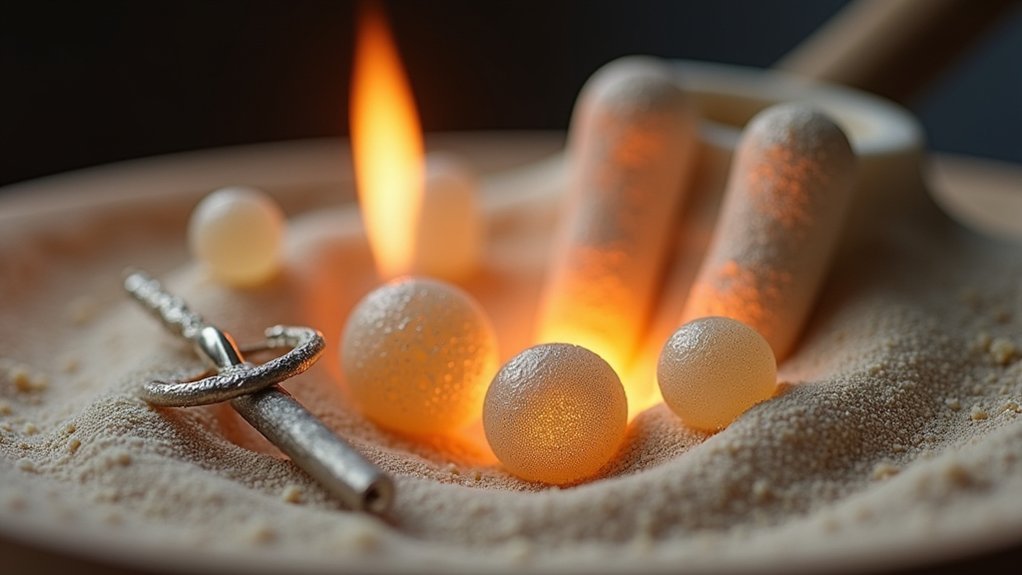
You’ll cast your 3D printed wax jewelry by first creating detailed patterns using SLA or DLP printers with specialized WAX resin. Next, you’ll build investment molds using steel flasks and investment plaster, ensuring proper debubbling with vacuum chambers. The burnout process requires gradually heating to 1,200°F-1,500°F to eliminate wax completely. Finally, you’ll pour molten metal using gravity, centrifugal, or vacuum casting methods depending on your design’s complexity. Mastering these fundamentals opens professional jewelry production capabilities.
Understanding Wax 3D Printing for Jewelry Applications
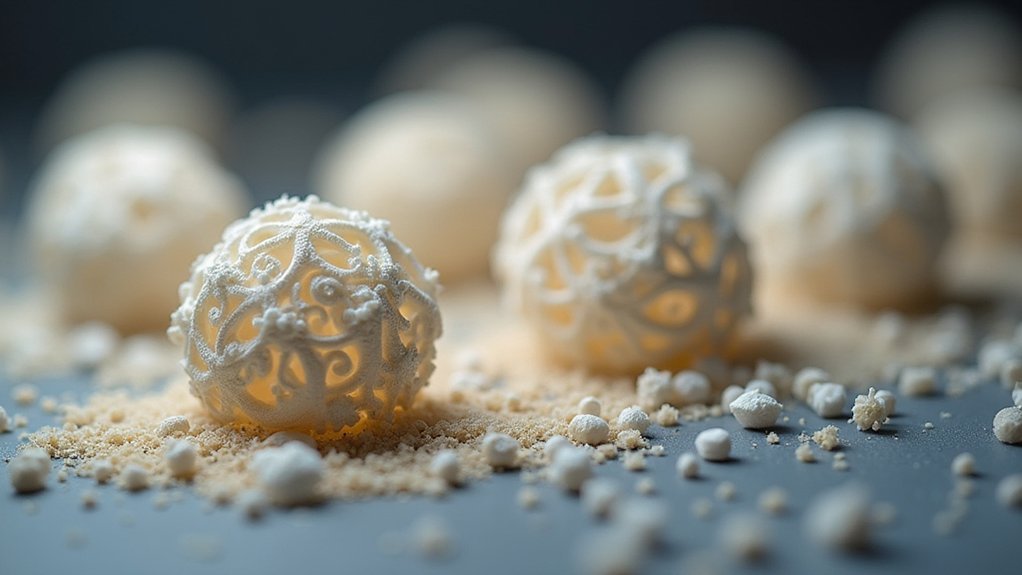
While traditional hand-carving methods have served jewelers for centuries, wax 3D printing revolutionizes jewelry making by producing highly detailed models with intricate designs that would be nearly impossible to achieve manually.
You’ll find this technology particularly valuable when creating complex geometries, delicate filigree work, or custom pieces requiring precise specifications.
The process works seamlessly with SLA and DLP technologies, delivering exceptional precision and smooth surface finishes that minimize post-processing time.
You can rapidly prototype designs and make adjustments based on customer feedback, dramatically reducing your timeline from concept to completion.
These wax patterns integrate perfectly with lost wax casting techniques, allowing you to create fine details and complex shapes in your final metal pieces while maintaining professional quality standards.
Essential Equipment and Materials for Casting
You’ll need specific equipment to transform your 3D printed wax patterns into finished metal jewelry pieces.
Your setup requires both 3D printing gear for creating detailed wax models and specialized casting materials that can handle extreme temperatures.
Don’t forget the essential safety equipment and precision tools that’ll keep you protected while achieving professional results.
3D Printing Equipment
Before you can begin casting 3D printed jewelry wax, you’ll need to assemble the right equipment for each stage of the process.
The printing process forms the foundation of successful investment casting, so choosing the right 3D printer is critical for producing high-quality wax patterns.
For creating intricate 3D printed jewelry designs, you’ll want a high-quality SLA or DLP printer that delivers exceptional detail and precision.
The Elegoo Mars stands out as an excellent choice, offering the accuracy needed for complex jewelry work.
You’ll also need specialized PowerResins WAX resin, which is specifically formulated for investment casting applications.
Key 3D printing equipment includes:
- SLA or DLP printer (such as Elegoo Mars)
- PowerResins WAX resin for investment casting
- Proper ventilation system for resin handling safety
Investment Casting Materials
Once you’ve selected your 3D printing equipment, the next step involves gathering the specialized materials needed for investment casting.
You’ll need investment plaster specifically formulated for molding, which offers superior durability compared to standard plaster of Paris and captures intricate details from your 3D printed patterns effectively.
A steel flask is vital for creating negative molds that withstand high temperatures during burnout and metal pouring.
Create high-quality 3D printed patterns using casting resins like PowerResins WAX, designed specifically for investment casting with smooth finishes that minimize post-processing.
Don’t forget safety equipment—respirators and gloves are essential when handling free silica in investment plaster.
A vacuum chamber for debubbling investment plaster guarantees bubble-free molds, preventing defects and enhancing your final cast quality.
Safety and Tools
Three critical safety components form the foundation of any successful casting operation: protective equipment, temperature control devices, and precision handling tools.
You’ll need safety goggles, gloves, and a respirator to protect against harmful dust and fumes from investment plaster and molten metal. A small electric furnace with precise temperature control is essential for melting metals like silver at 1,763°F.
Essential equipment includes:
- Tongs – For safely handling hot materials during melting and pouring
- Investment plaster – Specially formulated for casting, superior to standard plaster of Paris
- Vacuum chamber – Eliminates air bubbles from investment plaster before pouring
These tools guarantee both safety and casting quality. Proper equipment prevents accidents while maintaining the precision necessary for professional results in jewelry casting operations.
Designing and Preparing Your Digital Models
You’ll need to select the right CAD software that suits your skill level and design requirements, with options ranging from beginner-friendly programs like Tinkercad to professional-grade software like Rhino or Fusion 360.
Your digital model must incorporate proper dimensions and tolerances to account for thermal expansion during casting, ensuring your final piece fits correctly.
Focus on optimizing your model’s complexity and support structures to take full advantage of 3D printing’s capabilities while minimizing material waste and maximizing print quality.
CAD Software Selection
Before diving into the 3D printing process, selecting the right CAD software forms the foundation of successful jewelry wax casting. Your CAD software selection directly impacts your ability to create detailed, printable models that’ll translate beautifully into cast jewelry.
For jewelry design, you’ll want software like Rhino, MatrixGold, or Fusion 360, which offer specialized tools for intricate detailing and customization. These programs support STL file formats essential for 3D printing compatibility with slicing programs.
Key features to prioritize:
- Robust rendering engines that let you visualize designs realistically before printing
- Parametric modeling capabilities for easy design adjustments based on client feedback
- Strong community support with tutorials to accelerate your learning curve
Choose software that facilitates complex geometries while maintaining user-friendly interfaces for efficient workflow.
Model Optimization Techniques
Once your CAD design is complete, optimizing your digital model becomes critical for achieving professional casting results.
When applying model optimization techniques, you’ll need to maintain consistent wall thickness between 1-3 mm throughout your wax pattern to prevent weak points during printing and casting.
Don’t forget to incorporate drainage holes and vents into your design—these allow air to escape during metal pouring, preventing defects in your final piece.
Consider your model’s printing orientation carefully, especially for complex pieces like an engagement ring with intricate filigree work.
Proper orientation affects surface finish and detail fidelity.
Take advantage of CAD software’s capabilities to create complex geometries that traditional methods can’t achieve, maximizing 3D printing’s unique advantages for jewelry creation.
SLA Printing Techniques for High-Quality Wax Patterns
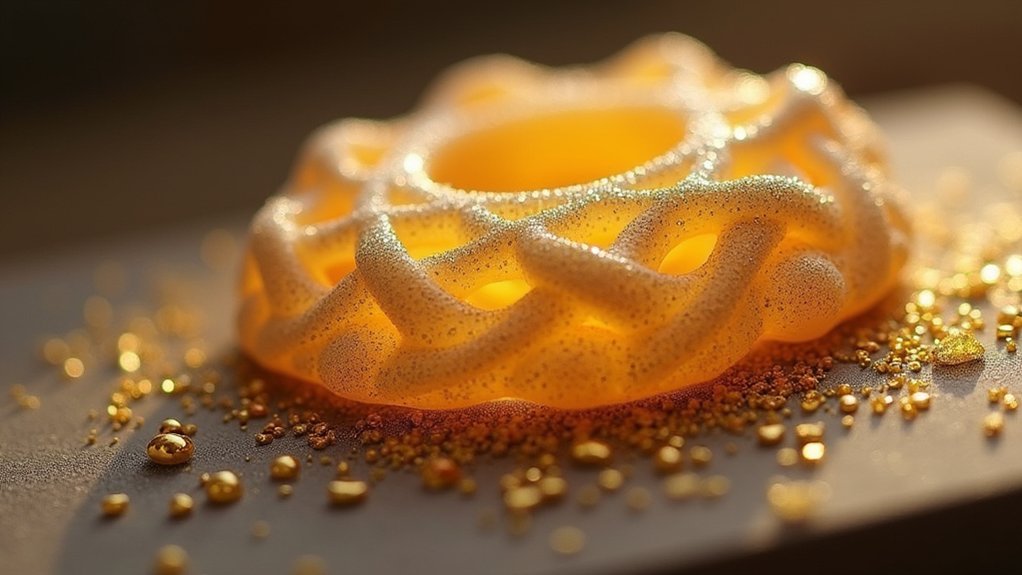
When creating jewelry wax patterns with exceptional detail, SLA printing stands out as the best choice for capturing intricate designs that traditional methods can’t match. You’ll achieve remarkable precision using light-cured resins that deliver smooth finishes and exceptional fidelity to your original designs.
- Layer Resolution Excellence: With SLA printers reaching 25-micron resolution, you’ll capture delicate engravings and filigrees that meet even the most demanding customer’s requests.
- Cost-Effective Equipment: Budget-friendly SLA printers like the Elegoo Mars (under $300) enable professional-quality printed jewelry production without breaking the bank.
- Specialized Materials: PowerResins WAX resin is specifically formulated for investment casting, ensuring ideal results.
Remember that proper post-processing through washing and curing is vital for achieving the strength and accuracy your wax patterns need before casting.
These SLA printing techniques consistently deliver superior results.
Creating Professional Investment Molds
After printing your high-quality wax patterns, you’ll transform them into professional investment molds that can withstand the extreme temperatures required for metal casting.
Start by preparing a steel cylinder flask to hold your investment plaster. Never use regular plaster of Paris—investment plaster creates durable molds essential for casting small metal pieces.
Mix the investment plaster carefully while using debubbling techniques like vacuum chambers to eliminate air bubbles that compromise mold integrity. These techniques work together to create superior casting results.
Air bubbles in investment plaster will ruin your casting—vacuum debubbling creates flawless molds for professional metal work.
Follow a proper burnout schedule when placing your flask in the kiln. This process removes wax patterns and prepares molds for ideal metal pouring.
Confirm proper flask orientation before pouring molten metal, as positioning noticeably affects casting quality and detail capture.
The Burnout Process: Removing Wax From Molds
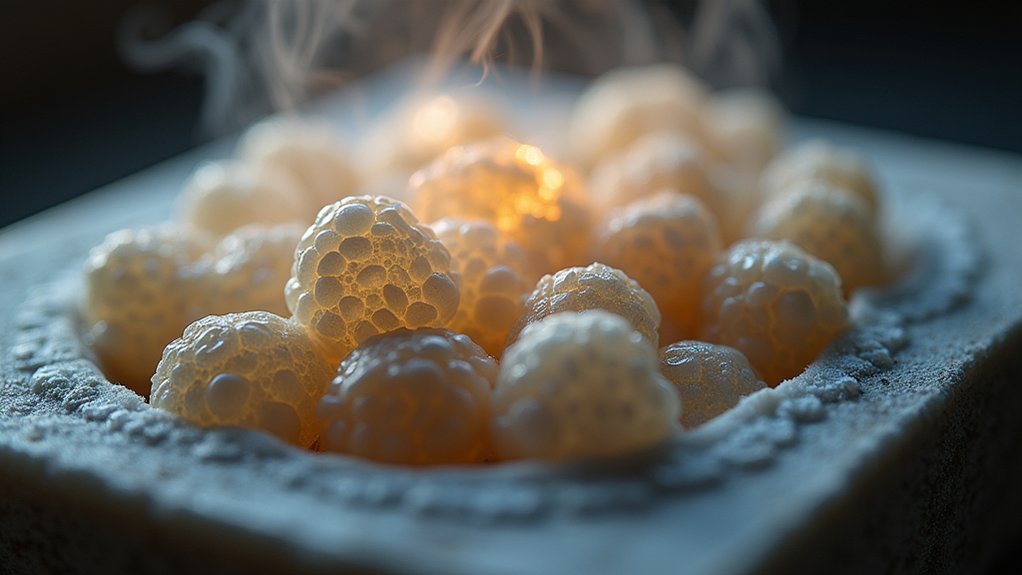
You’ll need to position your flask with the sprue hole facing downward to guarantee complete wax drainage during burnout.
This orientation prevents wax residues from becoming trapped inside the mold cavity, which could cause casting defects.
Following the manufacturer’s specific temperature schedule is equally critical for achieving a clean burnout without cracking your investment mold.
Flask Orientation Techniques
Proper flask orientation forms the foundation of successful wax removal during the burnout process. You’ll want to position your flask with the hole facing downward initially, allowing gravity to assist in complete wax elimination. This orientation prevents vapor trapping and guarantees residual wax doesn’t compromise your mold’s integrity.
Pay careful attention to your flask’s placement within the kiln. Uneven heating can create structural issues that’ll impact your final cast quality. You must follow the manufacturer’s recommended burnout schedule, as different materials require specific temperature profiles for maximum wax removal.
Key orientation techniques include:
- Position flask hole-down during initial heating phases for gravity-assisted drainage
- Monitor temperature consistently to prevent mold damage from overheating
- Guarantee even kiln placement to avoid hot spots that could compromise mold structure
Temperature Schedule Guidelines
Temperature control determines whether your burnout succeeds or fails catastrophically. You’ll need to gradually increase temperatures from room temperature to 1,200°F-1,500°F, allowing the wax to melt and evaporate completely from your mold cavity.
Don’t rush this process—rapid heating can crack your investment or trap wax residues.
Once you’ve reached peak temperature, hold it for several hours to eliminate every trace of wax. This extended heating guarantees your mold’s thoroughly prepared for metal pouring.
Always follow your investment plaster manufacturer’s specific burnout schedule, as different materials require varying temperatures and durations.
After burnout’s complete, let your mold cool gradually. Rapid temperature changes will crack your investment, ruining hours of careful preparation and potentially destroying your entire casting project.
Metal Selection and Melting Temperatures
When casting 3D printed jewelry wax, selecting the right metal directly impacts your melting and pouring temperatures, which are critical for achieving professional results.
You’ll need to understand each metal’s specific requirements to avoid casting defects and guarantee quality outcomes.
Silver melts at approximately 1,763°F and requires pouring at around 1,850°F.
Gold has a lower melting point of 1,064°F with pouring temperatures ranging from 1,080°F to 1,100°F depending on the alloy.
Brass and bronze both melt around 1,740°F, though bronze can require up to 2,100°F for certain alloys.
- Maintain precise temperatures – overheating causes oxidation while underheating creates incomplete fills
- Consider alloy composition – different gold alloys require temperature adjustments
- Plan for metal properties – your choice affects both appearance and durability
Casting Methods: Gravity, Centrifugal, and Vacuum Techniques
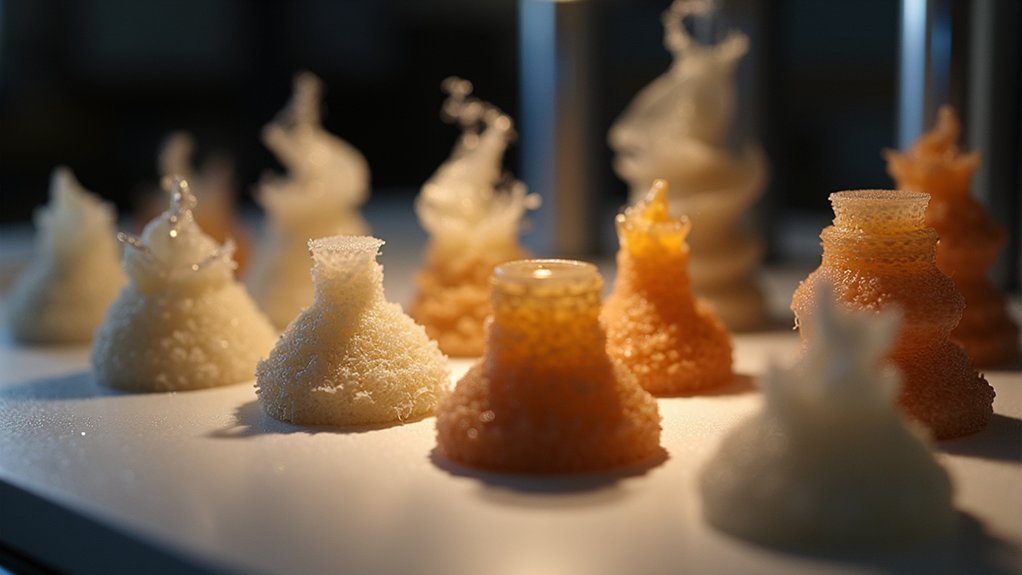
The casting method you choose fundamentally determines the quality and success of your 3D printed jewelry wax investment. Each technique offers distinct advantages depending on your project’s complexity and precision requirements.
| Method | Best For | Key Advantage |
|---|---|---|
| Gravity | Simple shapes, smaller pieces | Natural, cost-effective process |
| Centrifugal | Complex geometries | Forces metal into intricate details |
| Vacuum | High-detail work | Minimizes defects and air pockets |
Gravity casting works well for basic designs where you’re prioritizing simplicity over precision. Centrifugal casting uses high-speed rotation to push molten metal into complex mold cavities, making it ideal for detailed jewelry pieces. Vacuum casting pulls metal into molds using negative pressure, delivering exceptional detail reproduction. Remember to maintain proper pouring temperatures—silver melts at 1,763°F but should be poured around 1,850°F. Always prioritize safety with appropriate protective equipment and ventilation.
Post-Processing: Cleaning and Finishing Cast Jewelry
Once your cast jewelry emerges from the investment mold, you’ll face the essential post-processing phase that transforms rough castings into polished, professional pieces.
You’ll need to carefully separate the metal parts from the sprue using a jeweler’s saw or hacksaw. Precision is vital here—one wrong cut can damage your finished piece.
Next, grinding and filing remove any casting remnants or defects, creating smooth surfaces ready for finishing.
Meticulous grinding and filing eliminate casting flaws and rough edges, preparing surfaces for the final finishing stages.
For that professional polish, tumble your pieces with Dawn dish soap and stainless steel shot. This process achieves a bright, lustrous finish that customers expect.
- Precision cutting: Use proper saws to separate parts without damaging delicate details
- Surface refinement: File and grind away imperfections for smooth, clean results
- Professional polishing: Tumbling creates brilliant finishes that enhance perceived value
Troubleshooting Common Casting Issues
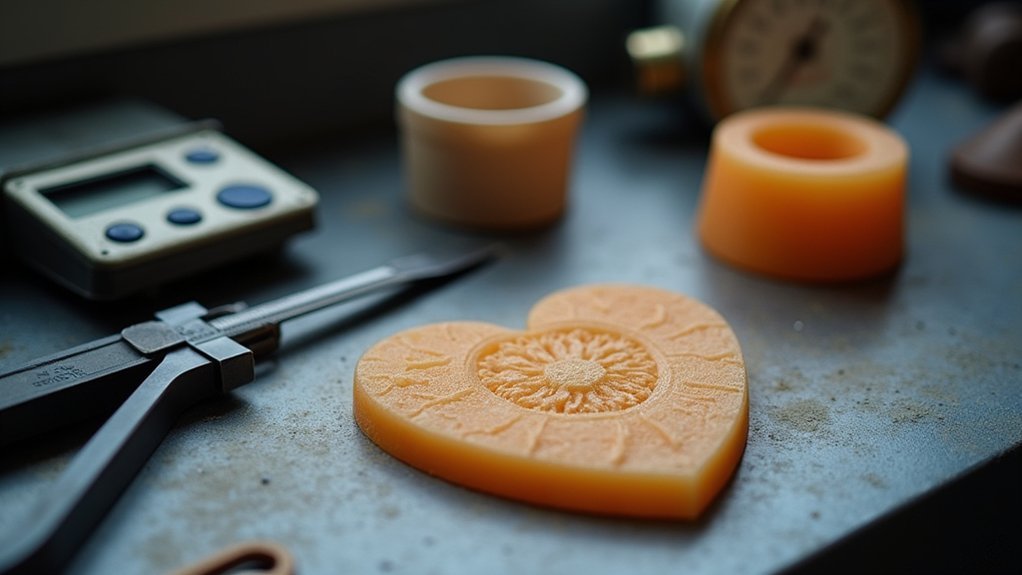
Even experienced casters encounter frustrating defects that can ruin hours of careful work, but understanding the root causes will help you salvage projects and prevent future failures.
Air bubbles in your investment plaster create surface defects, so you’ll need proper debubbling during mixing—preferably using a vacuum chamber.
If you’re getting incomplete fills or rough surfaces, check your pouring temperature; silver requires around 1,850°F for ideal results.
Incomplete wax removal stems from improper burnout schedules, so follow manufacturer guidelines precisely.
Check your mold orientation during burnout—incorrect positioning causes uneven heating and poor wax release.
Finally, control your cooling process carefully; rapid quenching can crack or warp your cast metal, destroying otherwise perfect pieces.
Advanced Techniques for Complex Jewelry Designs
Mastering basic casting prepares you for jewelry’s most ambitious projects—pieces that push beyond simple rings and pendants into sculptural territory.
Advanced casting techniques unlock jewelry’s sculptural potential, transforming ambitious creative visions into precision-crafted masterpieces that transcend traditional limitations.
You’ll leverage SLA 3D printing’s precision to create intricate filigrees and detailed engravings that’d be nearly impossible through traditional hand-carving. PowerResins WAX resin delivers the accuracy you need for investment casting complex geometries.
- Multi-section molds: Break large designs into printable components, then solder them together for seamless assembly
- CNC-enhanced workflows: Integrate machining with 3D printing to achieve unprecedented pattern accuracy and surface quality
- Rapid prototyping cycles: Use digital workflows to iterate designs quickly based on client feedback, reducing development time dramatically
These advanced techniques transform your creative vision into tangible masterpieces while maintaining the precision modern jewelry demands.
Frequently Asked Questions
Can You 3D Print Wax for Casting?
Yes, you can 3D print wax for casting using specialized casting resins like PowerResins WAX. You’ll need SLA printers such as Elegoo Mars to create detailed patterns for lost wax casting processes.
Can You Use PLA for Lost Wax Casting?
You shouldn’t use PLA for lost wax casting because it doesn’t burn out cleanly like traditional wax. It’ll leave residue in your mold, creating defects in your final cast piece.
Can You 3D Print Beeswax?
You can 3D print beeswax using specialized filaments and printers with precise temperature control. However, you’ll need dedicated wax filament since pure beeswax requires careful handling due to its low melting point.
How to Cast Using 3D Printing?
You’ll design your piece in CAD software, then 3D print it using castable resin. Create an investment mold, burn out the pattern, melt metal, and pour it into the cavity.
In Summary
You’ve now mastered the complete process of casting 3D printed jewelry wax, from digital design to finished piece. Remember that practice makes perfect—don’t get discouraged if your first attempts aren’t flawless. Keep refining your printing settings, investment mixing, and casting technique. With each project, you’ll develop better instincts for troubleshooting issues and achieving consistently professional results. Start simple, then gradually tackle more complex designs as your confidence grows.