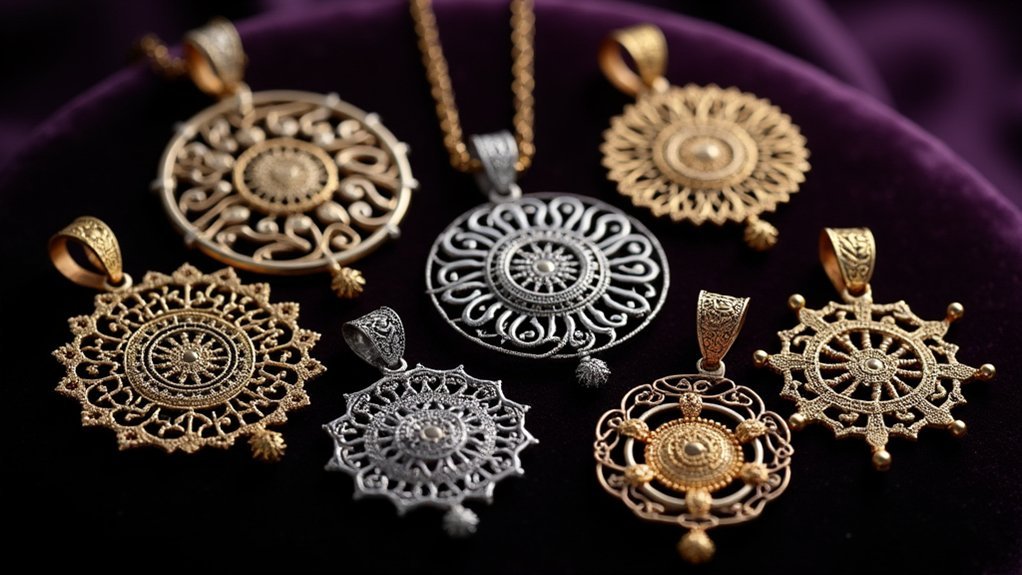
You’ve likely admired the intricate metalwork adorning ancient Byzantine jewelry, but you might not realize how these timeless patterns can transform modern pendant designs. Each filigree technique tells a story through delicate wirework that’s been refined over centuries. Whether you’re drawn to sacred geometries or imperial motifs, these seven distinctive patterns offer something remarkable for contemporary artisans. The question isn’t which pattern appeals to you most—it’s how you’ll adapt these masterful designs to create your own stunning pieces.
Traditional Cross Motif Filigree Patterns

When you examine traditional Byzantine cross motif filigree patterns, you’ll discover intricate designs that masterfully weave together spirals, loops, and delicate floral elements through centuries-old handcrafted techniques.
These ornate pieces showcase exceptional artistry found in specialized jewelry workshops, where skilled craftsmen dedicate 7-10 business days to each cross pendant due to its handmade nature.
You’ll find these masterpieces crafted in solid gold, typically 14k and 18k options, often enhanced with precious gemstones like emeralds and sapphires.
The ceremonial significance of Byzantine filigree makes these crosses perfect for weddings and religious occasions.
Pricing reflects complexity – simple designs start around $48.95, while elaborate pieces reach over $1,552.
Each cross pendant represents a perfect fusion of spiritual meaning and exceptional craftsmanship.
Spiral and Circular Byzantine Designs
You’ll discover that ancient spiral motifs form the foundation of Byzantine filigree’s most mesmerizing pendant designs, creating endless loops that symbolize eternity and divine continuity.
These intricate patterns work seamlessly with circular rosette formations, where delicate gold wires interweave to produce stunning three-dimensional effects that catch light from every angle.
When you examine these designs closely, you’ll notice how the spirals and circles often incorporate gemstone settings that enhance the overall luxurious appearance of your pendant.
Ancient Spiral Motifs
Countless Byzantine artisans mastered the ancient art of spiral motifs, weaving intricate patterns that symbolized eternity and life’s endless cycles into their exquisite filigree pendants.
When you examine Byzantine filigree jewelry today, you’ll notice how these ancient spiral motifs demonstrate extraordinary cultural significance. The dual-layered designs showcase spirals overlaid on circular bases, creating remarkable visual depth that captures light beautifully.
You can appreciate the meticulous craftsmanship required for each piece, where artisans employed sophisticated techniques like granulation and enameling to enhance the design’s elegance.
These religious jewelry pieces weren’t merely decorative—they carried profound spiritual meaning throughout the Byzantine Empire. The intricate patterns required exceptional skill, with each spiral carefully formed to create the complex, mesmerizing designs that define this timeless art form.
Circular Rosette Patterns
The circular rosette patterns represent Byzantine filigree’s most sophisticated expression of unity and eternal beauty, transforming precious metals into mesmerizing geometric harmony.
You’ll discover that these intricate designs showcase masterful craftsmanship through delicately interwoven gold threads creating remarkable depth and dimension. Each handcrafted piece becomes unique through its complex spiral arrangements and circular motifs.
When you examine traditional Croatian filigree from Dubrovnik, you’ll appreciate the solid gold construction using 14k or 22k materials.
These circular rosette patterns often incorporate stunning gemstones like emeralds and sapphires, elevating the jewelry’s luxurious appeal. The Byzantine filigree technique produces exceptional statement pieces that effortlessly shift from formal occasions to everyday elegance, reflecting centuries of refined artistic tradition while maintaining contemporary relevance.
Geometric Diamond and Square Patterns
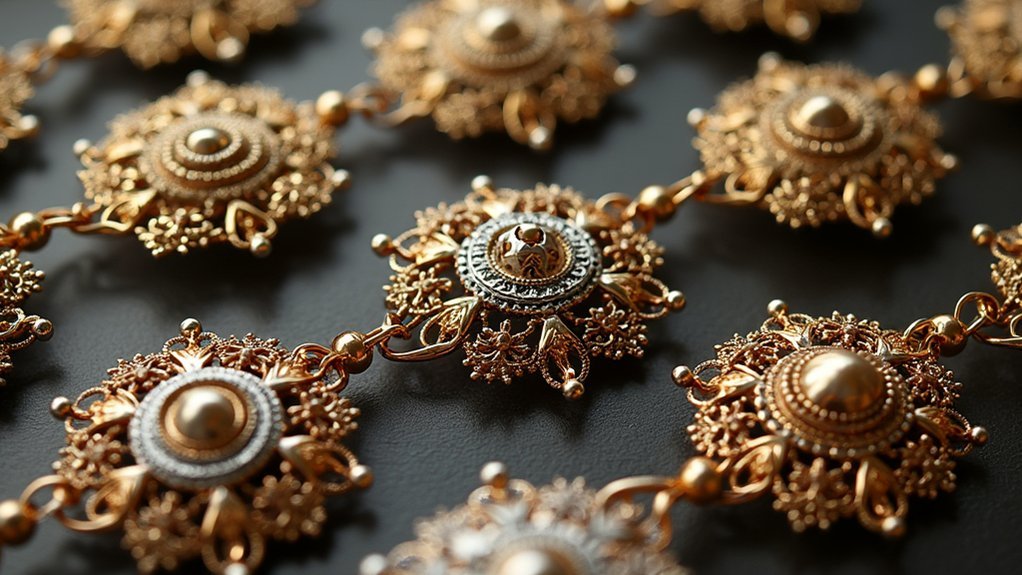
Among Byzantine filigree’s most recognizable motifs, geometric diamond and square patterns hold special significance as symbols of eternity and stability.
You’ll find these geometric patterns created through intricate wire techniques that showcase exceptional craftsmanship and attention to detail. Artisans skillfully intersperse diamond shapes with swirling filigree designs, creating remarkable visual complexity that elevates pendant elegance.
When you examine these square patterns closely, you’ll notice how oxidized sterling silver or solid gold enhances contrast, making geometric elements stand out prominently.
Each handmade jewelry piece reflects the artisan’s individual style and skill, ensuring you own something truly unique. The repetitive nature of these Byzantine filigree designs creates mesmerizing visual rhythm while maintaining the symbolic meaning that’s made these patterns treasured for centuries.
Floral and Vine-Inspired Filigree Work
While geometric patterns emphasize structured symbolism, floral and vine-inspired filigree work captures nature’s organic beauty through delicate scrollwork and graceful looping patterns. You’ll find these intricate designs in Byzantine jewelry showcase handcrafted excellence using solid gold materials, typically 14k or 22k varieties.
| Element | Symbolism | Application | Craftsmanship |
|---|---|---|---|
| Floral motifs | Beauty and fertility | Ceremonial pieces | Traditional techniques |
| Vine patterns | Growth and connection | Wedding pendants | Delicate scrollwork |
| Combined designs | Natural harmony | Special occasions | Solid gold construction |
| Looping patterns | Organic flow | Elegant pendants | Intricate handwork |
These ceremonial pieces enhance special occasions through meaningful symbolism. The traditional craftsmanship creates harmonious balances between floral and vine elements, making your pendant both visually stunning and symbolically rich.
Imperial Crown and Royal Motifs

When you’re crafting Byzantine pendant designs, imperial crown motifs elevate your filigree work to reflect the empire’s divine authority and royal heritage.
You’ll need to master specialized crown filigree techniques that incorporate intricate scrollwork, laurel wreaths, and crosses to achieve authentic imperial aesthetics.
Your challenge lies in seamlessly integrating these royal symbols through meticulous gold wirework that captures the opulent grandeur Byzantine nobility demanded.
Crown Filigree Techniques
Since Byzantine emperors wore crowns that displayed their divine authority through intricate metalwork, crown filigree techniques naturally evolved to capture this imperial grandeur in pendant form.
You’ll find that Byzantine jewelry artisans mastered crown filigree through delicate wirework and granulation methods, creating elaborate patterns that mirror royal motifs. These intricate designs incorporate leaves, flowers, and geometric shapes, requiring exceptional craftsmanship to achieve their signature luxurious appearance.
When you examine authentic pieces, you’ll notice they’re crafted from high-quality materials like 14k gold and premium metals.
The techniques involve carefully twisting and soldering fine wire into complex formations, then adding gemstones such as emeralds and sapphires. This meticulous process guarantees each pendant reflects the opulence and historical significance of Byzantine imperial crowns.
Royal Symbol Integration
Because imperial crowns served as the ultimate symbol of divine rulership, Byzantine artisans seamlessly integrated these regal motifs into their filigree pendant designs, transforming personal jewelry into miniature declarations of power and prestige.
You’ll discover that these royal symbols showcase intricate patterns featuring laurel wreaths and ornate floral designs that symbolize authority. The craftsmanship employs premium gold, particularly 14k and 22k varieties, creating pieces perfect for ceremonial occasions.
When you examine these pendants, you’ll notice how gemstones like emeralds and sapphires elevate their luxurious appeal.
The Byzantine filigree techniques include granulation and enameling, producing unique pieces that capture the opulence of imperial heritage while serving as stunning visual focal points for modern wearers.
Interlocking Chain and Link Patterns
While ancient Byzantine artisans developed numerous decorative techniques, their interlocking chain and link patterns stand out as masterpieces of symbolic craftsmanship.
You’ll discover these intricate designs represent unity and connection through handcrafted techniques involving twisted gold or silver wire. Byzantine filigree artisans spent countless hours weaving delicate strands into interconnected shapes that transformed ceremonial jewelry into meaningful art pieces.
When you examine these patterns, you’re witnessing exceptional skill where each link carries symbolic significance beyond mere decoration. The meticulous process creates pendants that balance aesthetic beauty with spiritual meaning.
Today’s modern interpretations preserve traditional elements while adding contemporary touches, making them perfect for historical enthusiasts who appreciate ancient artistry and collectors seeking unique pieces that bridge past and present craftsmanship traditions.
Religious Symbol and Sacred Geometry Designs
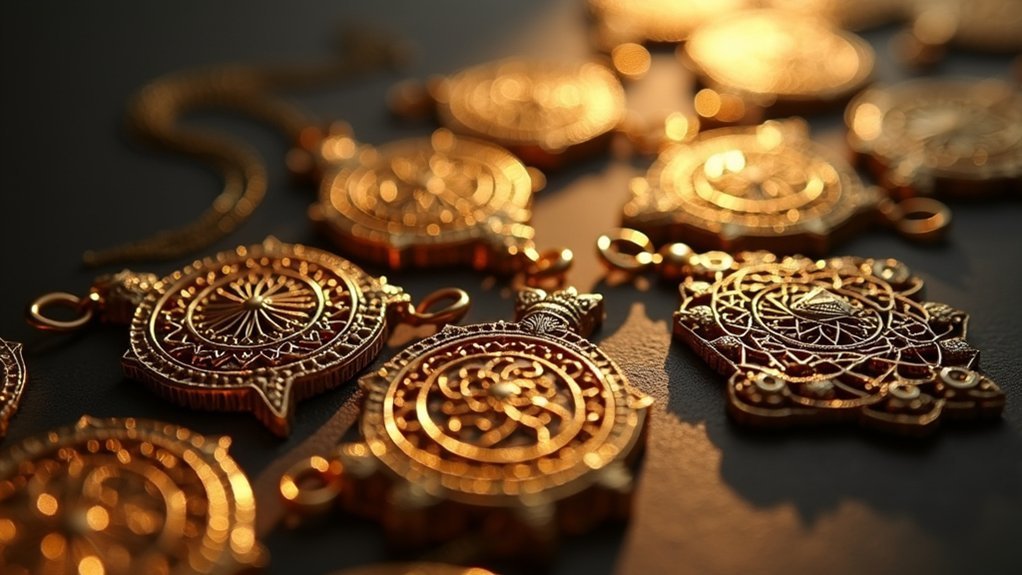
Beyond their symbolic representation of unity, Byzantine filigree patterns reached their most profound expression through religious symbols and sacred geometry designs.
When you examine a Byzantine cross pendant, you’ll discover how craftsmen masterfully integrated sacred geometry with religious symbols to create intricate designs of extraordinary spiritual significance.
Your filigree work combines delicate metal threads with carefully selected gemstones, using circles and triangles to represent harmony and balance.
This craftsmanship reflects Byzantine art’s deep spiritual heritage, where each design element connects the divine with the cosmos.
You’ll notice how these religious symbols serve as central motifs, transforming your pendant into more than mere jewelry.
The interplay of light through gemstones enhances the sacred nature, creating pieces that evoke reverence and connection to ancient traditions.
Frequently Asked Questions
What Metals Are Best Suited for Creating Byzantine Filigree Pendant Designs?
You’ll find gold and silver work best for intricate filigree designs. They’re malleable, allowing you to twist delicate wires without breaking. Copper’s also excellent for beginners since it’s affordable and forgiving while you’re learning techniques.
How Much Do Authentic Byzantine Filigree Pendants Typically Cost?
You’ll find authentic byzantine filigree pendants ranging from $200-$2,000 depending on metal quality, craftsmanship complexity, and historical significance. Handmade pieces using precious metals command higher prices than mass-produced alternatives.
What Tools Are Essential for Crafting Byzantine Filigree Jewelry at Home?
You’ll need fine silver or gold wire, precision pliers, a soldering torch, flux, solder, tweezers, a jeweler’s saw, files, and a magnifying glass. Don’t forget a soldering block and pickle solution for cleaning.
How Should I Properly Clean and Maintain My Byzantine Filigree Pendant?
You’ll need to gently clean your filigree pendant with a soft brush and mild soap solution. Don’t use harsh chemicals or ultrasonic cleaners that’ll damage delicate wirework. Store it properly to prevent tangling.
Where Can I Find Certified Authentic Byzantine Filigree Pendant Artisans?
You’ll discover certified artisans through jewelry guilds, craft councils, and museum gift shops. Check online marketplaces with verified seller programs, visit cultural festivals, or contact Byzantine art societies for authentic referrals and recommendations.
In Summary
You’ve discovered seven magnificent Byzantine filigree patterns that’ll transform your pendant designs into timeless masterpieces. Whether you’re drawn to sacred crosses, mesmerizing spirals, or regal crown motifs, each pattern carries centuries of artistic tradition. Don’t hesitate to experiment with geometric shapes, delicate florals, or intricate interlocking chains. You’ll create pendants that aren’t just jewelry—they’re wearable art pieces that honor Byzantine craftsmanship while expressing your personal style and spiritual connection.