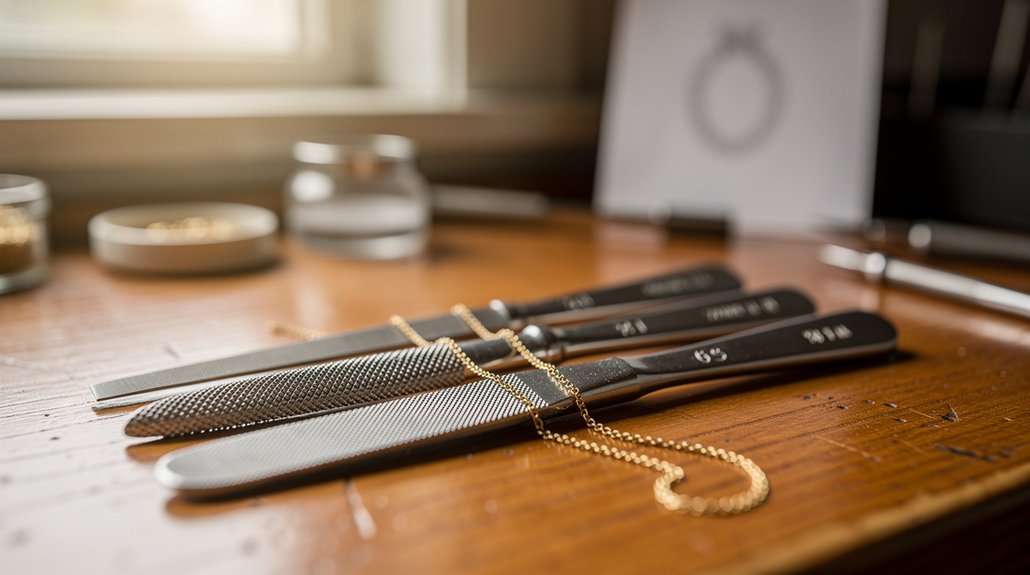
You’re looking for metal files that cut fast, stay sharp, and fit comfortably in your hand while you shape delicate jewelry. In 2026 the top options blend diamond‑coated or carbide teeth with ergonomic, non‑slip handles and sturdy steel bodies, and they come in a range of profiles—round, flat, half‑round, square, triangle, and warding—to tackle any curve or fine detail. The right set will also protect its teeth in a compact case, but which one truly balances durability, versatility, and price?
| LIBRATON Needle Diamond File Set (13pcs) with Case | Professional Grade | Number of Files: 13 pcs | File Material: High‑carbon steel & diamond‑coated | Handle Type: Rubberized, non‑slip | CHECK ON AMAZON | Read Our Analysis | |
| 5‑Piece Premium Metal Needle File Set by XEKIGU | Compact Precision | Number of Files: 5 pcs | File Material: Hardened alloy steel | Handle Type: Soft rubberized, non‑slip | CHECK ON AMAZON | Read Our Analysis | |
| 12PCS Needle File Set with Tool Bag | Versatile Set | Number of Files: 12 pcs | File Material: Carbon steel & alloy steel | Handle Type: Serrated, rubberized | CHECK ON AMAZON | Read Our Analysis | |
| 6-Piece Metal Needle File Set – 4‑inch Carbon Steel Files | Heavy‑Duty Choice | Number of Files: 6 pcs | File Material: Carbon steel (heat‑treated) | Handle Type: Rubberized, non‑slip | CHECK ON AMAZON | Read Our Analysis | |
| YAKAMOZ 10-Piece Mini Diamond Needle File Set | Diamond‑Coated Elite | Number of Files: 10 pcs | File Material: Nickel‑plated alloy steel (diamond‑coated) | Handle Type: Rubber, non‑slip | CHECK ON AMAZON | Read Our Analysis |
More Details on Our Top Picks
LIBRATON Needle Diamond File Set (13pcs) with Case
Looking for a compact, all‑in‑one file set that lets you shape delicate jewelry pieces with pinpoint precision? The LIBRATON Needle Diamond File Set delivers 13 pieces—six diamond‑tipped files and six high‑carbon‑steel files—each with a distinct profile: round, half‑round, square, flat, flat‑warding, and triangle sharp. You’ll appreciate the rubberized, non‑slip handles that dip for firm grip, letting you work faster and more accurately. The diamond bits tackle metal, while steel files handle wood and plastic. All tools nest in a canvas pouch and case, keeping them protected and ready for every refining, reshaping, or scraping task.
- Number of Files:13 pcs
- File Material:High‑carbon steel & diamond‑coated
- Handle Type:Rubberized, non‑slip
- Shape Variety:Round, half‑round, square, flat, flat warding, triangle
- Storage/Case:Canvas pouch with case
- Primary Applications:Metal, wood, plastic, jewelry shaping
- Additional Feature:Canvas pouch storage
- Additional Feature:Rubberized non‑slip handles
- Additional Feature:Diamond‑coated files
5‑Piece Premium Metal Needle File Set by XEKIGU
If you need ultra‑precise detail work on tiny jewelry pieces, the XEKIGU 5‑Piece Premium Metal Needle File Set delivers exactly that. Its hardened alloy‑steel files—Round, Half‑Round, Flat, Square, Triangle—are deeply quenched for sharp, wear‑resistant teeth. The fine, evenly spaced tooth pattern lets you remove burrs, refine edges, and reshape contours without snagging delicate metal. Soft rubberized handles give a non‑slip grip, keeping your hand comfortable in tight spaces. You can tackle wood, glass, ceramic, leather, or plastic as well, making this set a versatile, durable choice for jewelers, carpenters, and DIY enthusiasts alike.
- Number of Files:5 pcs
- File Material:Hardened alloy steel
- Handle Type:Soft rubberized, non‑slip
- Shape Variety:Round, half‑round, flat, square, triangle
- Storage/Case:No dedicated case (hand‑held)
- Primary Applications:Metal, wood, jewelry, glass, ceramic, leather, plastic
- Additional Feature:Hardened alloy steel
- Additional Feature:Deeply quenched teeth
- Additional Feature:Soft rubberized grips
12PCS Needle File Set with Tool Bag
Needle‑file enthusiasts seeking a compact, all‑in‑one solution will love the 12‑piece Needle File Set with Tool Bag, which packs six jeweler’s files and six steel files into a sturdy, zip‑pered case. You’ll find tri‑shaped, brushed‑finish carbon and alloy steel teeth that are deeply quenched and coated for durability. The serrated handles screw‑in securely, and the lightweight 0.4 kg bag fits in a 10 × 3.5 × 2 cm space. Use them to file, deburr, shape, trim, and smooth metal, wood, leather, plastic, ceramics, glass, or jewelry. Clean the teeth with a brush, oil lightly, and store in the bag; drops may damage the coating.
- Number of Files:12 pcs
- File Material:Carbon steel & alloy steel
- Handle Type:Serrated, rubberized
- Shape Variety:Round, half‑round, square, flat, flat warding, triangle (plus assorted)
- Storage/Case:Tool bag (incl. zip‑up)
- Primary Applications:Metal, wood, jewelry, leather, plastic, ceramics, glass
- Additional Feature:Brushed exterior finish
- Additional Feature:Serrated handle attachment
- Additional Feature:Included cleaning brush
6-Piece Metal Needle File Set – 4‑inch Carbon Steel Files
Who needs razor‑sharp precision for tiny jewelry details? You’ll love the 6‑piece needle file set, each 4‑inch carbon steel file delivering 60‑62 HRC hardness and a fine‑grained, wear‑resistant surface. The flat, warding, square, triangular, round, and half‑round shapes let you deburr, reshape, and scrape metal, wood, glass, or leather without scratching. Ergonomic rubberized handles stay non‑slip, reducing hand fatigue and boosting control. Deep‑quenched, anti‑corrosive coating keeps the tools sharp even in humid workshops. The compact case stores all six files neatly, and the set’s 30 % longer service life means fewer replacements.
- Number of Files:6 pcs
- File Material:Carbon steel (heat‑treated)
- Handle Type:Rubberized, non‑slip
- Shape Variety:Flat, warding, square, triangular, round, half‑round
- Storage/Case:Compact storage case
- Primary Applications:Metal, wood, jewelry, glass, ceramics, leather, plastic
- Additional Feature:Anti‑corrosive coating
- Additional Feature:4‑inch working length
- Additional Feature:Compact storage case
YAKAMOZ 10-Piece Mini Diamond Needle File Set
The YAKAMOZ 10‑Piece Mini Diamond Needle File Set is the ideal choice for jewelers and hobbyists who need precise, rapid material removal on tiny metal components. Its 150‑grit diamond‑coated surfaces cut fast and resist wear, corrosion, and heat. Each 40 mm file fits a 2 mm shank and ends in a rubber, non‑slip grip, letting you work longer without fatigue. You get ten shapes—round, square, triangle, leaf, oval, half‑round, flat, knife, sharp‑flat, and equilateral triangle—so you can file, shape, carve, or engrave metal, glass, wood, stone, plastic, or ceramics with confidence. The nickel‑plated alloy steel body stays durable, while the compact 100 mm total length keeps your toolbox tidy and ready for detailed jewelry work.
- Number of Files:10 pcs
- File Material:Nickel‑plated alloy steel (diamond‑coated)
- Handle Type:Rubber, non‑slip
- Shape Variety:Round, square, equilateral triangle, leaf, triangle, oval, half‑round, flat, knife, sharp‑flat
- Storage/Case:No case (packaged in box)
- Primary Applications:Metal, jewelry, glass, wood, stone, plastic, ceramics, bearings, molds, gears
- Additional Feature:Nickel‑plated alloy steel
- Additional Feature:150‑grit diamond grit
- Additional Feature:2 mm shank size
Factors to Consider When Choosing Metal Files for Jewelry Shaping and Smoothing
When you pick a metal file, start by matching its hardness to the jewelry metal you’ll work on, then choose a shape that fits the contours you need to smooth. Comfort matters, so look for a grip that feels secure in your hand, and decide whether diamond‑coated or steel filings give the finish you want. Finally, consider the file’s size and length to ensure it reaches tight spots without sacrificing control.
Material Hardness Selection
So, what should you prioritize when selecting a metal file for jewelry shaping? First, gauge hardness. A 60–62 HRC carbon steel file offers excellent wear resistance on gold, silver, and hard plastics, but its brittleness can chip delicate pieces. Diamond‑coated files stay sharp longer, letting you remove material quickly from both metals and hard gemstones without frequent resharpening. Consider corrosion protection: deep‑quenched, coated steel resists humidity and mixed‑material environments, extending life. Choose between high‑carbon and alloy steel based on rigidity and grain retention; alloy steel holds finer tooth patterns for intricate settings, while high‑carbon provides stiffer cuts. For fine jewelry, balance hardness with tooth design—enough brittleness to carve precise cuts, yet not so fragile that softer substrates crack. This equilibrium maximizes efficiency and surface finish.
File Shape Variety
Hardness determines how long a file lasts, but the shape you pick decides how cleanly you can work. A diverse set of shapes—round, half‑round, square, flat, triangular, and warding—lets you contour, deburr, and smooth both curved and flat surfaces with precision. Needle‑file styles give you narrow profiles that slip into tight corners, settings, and intricate edges. Choose a round or half‑round for sweeping curves, a square or flat for flat planes, and a triangular or warding for aggressive material removal. Switching among these shapes lets you progress from rough shaping to fine polishing without over‑sculpting. If you work with hard metals, opt for diamond‑coated or high‑hardness alloy steel files; they cut faster and last longer, keeping your workflow efficient.
Handle Grip Comfort
What makes a file feel like an extension of your hand? You’ll notice a rubberized, non‑slip handle that’s dipped for firm control, letting you work longer without fatigue. Ergonomic shapes paired with soft‑grip textures let you apply steady pressure while maintaining accuracy on tiny refinements. Look for serrated or textured surfaces that keep the file from slipping when you trace delicate contours. The balance of the grip matters too; a well‑shaped handle stays in contact with curved jewelry pieces, preventing uneven pressure. When the handle fits your palm and the material cushions your fingers, you can mill and smooth with confidence, minimizing strain and maximizing precision.
Diamond vs. Steel Filings
Ever wondered which file will let you shape gold, titanium, or even ceramic beads most efficiently? Diamond‑coated files bite hard alloys and glass‑like materials with blazing speed, thanks to their abrasive grit that stays sharp longer and resists clogging. You’ll notice faster material removal and smoother finishes on stubborn metals and ceramics. Steel files, especially high‑carbon variants, cost less and work well on softer metals and plastics, but they dull quicker and may need frequent replacement. They’re ideal for rough shaping, deburring, and can be re‑sharpened easily. For precision jewelry work, many artisans start with a diamond file for aggressive removal, then switch to a steel file for fine detail and final polishing, balancing speed, durability, and cost.
File Size and Length
A 4‑inch needle file lets you glide along the curve of a ring or pendant, while a 2‑inch mini file gives you the control needed for tiny beads and intricate settings. Longer files reach tight areas and cover more surface, making them ideal for shaping broader contours on bracelets or pendants. Mini files, typically 2‑3 inches, excel at precise deburring and fine contouring on delicate components, reducing the risk of over‑smoothing. Standard needle files often feature a 4‑inch working length with a 6‑inch overall handle, balancing control and reach for curved work. Some sets include diamond‑coated mini files around 3.94 inches, offering a compact option for intricate details. Mixing lengths in your kit lets you tackle both sweeping shaping and meticulous finishing without swapping tools.
Case and Storage Solutions
A sturdy case is essential for keeping your needle files from bending, chipping, or rusting while you work. Choose a rigid canvas pouch or a roll/box with individual slots that hold each file securely. Look for labeled compartments—round, flat, half‑round, triangle, square, warding—so you never mix shapes and can grab the right tool instantly. Firm closures, whether zip or snap, keep the interior moisture‑resistant, protecting high‑carbon steel and diamond‑coated teeth from rust. Opt for a compact, portable organizer that fits on a bench or in a toolbox without rattling. Finally, ensure the system includes a small cleaning brush or wipe, letting you clear debris before returning each file to its slot.
Durability and Coating
Keeping your files organized is only half the battle; the real test lies in how long they stay sharp and resistant to wear. High‑carbon steel and alloy steel give you a sturdy base that endures repetitive shaping without chipping. When you choose diamond‑coated files, you’ll notice faster cuts and a surface that resists wear, keeping the edge fine for longer. Look for a fine tooth texture with evenly spaced teeth—this pattern delivers smooth finishes and better control. Heat‑treated, deeply quenched steels with 60–62 HRC hardness stay stiff, preventing deformation when you work on delicate pieces. Finally, anti‑corrosive coatings protect the file from sweat, humidity, and polishing compounds, extending its usable life in any workshop environment.
Precision Cutting Efficiency
How can you maximize precision while shaping delicate jewelry? Choose diamond or carbide abrasive files; they cut faster and last longer than plain carbon steel, letting you shape quickly without frequent changes. Look for fine tooth density and a uniform pattern—these give you tight control and a smooth finish, cutting gouging. Opt for a 150‑Hz grit (or similar high‑abrasion rating) to remove material efficiently while keeping heat low, protecting metal properties. An ergonomic, non‑slip handle steadies your grip, especially in tight or intricate spots, ensuring repeatable cuts. Finally, pick short, compact mini files in round, flat, triangle, or half‑round shapes; they let you detail and smooth tiny features with pinpoint accuracy.
Frequently Asked Questions
How Do I Clean and Maintain Diamond Needle Files for Longevity?
You clean and maintain diamond needle files by gently brushing off debris with a soft brush, soaking them briefly in warm soapy water, drying thoroughly, and storing them in a dry, protective case to prevent rust.
Can I Use These Metal Needle Files on Non‑Metal Jewelry Materials?
Yes, you can use metal needle files on non‑metal jewelry, but keep the pressure light, test on a hidden spot first, and avoid scratching softer materials like wood, resin, or polished stone.
What Safety Gear Is Recommended While Using Fine Needle Files?
Wear safety glasses, a dust mask, and snug‑fitting gloves. Use a dust‑collection pad or a well‑ventilated area, and keep a fire‑resistant mat beneath the workpiece to avoid sparks.
Do the Files Come With a Warranty or Replacement Policy?
You’ll find most brands include a one‑year warranty and a hassle‑free replacement policy; if a file defects, just contact the manufacturer, and they’ll ship a new one at no cost.
How Does File Hardness Affect Shaping Delicate Gemstones?
You’ll notice harder files bite faster but can chip or scratch delicate gemstones, while softer files give you finer control and smoother finishes. Choose a medium‑hardness file to balance speed and gentleness without damaging the stone.