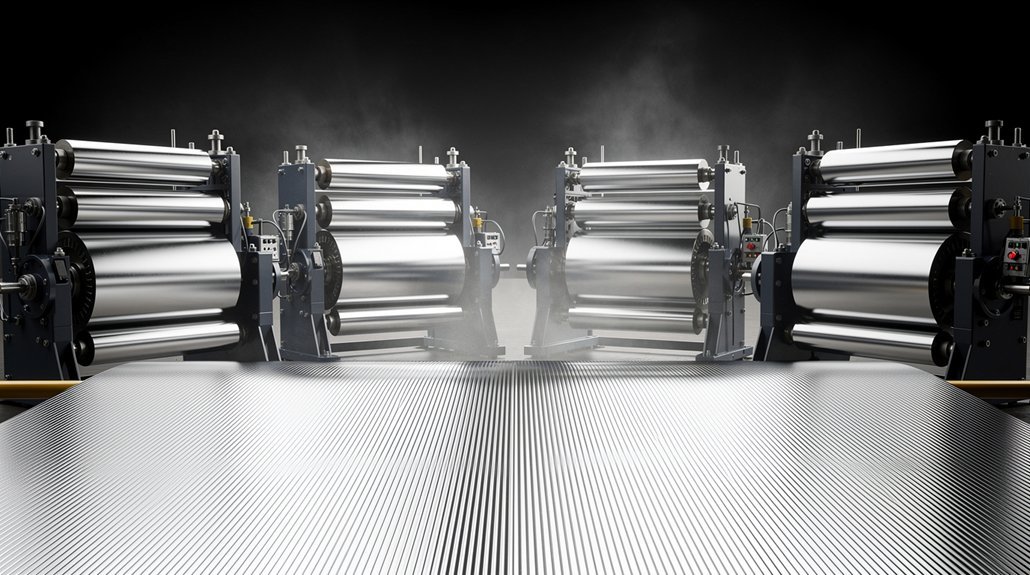
You’ve probably wondered which rolling mill can give you that perfect, consistent thinness from 0.1 mm up to 7 mm without sacrificing durability or ergonomics. The 2026 lineup offers four models that blend high‑precision CNC gears, rugged 45# steel rollers, and rust‑proof bodies, each with distinct gear ratios and width options. From a 3‑inch, 1:2 ratio for delicate work to a 5.11‑inch, 4:1 multi‑function unit for larger pieces, the choices cater to gold, silver, copper, and aluminum alike. Which one aligns best with your workflow and material needs?
| VEVOR 3″ Jewelry Rolling Mill 1:2 Gear Ratio Multi‑Function | Best Overall | Gear Ratio: 1:2 | Working Width: 3 in (76 mm) | Thickness Range: 0.1–7 mm | CHECK ON AMAZON | Read Our Analysis | |
| VEVOR 1.77″ Jewelry Rolling Mill 3‑in‑1 0‑6 mm Thickness | Budget-Friendly Pick | Gear Ratio: 1:2.4 | Working Width: 1.77 in (45 mm) | Thickness Range: 0–6 mm | CHECK ON AMAZON | Read Our Analysis | |
| Rolling Mill 5.11″ 4:1 Multi-Function Jewelry Tool RM02A | Heavy-Duty Pro | Gear Ratio: 4:1 | Working Width: 5.11 in (130 mm) | Thickness Range: 0.1–4.5 mm | CHECK ON AMAZON | Read Our Analysis | |
| Professional 3‑in‑1 Rolling Mill for Jewelry Making (65mm) | Compact Professional | Gear Ratio: 4:1 | Working Width: 65 mm (2.56 in) | Thickness Range: 0.0004 in (≈0.01 mm) to larger (micro‑adjustable) | CHECK ON AMAZON | Read Our Analysis |
More Details on Our Top Picks
VEVOR 3″ Jewelry Rolling Mill 1:2 Gear Ratio Multi‑Function
Looking for a rolling mill that lets you turn gold, silver, copper or aluminum into ultra‑thin sheets, square wire or half‑round shapes without hunting for extra tools? The VEVOR 3″ Jewelry Rolling Mill delivers exactly that. Its 1:2 gear ratio and CNC‑machined T‑bar let you dial thickness from 0.1 mm to 7 mm with pinpoint accuracy. High‑grade 45# steel rollers and a heat‑treated, rust‑resistant body keep performance steady under pressure. You’ll get a silver polishing cloth, silver rod, agate knife, and more—all ready to use out of the box. Whether you’re a pro or a DIY hobbyist, you can shape gold, K goldgold,925 silver, copper, aluminum, and other soft metals into bracelets, rings, and bangles without extra tools.
- Gear Ratio:1:2
- Working Width:3 in (76 mm)
- Thickness Range:0.1–7 mm
- Multi‑Function Shapes:Sheet, square wire, half‑round
- Roller Material:45# steel
- Target Users:Professional jewelers & DIY enthusiasts
- Additional Feature:Heat‑treated body
- Additional Feature:Rust‑resistant oil coating
- Additional Feature:Included polishing accessories
VEVOR 1.77″ Jewelry Rolling Mill 3‑in‑1 0‑6 mm Thickness
If you’re a jewelry maker who needs both precision and versatility, the VEVOR 1.77″ rolling mill is a top pick. Its 3‑in‑1 design lets you flatten metal into sheets, draw square wire, and form half‑round profiles—all with one machine. CNC‑machined gears and a T‑bar let you dial thickness from 0 to 6 mm, giving consistent, scratch‑free results. The 45# steel rollers stay hard and wear‑resistant, while a rust‑proof oil coating protects the iron plates. With a 45 mm working width, you can handle gold, K‑gold, 925 silver, copper, aluminum, and other malleable alloys for bracelets, rings, and bangles.
- Gear Ratio:1:2.4
- Working Width:1.77 in (45 mm)
- Thickness Range:0–6 mm
- Multi‑Function Shapes:Sheet, square wire, half‑round
- Roller Material:45# steel
- Target Users:Professional jewelers & DIY enthusiasts
- Additional Feature:Mirror‑finish rollers
- Additional Feature:Iron plates construction
- Additional Feature:Compact 45 mm width
Rolling Mill 5.11″ 4:1 Multi-Function Jewelry Tool RM02A
The Rolling Mill 5.11″ 4:1 Multi‑Function Jewelry Tool RM02A is the ideal choice for jewelers and metal‑craftspeople who need a compact, versatile machine that can quickly turn gold, silver, copper, or aluminum into thin sheets, wire, or semicircular shapes. You’ll appreciate its 4:1 gear ratio, which lets four handle turns produce one roller rotation, cutting fatigue and boosting efficiency. Adjustable thickness from 0.1 mm to 4.5 mm via a T‑shaped bar lets you fine‑tune results. Square trunking accepts sizes from 0.04 mm to 0.26 mm, while semicircular grooves cover 0.1 × 0.04 mm to 0.16 × 0.06 mm. Rollers swap easily, and a 1‑year warranty backs the build.
- Gear Ratio:4:1
- Working Width:5.11 in (130 mm)
- Thickness Range:0.1–4.5 mm
- Multi‑Function Shapes:Sheet, square wire, half‑round (with multiple groove sizes)
- Roller Material:45# steel
- Target Users:Jewelers & craftspeople
- Additional Feature:Interchangeable rollers
- Additional Feature:Multiple square trunking sizes
- Additional Feature:1‑year warranty
Professional 3‑in‑1 Rolling Mill for Jewelry Making (65mm)
Jewelry makers who need fast, precise metal shaping will love the 65 mm professional 3‑in‑1 rolling mill. Its 4:1 gear ratio lets you roll gold, silver, copper, or aluminum quickly, while the micro‑adjustable T‑bar delivers thicknesses as fine as 0.0004 in. You’ll get smooth sheets, round wires, and half‑round profiles from a single 65 mm roller, plus nine square and three semi‑circular grooves for texture work. The electroplated steel body, double‑sided gears, and pre‑drilled mounting holes ensure quiet, durable operation on any bench. Ergonomic handling, quick cleanup, and compact dimensions make it ideal for busy workshops.
- Gear Ratio:4:1
- Working Width:65 mm (2.56 in)
- Thickness Range:0.0004 in (≈0.01 mm) to larger (micro‑adjustable)
- Multi‑Function Shapes:Sheet, square wire, half‑round (9 square, 3 semi‑circular grooves)
- Roller Material:Electroplated steel (high‑strength)
- Target Users:Jewelers & craftsmen (bench‑mounted)
- Additional Feature:Electroplated steel housing
- Additional Feature:Pre‑drilled bench mounting holes
- Additional Feature:Micro‑adjustable thickness to 0.0004 in
Factors to Consider When Choosing Rolling Mills for Texturing and Thinning Metal
When you pick a rolling mill, check the gear ratio and torque to ensure it can handle the metal thickness you need. Look at the roller material and hardness, because they affect surface finish and durability. Finally, verify the thickness‑adjustment precision, tool‑width compatibility, and ergonomics to match your workflow.
Gear Ratio and Torque
How much effort you’ll need to thin or texture metal hinges on the gear ratio and torque of the rolling mill. A higher gear ratio, like 4:1, means fewer handle turns per roller revolution, so you’ll work faster and tire less during repetitive thinning. Lower ratios, close to 1:1, give you direct control, letting you dial in subtle thickness changes for delicate texturing. Variable ratios let you switch between speed and precision, keeping texture transfer smooth and sheet thickness consistent across passes. Torque works hand‑in‑hand with the ratio; sufficient torque prevents slipping when you tackle harder alloys such as gold or K‑gold. Choose a mill where the torque matches your material’s resistance, ensuring steady pressure without excessive force.
Roller Material and Hardness
The material and hardness of a rolling‑mill’s rollers are the foundation of wear resistance and precision when you’re texturing or thinning metal. You’ll find the best rollers made from tempered steel—45# steel is a common choice—because heat‑treatment gives them the strength to endure high loads without warping. Consistent hardness across the roller surface keeps pressure uniform, so the texture and thickness stay repeatable. Look for rust‑resistant coatings; they protect the rollers from corrosion and stop particles from contaminating your workpiece. When the rollers stay hard and stable, they won’t leave unwanted marks, and you’ll enjoy longer tool life with fewer replacements. Choosing the right material and hardness therefore directly impacts the quality and durability of every roll.
Thickness Adjustment Precision
Ever wondered how tightly you can control metal thickness on a rolling mill? You’ll find that CNC‑machined gears or a T‑bar mechanism set the stage for fine‑tuning, often within 0.1–7 mm or 0–6 mm depending on the model. A lower gear ratio, like 4:1, cuts the turns needed to shift rollers, giving you a smoother feel but potentially coarser micron control. Look for mills that boast micro‑adjustments down to 0.0004 inches, because that level of precision translates into uniform thinning and consistent texture transfer. Don’t overlook durability: rust‑proof coatings and rigid gear trains keep the setting stable through repeated changes, preserving accuracy over time.
Tool Width Compatibility
Choosing the right tool width is essential because it dictates how much material you can feed through the rollers and how evenly the reduction will occur. You’ll find common widths from 1.77″ (45 mm) up to 5.11″ (130 mm). A wider mill lets you process larger sheets in one pass, cutting time but demanding more bench space and a sturdier mount. Narrow widths excel at detailed texturing and small‑scale work, minimizing overhang and misalignment. Match the width to your groove pattern—square, semicircular, or custom textured grooves—to avoid unwanted distortion. Also verify that the chosen width pairs with the mill’s thickness range (e.g., 0.1–7 mm) so the rollers stay engaged without stalling or overworking the metal. This balance ensures consistent, high‑quality thinning and texturing.
Gear Ratio Ergonomics
A lower gear ratio—say 4:1—lets you turn the handle four times for each roller rotation, which cuts fatigue and gives you tighter control when texturing or thinning metal. You’ll notice that a 4:1 setup lets you apply steady pressure without tiring your wrist, especially during long runs. Higher ratios near 1:1 deliver finer thickness tweaks, but each pass demands more force, so you may feel strain after a while. Pair the gear with a micro‑adjustable T‑bar, and you’ll achieve consistent thinning while keeping hand motion smooth. Slower‑rotating gear systems also lower mechanical resistance, enhancing precision and easing strain. When judging ergonomics, weigh the gear ratio against how easily you can adjust roller spacing; smoother adjustments mean less repetitive‑motion fatigue.
Noise and Vibration Levels
A lower gear ratio like 4:1 not only eases hand fatigue but also cuts down on vibration, because fewer handle turns mean less abrupt torque spikes. You’ll notice that mills built with heavier frames and precision gears stay quieter, their mass absorbing acoustic energy. When rollers are hardened 45‑# steel with smooth finishes, friction drops, delivering steadier motion and reduced buzz. Double‑sided gears and reinforced housings act as built‑in dampers, quelling resonance during continuous thinning. Secure bench mounting and a solid, vibration‑free base prevent noise from traveling to the work surface, keeping your workspace calm. By prioritizing these design features, you’ll enjoy a smoother, quieter operation that lets you focus on perfecting texture without distraction.
Ease of Maintenance
Ever wondered how a rolling mill can stay reliable without constant tinkering? You’ll want a machine with rust‑resistant coating and a heat‑treated body, because those features curb corrosion and extend tool life. CNC‑machined gears give you precise, repeatable thickness adjustments, so you won’t waste time recalibrating manually. Look for rollers forged from hard, wear‑resistant steel—45# steel is a solid choice—so repeated thinning won’t deform the surfaces. Easy roller‑spacing adjustment, whether 0.1–7 mm or 0–6 mm, helps you avoid jams and misalignments that force disassembly. Finally, pick a model that ships with a full set of accessories and a ready‑to‑run setup; that cuts the need for extra tools and reduces overall upkeep.
Frequently Asked Questions
Can I Use These Rolling Mills for Non‑Jewelry Metal Projects?
Yes, you can use those rolling mills for non‑jewelry metal projects. They handle various alloys and thicknesses, so you’ll be able to texture and thin sheets for automotive, aerospace, or artistic applications.
What Safety Gear Is Required When Operating a Jewelry Rolling Mill?
You must wear safety glasses, a dust mask or respirator, hearing protection, and sturdy gloves; use a sturdy apron or shirt, and keep a fire‑extinguishing blanket nearby for sparks.
How Do I Maintain Consistent Thickness Across Multiple Passes?
Keep the mill calibrated, clean the rollers, and set the same pressure each pass. Use a thickness gauge between passes, adjust the gap minimally, and maintain consistent feed speed to avoid variations.
Are These Mills Compatible With Hardened Steel Rollers?
Ensure you check each model’s torque rating and feed speed limits, as they’re compatible with hardened steel rollers. Make sure the rollers are properly mounted and that the mill’s drive can handle the increased load.
What Is the Typical Lifespan of the Mill’s Motor Under Heavy Use?
You’ll find the motor typically lasts eight to twelve years under heavy use, assuming regular maintenance and proper cooling. Expect occasional bearing replacements, but the core motor should endure that full lifespan without major failures.