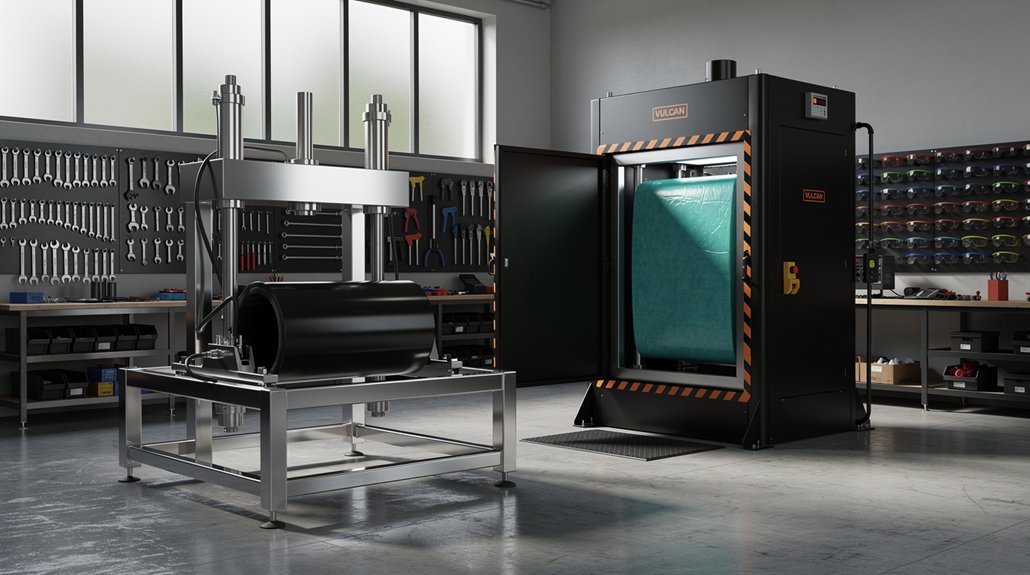
You’re looking for a vulcanizing press that delivers reliable capacity, tight temperature control, and solid safety without breaking the bank. In 2026 the market narrows to two models that hit those marks, each offering a robust cushion system, PLC‑driven recipes, and energy‑saving features. One leans on a hydraulic servo setup for precise pressure, while the other uses an all‑electric design for faster cycles. The details on how they differ in heat‑transfer options and diagnostics will help you decide which fits your shop’s workflow.
| Bosimodo 2X4 Aluminum Flower Press Pre-Press Mold | Professional Grade | Material: Solid 6061 aluminum alloy | External Size: 2 × 4 × 1.5 in (W × L × H) | Internal Size: 1.6 × 3.5 × 1 in (W × L × H) | CHECK ON AMAZON | Read Our Analysis | |
| Pre-Press Mold Aluminum Mold (Silver 2×4) | Budget-Friendly Pick | Material: High‑quality aluminum | External Size: 2 × 4 in with 1.5 in height | Internal Size: 1.64 × 3.5 in with 1 in height | CHECK ON AMAZON | Read Our Analysis |
More Details on Our Top Picks
Bosimodo 2X4 Aluminum Flower Press Pre-Press Mold
Looking for a durable, precision‑engineered pre‑press mold that won’t wear down after countless flower‑press cycles? You’ll appreciate the Bosimodo 2X4 Aluminum Flower Press Pre‑Press Mold. It’s forged from solid 6061 aluminum alloy, then anodized for extra strength and a silvery‑white finish that resists corrosion. The scientifically sized gap across three accessories ensures even pressure, while the 2 × 4 × 1.5 in external dimensions and 1.6 × 3.5 × 1 in internal cavity fit most flower‑press setups. Large precision machine tooling guarantees tight tolerances, and the manufacturer offers responsive support if any issues arise during use. This mold delivers consistent results and long‑term durability.
- Material:Solid 6061 aluminum alloy
- External Size:2 × 4 × 1.5 in (W × L × H)
- Internal Size:1.6 × 3.5 × 1 in (W × L × H)
- Surface Finish:Anodized (silvery white)
- Design Precision:Scientifically designed gap size in three accessories
- Ergonomics:Easy entry and exit
- Additional Feature:Anodized surface durability
- Additional Feature:Precision‑machined gap sizes
- Additional Feature:Dedicated customer support
Pre-Press Mold Aluminum Mold (Silver 2×4)
If you need a compact, high‑precision tool for shaping small rubber parts, the Pre‑Press Mold Aluminum Mold (Silver 2×4) fits the bill. Its high‑quality aluminum body gives you durability and strength while staying lightweight. The external 2 × 4 inch frame with a 1.5‑inch height houses an internal cavity of 1.64 × 3.5 inches and a 1‑inch depth, letting you craft intricate details without excess material waste. An ergonomic handle ensures a secure, comfortable grip, so you can apply pressure evenly and maintain consistent molding accuracy. This versatile mold works well with a range of elastomers, making it a reliable addition to any vulcanizing press setup.
- Material:High‑quality aluminum
- External Size:2 × 4 in with 1.5 in height
- Internal Size:1.64 × 3.5 in with 1 in height
- Surface Finish:Silver finish
- Design Precision:Precise molding for intricate shapes
- Ergonomics:Ergonomic handle for secure grip
- Additional Feature:Ergonomic grip handle
- Additional Feature:Versatile material shaping
- Additional Feature:High‑strength aluminum construction
Factors to Consider When Choosing Vulcanizing Presses for Rubber Mold Making
You should match the press capacity to the size and volume of your molds, because undersized machines will stall while oversized ones waste space and money. Consistent temperature uniformity is essential for defect‑free parts, so look for systems that can maintain tight thermal tolerances across the entire heating.. Choose a control interface that balances ease of use with programmable flexibility, and don’t forget to compare energy‑efficiency ratings and built‑in safety features like emergency stop and overload protection.
Press Capacity Requirements
One of the first things you’ll check is whether the press’s tonnage meets or exceeds the maximum cross‑sectional area of the rubber mold you plan to cure, since the required force—usually expressed in tons or kN—depends on the compound’s hardness, the mold’s geometry, and the opening‑to‑part size ratio. Next, calculate the force needed from workpiece thickness and base rubber density; thicker or denser sections demand higher tonnage to avoid flashing. Choose a press with a cushion and platen large enough to cover the entire mold face, ensuring uniform pressure and preventing edge voids. Verify that the heater power and platen temperature range can sustain the curing cycle for your mold dimensions, so the press delivers consistent force throughout the process.
Temperature Uniformity Importance
After confirming the press’s tonnage and cushion size, turn your attention to temperature uniformity. Uniform heat across the platen prevents hot spots that cause uneven hardness and dimensional shrinkage. Even a ±5 °C deviation can shift tensile strength and elongation between a part’s center and edges, so you’ll want a platen design that spreads heat evenly and maintains solid contact with the mold. Choose a system that transfers heat efficiently—whether steam, oil, or electric elements—to keep the entire surface at the set temperature. Real‑time control and consistent heat‑up rates reduce internal stress and avoid localized degradation. Finally, account for thermal inertia and soak time so the press holds steady‑state temperature throughout long cycles, delivering repeatable, high‑quality molds.
Control System Options
Precision matters when selecting a control system for a vulcanizing press, because the right interface directly influences temperature, time, and pressure consistency. You’ll find three tiers: manual, semi‑automatic, and fully automatic PLC‑based. Manual units rely on operator intuition, which can cause cycle drift. Semi‑automatic models add basic timers and pressure gauges, easing repeatability without full programmability. PLC systems deliver recipe storage, real‑time monitoring, and fault diagnostics, letting you lock in exact setpoints for thermal oil, electric heaters, or steam jackets via RTD or thermocouple feedback. Pressure is governed by servo or hydraulic actuators linked to load cells or transducers, ensuring precise cure profiles. An intuitive HMI and robust data logging give you alarm alerts, trend analysis, and traceability, all essential for consistent rubber mold quality.
Energy Efficiency Metrics
Energy efficiency starts with measurable metrics, so you can compare presses on hydraulic power draw (kW), electrical consumption at steady temperature, and the energy cost per molded part (kWh/part). Look at Specific Energy Consumption (SEC) in kWh/kg rubber; lower SEC means less energy per kilogram of vulcanized material. Assess Energy Intensity, expressed as kWh per million units, to gauge large‑scale impact. Shorter cycle times improve kWh/part, but only if heat transfer remains adequate and platen temperature (150‑180 °C) is reached quickly. High‑quality insulation cuts heat‑up and hold‑time energy. Finally, calculate the Duty Cycle efficiency—productive molding time divided by total cycle time—because a higher ratio directly reduces annual energy use and operating costs.
Safety Feature Considerations
What safety features should you prioritize when selecting a vulcanizing press? Look for integrated overload protection that stops the machine before pressure or temperature damages the press or the rubber mold. An emergency‑stop button paired with clear visual indicators lets you halt the cycle instantly if a fault or misalignment appears. Guarding and interlocks around moving parts prevent pinch points and accidental contact, keeping operators safe. Real‑time pressure and temperature monitoring with audible and visual alarms ensures the cure stays within the specified limits for the mold material. Finally, choose a press that supports lockout/tagout procedures and comes with comprehensive safety documentation, so maintenance and servicing remain controlled and compliant.
Frequently Asked Questions
How Long Does a Typical Vulcanizing Cycle Take for Rubber Molds?
You’ll typically run a vulcanizing cycle for 15‑30 minutes, depending on mold size, rubber compound, and temperature. Adjust time and heat to achieve full cure without overheating or damaging the mold.
What Safety Features Are Essential on a Vulcanizing Press?
You need emergency stop buttons, thermal overload protection, pressure relief valves, insulated controls, and interlocked doors. Also install temperature sensors, fire‑suppression kits, and clear signage to prevent accidents.
Can the Press Temperature Be Programmed for Multiple Material Types?
Yes, you can program the press temperature for multiple material types. Modern controllers let you store presets, switch profiles on the fly, and adjust ramps, ensuring each rubber cures at its ideal temperature.
What Maintenance Schedule Is Recommended for Aluminum Press Frames?
You should inspect and lubricate the frame weekly, tighten bolts monthly, clean dust daily, and replace worn guides every six months. Perform a full alignment check and pressure test at least once a year.
Are There Energy‑Saving Modes Available on Modern Vulcanizing Presses?
Yes, modern vulcanizing presses include energy‑saving modes; you can set low‑heat standby, programmable timers, and variable‑frequency drives to cut power when idle, reducing consumption without sacrificing performance.