
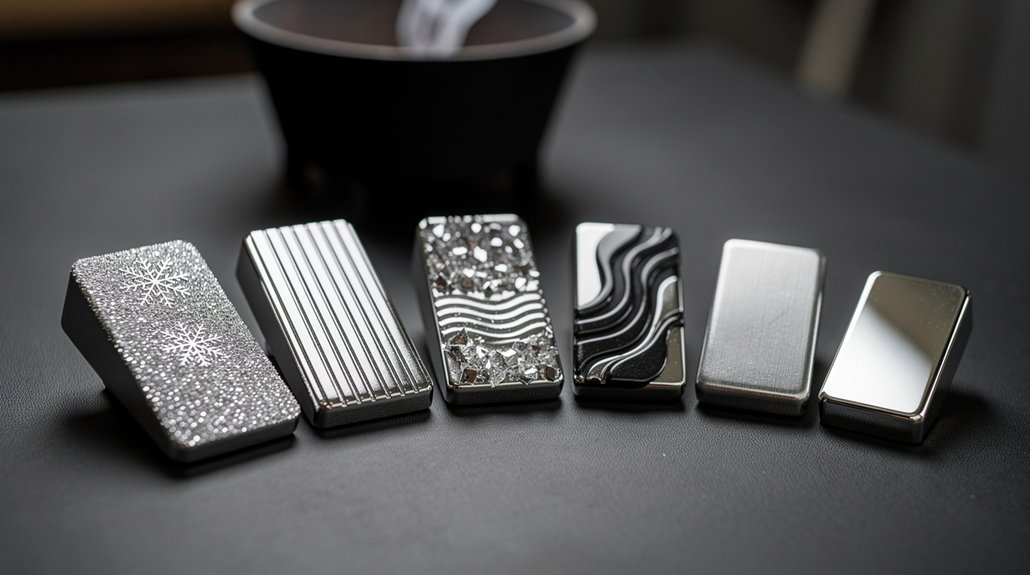
You’re about to see how seven new silver grains can hit the 92.5 % sterling mark while cutting porosity and boosting gloss. They’re tuned for a tight 900‑960 °C liquidus window, work with high‑purity silica sand and borax flux, and pair with reusable graphite crucibles and master patches. The result? smoother pours, fewer sand holes, and brighter, longer‑lasting jewelry. The details on each grain and why they matter are next.
| Master Alloy 925 Sterling Silver Patch (100g) | 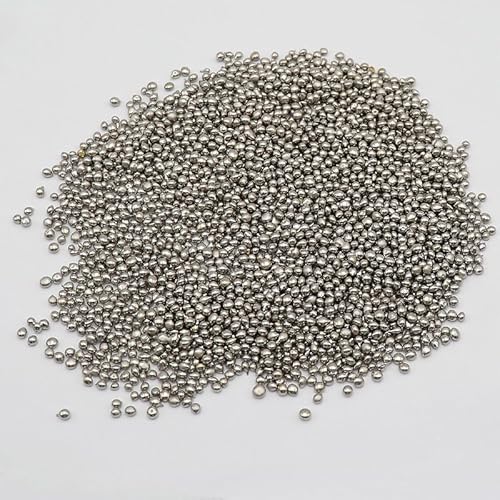 | Professional Grade | Primary Use: Silver alloy additive | Material Type: Master alloy (silver‑based) | Metal Compatibility: Sterling silver (925) | CHECK ON AMAZON | Read Our Analysis |
| MMasters Melting Casting Kit with Graphite Crucible and Molds | 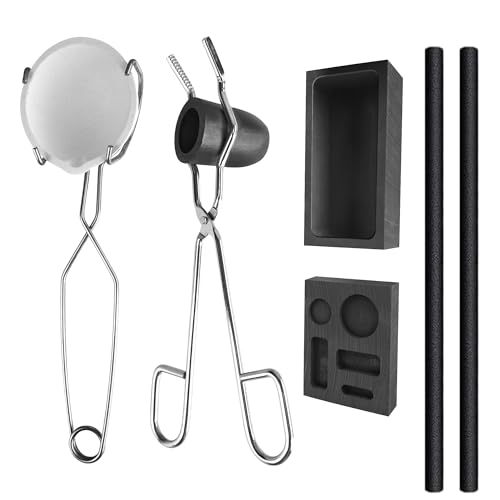 | Complete Kit | Primary Use: Melting & casting kit | Material Type: Graphite components | Metal Compatibility: Gold, silver, copper, aluminum | CHECK ON AMAZON | Read Our Analysis |
| Natural Casting Sand Ultra-Fine 400Mesh Molding Clay (6lb) |  | Ultra-Fine Detail | Primary Use: Casting sand | Material Type: Natural silica sand | Metal Compatibility: Gold, silver, copper, brass, zinc, aluminum, bronze | CHECK ON AMAZON | Read Our Analysis |
| Borax Flux 1/2 Pound Melting Gold Silver Crucible Glaze Jewelry Casting 8oz |  | Clean Melt | Primary Use: Flux for melting | Material Type: Borax flux paste | Metal Compatibility: Gold, silver, precious metals | CHECK ON AMAZON | Read Our Analysis |
| Amyhill 1lb Copper Alloy for Gold Jewelry Casting | 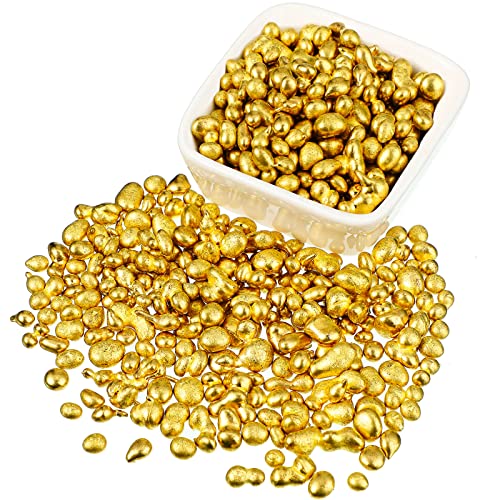 | Hobbyist Friendly | Primary Use: Copper alloy for casting | Material Type: Copper‑based alloy | Metal Compatibility: Gold (as alloy component) | CHECK ON AMAZON | Read Our Analysis |
| Nelyrho 5‑in‑1 Graphite Casting Ingot Mold (1‑Piece) |  | Versatile Mold | Primary Use: Graphite ingot mold | Material Type: High‑purity graphite | Metal Compatibility: Gold, silver, copper, brass, zinc, aluminum | CHECK ON AMAZON | Read Our Analysis |
| Casting Pewter Alloy (98% Tin 15oz) Low‑Melt Metal for Jewelry & Sculpture |  | Low-Melt Choice | Primary Use: Pewter casting alloy | Material Type: Tin‑based pewter | Metal Compatibility: Tin, bismuth, copper (pewter) | CHECK ON AMAZON | Read Our Analysis |
More Details on Our Top Picks
Master Alloy 925 Sterling Silver Patch (100g)
If you’re a professional jeweler looking to keep your 925 pieces bright and durable, the Master Alloy 925 Sterling Silver Patch (100 g) is the perfect additive. You’ll blend this anti‑oxidation alloy with your base metal to hit exactly 92.5% silver, preventing blackening and boosting gloss. The patch improves wear resistance, giving a smoother casting surface that minimizes sand holes and hard points. It’s designed for 925 sterling silver casting and repair, and you can order it in 100 g, 200 g, or 500 g packs. Use it whenever you need consistent composition and lasting shine in your jewelry pieces.
- Primary Use:Silver alloy additive
- Material Type:Master alloy (silver‑based)
- Metal Compatibility:Sterling silver (925)
- Form/Packaging:Powder (100 g/200 g/500 g)
- Temperature Tolerance:Suitable up to melting point of silver (~960 °C)
- Reusability:Consumable additive (single use)
- Additional Feature:Anti‑oxidation alloy
- Additional Feature:Improves gloss & wear resistance
- Additional Feature:Reduces sand holes
MMasters Melting Casting Kit with Graphite Crucible and Molds
Looking for a reliable, all‑in‑one solution to melt and cast precious metals at home? The MMasters Melting Casting Kit gives you a high‑density graphite crucible, a quartz crucible, two graphite sticks, tongs, and both a single‑use ingot mold and a versatile 5‑in‑1 mold. Graphite’s superior thermal conductivity heats quickly and cools fast, shortening casting cycles and boosting efficiency. The crucible resists cracking and deformation, lasting through countless projects, from jewelry making to lab testing. You’ll also get dedicated Amazon‑based customer support for pre‑sale questions and post‑sale assistance, ensuring you stay on track.
- Primary Use:Melting & casting kit
- Material Type:Graphite components
- Metal Compatibility:Gold, silver, copper, aluminum
- Form/Packaging:Kit (crucible, molds, sticks)
- Temperature Tolerance:Up to 2000 °C (graphite)
- Reusability:Reusable crucible and molds
- Additional Feature:High‑thermal‑conductivity graphite
- Additional Feature:Complete accessory set
- Additional Feature:Dedicated Amazon support
Natural Casting Sand Ultra-Fine 400Mesh Molding Clay (6lb)
The Ultra‑Fine 400‑Mesh BoldWay Casting Sand is the go‑to choice for jewelers and metalworkers who demand razor‑sharp detail in every silver piece. Its 95% SiO₂ natural composition gives you fire‑resistant, durable molds without added chemicals, so you avoid toxic fumes. The 400‑mesh grain captures intricate patterns, delivering smooth finishes and minimal defects. You can cast gold, silver, copper, brass, aluminum, bronze, or zinc with consistent results. The sand stays pliable for sculpting, then air‑dries after plasticization, and you can reuse it for multiple pours. BoldWay’s rigorous inspection guarantees professional‑grade performance for both hobbyists and experts.
- Primary Use:Casting sand
- Material Type:Natural silica sand
- Metal Compatibility:Gold, silver, copper, brass, zinc, aluminum, bronze
- Form/Packaging:Loose sand (6 lb bag)
- Temperature Tolerance:High‑temperature fire‑resistant sand
- Reusability:Reusable sand (multiple castings)
- Additional Feature:95%+ natural SiO₂
- Additional Feature:No toxic gas emissions
- Additional Feature:Reusable for multiple casts
Borax Flux 1/2 Pound Melting Gold Silver Crucible Glaze Jewelry Casting 8oz
Who needs a reliable, all‑purpose flux for gold and silver projects? You’ll find the ½‑pound Borax Flux perfect for jewelry making, metal casting, assaying, and other precision work. It dissolves oxides and impurities, keeping gold, silver, and other precious metals clean for a high‑quality pour. The easy‑mix paste forms a smooth slurry that you can apply precisely, and when mixed with water it becomes an essential soldering aid. It also creates a non‑stick glaze on crucibles, protecting ceramics and ensuring clean metal recovery. Optimized for gold, silver, and sterling, it delivers consistent results in refining and assaying.
- Primary Use:Flux for melting
- Material Type:Borax flux paste
- Metal Compatibility:Gold, silver, precious metals
- Form/Packaging:Powder (8 oz)
- Temperature Tolerance:Effective up to gold/silver melting ranges
- Reusability:Consumable flux (single use)
- Additional Feature:Easy‑mix paste formula
- Additional Feature:Non‑stick crucible glaze
- Additional Feature:Optimized for gold & silver
Amyhill 1lb Copper Alloy for Gold Jewelry Casting
If you’re a hobbyist or budding jeweler who wants a reliable copper alloy that behaves like gold in lost‑wax casting, the Amyhill 1 lb Copper Alloy is a solid pick. The sealed 450‑gram bag prevents oxidation, and the alloy’s trace elements keep it serviceable and resistant to corrosion. It works with open, centrifugal, vacuum, and closed‑system casts, delivering consistent flow and detail. You’ll find it easy to carve, imprint, and engrave, making rings, pendants, or enamel‑decorated beads without fading. Ideal for learners, it supports DIY projects and broader jewelry production while staying affordable and dependable.
- Primary Use:Copper alloy for casting
- Material Type:Copper‑based alloy
- Metal Compatibility:Gold (as alloy component)
- Form/Packaging:Granules (1 lb bag)
- Temperature Tolerance:Suitable for gold casting (~1064 °C)
- Reusability:Consumable alloy (single use)
- Additional Feature:BPA‑free sealed packaging
- Additional Feature:Ideal for learners & hobbyists
- Additional Feature:Suitable for engraving & imprinting
Nelyrho 5‑in‑1 Graphite Casting Ingot Mold (1‑Piece)
Looking for a compact, high‑performance mold that lets you melt and shape silver, brass, zinc, or aluminum in a single step? The Nelyrho 5‑in‑1 Graphite Casting Ingot Mold fits that bill. At 2.8 × 2.3 × 0.5 inches, its three rectangular slots and two round holes let you produce multiple bars or coins simultaneously. Made from high‑purity graphite, it endures up to 2000 °C, cools fast, and conducts heat efficiently, cutting casting time and energy use. Its smooth surface resists sticking, minimizing waste and cleanup. Verify size before buying, handle with care at high temps, and you’ll enjoy durable, versatile casting for gold, silver, copper, aluminum, and more.
- Primary Use:Graphite ingot mold
- Material Type:High‑purity graphite
- Metal Compatibility:Gold, silver, copper, brass, zinc, aluminum
- Form/Packaging:Single mold piece
- Temperature Tolerance:Up to 2000 °C
- Reusability:Reusable mold (multiple uses)
- Additional Feature:3 rectangular + 2 round slots
- Additional Feature:Up to 2000 °C tolerance
- Additional Feature:Fast cooling, energy‑saving
Casting Pewter Alloy (98% Tin 15oz) Low‑Melt Metal for Jewelry & Sculpture
Professional jewelers and sculptors will appreciate the 15‑oz low‑melt pewter alloy because its 98 % tin composition melts at just 338‑446 °F, letting you pour intricate pieces without the hassle of high‑heat equipment. This high‑purity blend—98 % tin, 1.5 % bismuth, 0.5 % copper—delivers smooth flow and a bright, silvery finish that polishes to heirloom quality. You can choose hemispheres or ingots, fitting anything from tiny rings to larger sculptures. The alloy works with standard torches, crucibles, and molds, and it’s batch‑tested for consistency. Expect reliable performance, easy cleanup, and a satisfaction guarantee that backs every artistic project.
- Primary Use:Pewter casting alloy
- Material Type:Tin‑based pewter
- Metal Compatibility:Tin, bismuth, copper (pewter)
- Form/Packaging:Ingot or hemisphere (15 oz)
- Temperature Tolerance:Low melt (170‑230 °C)
- Reusability:Consumable alloy (single use)
- Additional Feature:Low melting point (170‑230 °C)
- Additional Feature:Hemisphere or ingot forms
- Additional Feature:Silvery high‑luster finish
Factors to Consider When Choosing Casting Grain Silver for Melting and Casting
When you pick casting grain silver, start by checking its purity level to match your project’s standards. Consistent grain size and good oxidation resistance keep the melt stable, while the right melting temperature range and flowability ensure smooth casting. These factors together determine how reliably your piece will turn out.
Purity Level Requirements
What purity level do you really need for your silver casting grain? If you’re aiming for classic jewelry, 92.5 % silver (sterling) is the baseline; it gives you the right balance of strength, color, and tarnish resistance. Fine silver, at 99.9 % Ag, melts at a lower temperature and yields a smoother surface, but it can be too soft for structural parts. Anything below 92.5 % introduces excess copper, zinc, or lead, which boosts oxidation, dross, and a dull finish. When you blend master alloys or patches, measure carefully to hit the 92.5 % target without overshooting. In short, match the purity to your piece’s functional needs and desired aesthetics, and keep impurity levels low to avoid casting defects.
Grain Size Consistency
Why does grain size matter? It dictates how evenly your silver melts and flows. When the grains are uniform, you get a predictable melt pool, fewer sand holes, and no hard spots. Smaller, consistent grains—like a 400‑mesh ultra‑fine grade—give you a smoother surface and let intricate jewelry details reproduce accurately. If the size varies, some particles fuse early while others lag, creating porosity and erratic flow. Consistency also stabilizes alloying reactions, keeping the melt chemistry steady throughout the pour. Choose a supplier that certifies tight grain‑size tolerances, and you’ll see fewer defects, cleaner casts, and reliable results every time you melt and pour.
Oxidation Resistance Properties
Ever wondered how oxidation can ruin a flawless cast? You’ll notice that master alloys or patches raising the silver content to 92.5 % dramatically curb surface darkening during heating. Those anti‑oxidation additives form a stable surface film, slashing oxide formation on molten silver. When you choose a 92.5 % alloy with master‑alloy patches, you’ll see a brighter gloss and better wear resistance because the oxide‑growth rate drops. This protective chemistry also prevents sand holes and hard spots, giving you a cleaner, more repeatable solidification. Aim for a balanced silver percentage and oxidation‑inhibiting additives to keep the final piece bright and avoid post‑casting blackening. With these factors in mind, you’ll achieve consistent, high‑quality casts.
Melting Temperature Range
Oxidation resistance sets the stage, but the temperature you actually melt the grains at determines whether that protection holds up. You’ll want to keep the furnace between 900 °C and 960 °C (1650 °F–1760 °F) for standard 92.5 % sterling silver. Staying in this liquidus window lets master‑alloy patches dissolve evenly, preserving the target fineness and minimizing oxide formation. If you dip below 900 °C, the metal may not fully liquefy, leading to porosity and weak joints. Exceeding 960 °C accelerates oxidation and can cause excessive surface scum, which later appears as blemishes. Fine‑grained, high‑purity grains melt uniformly within this range, filling intricate molds without voids. Precise temperature control is therefore essential for a clean, solid cast.
Flowability During Casting
How well your molten silver flows into a mold can make or break a cast. You’ll want a grain that stays fluid long enough to fill every cavity before solidifying, which cuts porosity and sand holes. Look for additives or master alloys that lower viscosity at melting temperature; they improve flow without altering the final composition. Consistent fluidity across a temperature range prevents cold shuts and misruns, so choose a grain that maintains its behavior from melt to pour. Particle size matters—smaller, uniformly sized particles melt faster and create a smoother melt. Surface condition is equally critical; well‑mixed, clean grains reduce friction and let the alloy surge into intricate details quickly and evenly. This combination delivers a clean, defect‑free casting.
Compatibility With Alloys
Good flow is only part of the equation; the grain also has to blend seamlessly with the alloy you’re targeting. When you pick casting grain silver, verify that its composition lets you hit the exact alloy percentage—like 92.5 % silver for sterling—without overshooting. Master alloys or patches should alloy uniformly with the base, so look for grains that won’t cause segregation or voids. Trace elements matter too; choose grains that preserve oxidation resistance and gloss when mixed with copper or zinc. Match melting points closely; a grain that melts too early or too late will leave unmixed pockets and weaken the cast. Finally, confirm the grain is free of contaminants that could alter color, hardness, or introduce unwanted inclusions.
Surface Finish Quality
Where do you start when you want a flawless surface finish? First, pick a master alloy that boosts oxidation resistance; that cuts blackening during melting and keeps the surface bright. Next, examine the silicon‑copper balance—more silicon adds gloss, while copper smooths edges, so a well‑tuned mix yields a glossy, even cast. Anti‑oxidation properties in the grains further suppress flux‑related inclusions, preventing tiny pits and micro‑scratches. Higher silver content also helps, delivering finer grain structures that reduce sand holes and hot spots. Finally, pair the right alloy with proper fluxing and cleaning; a clean melt eliminates surface imperfections and lets you achieve the polish you expect. By watching these factors, you’ll consistently produce high‑quality, mirror‑like finishes.
Reusability And Waste Reduction
A flawless surface finish starts with the right alloy, and that same alloy choice also determines how efficiently you can reuse your sand and molds. When you pick a casting grain silver that pairs with high‑SiO2 sand free of additives, the sand retains its shape and permeability after each pour, letting you recycle it many times and cut disposal costs. Choose graphite‑based molds and crucibles; their thermal resilience means you can heat‑treat them repeatedly without cracking. Opt for master alloys that let you adjust silver content on the fly—any excess can be reclaimed and melted into the next batch, shrinking precious‑metal waste. Finally, use corrosion‑resistant tools and alloys that hold surface integrity, so you avoid rework and scrap, keeping both material and environmental footprints low.
Frequently Asked Questions
How Does Grain Size Affect Melt Flow Rate?
You’ll notice that finer grains melt faster and flow more smoothly because they have larger surface area, reducing resistance, while coarser grains melt slower, creating a thicker, less fluid melt.
Can I Reuse Leftover Casting Sand for Future Projects?
Yes, you can reuse leftover casting sand; just sift out debris, dry it thoroughly, and add fresh binder if needed. Properly storing it in a sealed container preserves its quality for future casts.
What Safety Gear Is Essential for Handling Borax Flux?
You need heat‑resistant gloves, a face shield, safety goggles, a respirator or mask, flame‑retardant apron, and closed‑toe shoes; these protect you from burns, splatter, and inhaling borax fumes.
Do Copper Alloys Alter the Color of Silver Casts?
Yes, copper alloys will tint your silver casts; they usually add a reddish or pinkish hue, especially at higher copper percentages, so you’ll see a noticeable color shift.
Is a Graphite Crucible Reusable After Multiple Melts?
Yes, you can reuse a graphite crucible after several melts, but inspect it for cracks, carbon loss, or surface wear each time; clean it thoroughly, and avoid overheating to prolong its lifespan.

Leave a Reply