
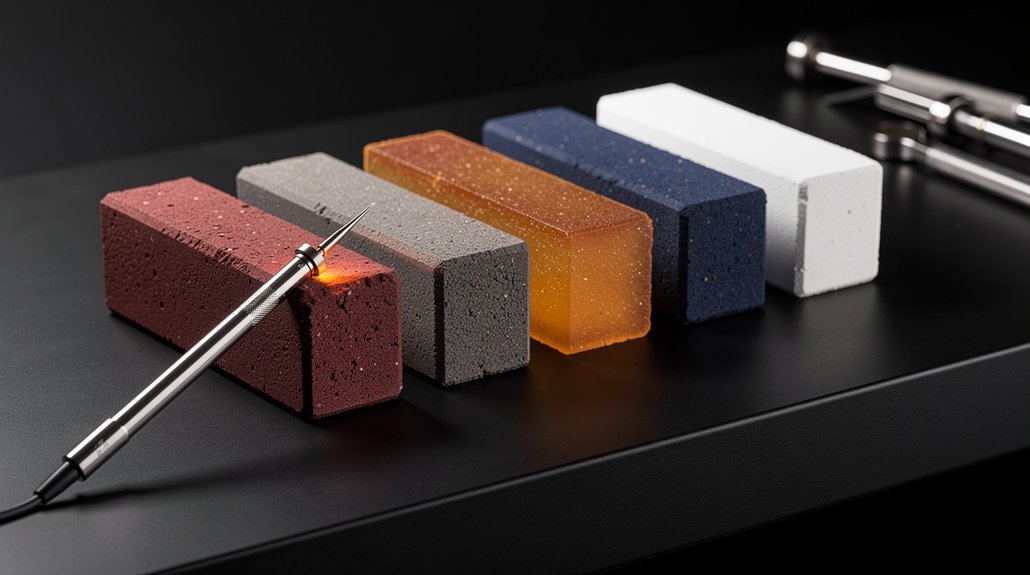
You’re looking for a fire brick that won’t melt under a jeweler’s torch, stays cool enough to handle, and keeps your solder clean. The 2026 market offers a mix of insulating bricks, ceramic boards, and honeycomb combos that promise those exact traits. Each option balances heat tolerance, durability, and ease of use, but the right one depends on how you prioritize space, cleanup, and temperature control. Let’s see which five actually stand out.
| Lynn Manufacturing Insulating Fire Brick 1.25″x4.5″x9″ Single Pack |  | Best Overall | Material: Alumina‑silica refractory ceramic clay | Temperature Rating: 2300 °F (≈1260 °C) | Dimensions (L × W × H): 9 × 4.5 × 1.25 in | CHECK ON AMAZON | Read Our Analysis |
| Ceramic Soldering Board Soldering Mat for Jewelry Making Firebrick-1 Pack |  | Budget-Friendly Pick | Material: Cordierite ceramic | Temperature Rating: up to 2100 °F (≈1200 °C) | Dimensions (L × W × H): 5.25 × 3.625 × 0.5 in | CHECK ON AMAZON | Read Our Analysis |
| 2 Ceramic Soldering Boards Soldering Mat for Jewelry Making Firebrick |  | Value Pack | Material: Cordierite ceramic | Temperature Rating: up to 2100 °F (≈1200 °C) | Dimensions (L × W × H): 5.25 × 3.625 × 0.5 in (each) | CHECK ON AMAZON | Read Our Analysis |
| Nuanchu 5‑Piece Jewelry Soldering Kit with Tweezers |  | Pro Kit | Material: Ceramic (white) | Temperature Rating: up to 2100 °F (≈1200 °C) | Dimensions (L × W × H): 5.71 × 4.33 × 0.55 in (block) | CHECK ON AMAZON | Read Our Analysis |
| Zonon Ceramic Honeycomb Soldering Board (2 Pieces) |  | Specialty Choice | Material: Ceramic honeycomb & quartz | Temperature Rating: honeycomb up to 1450 °C, quartz up to 1700 °C | Dimensions (L × W × H): honeycomb 5.28 × 3.66 × 0.51 in; quartz 5.63 × 4.33 × 0.71 in | CHECK ON AMAZON | Read Our Analysis |
More Details on Our Top Picks
Lynn Manufacturing Insulating Fire Brick 1.25″x4.5″x9″ Single Pack
The Lynn Manufacturing insulating fire brick—1.25″ × 4.5″ × 9″, 2300 °F rated, and weighing just 1.1 lb—stands out as the go-to choice for anyone setting up a jewelry soldering station in 2026. You’ll value its low thermal conductivity, which keeps heat where you need it while staying cool to the touch. Its lightweight, 1.1-lb mass lets you reposition it without strain, and the 9 × 4.5 × 1.25-inch size fits most workbenches. You can cut or carve it with standard wood tools, shaping a custom soldering block in minutes. The brick arrives well-wrapped, protecting it for immediate use in kilns, forges, or casting rigs.
- Material:Alumina‑silica refractory ceramic clay
- Temperature Rating:2300 °F (≈1260 °C)
- Dimensions (L × W × H):9 × 4.5 × 1.25 in
- Weight:1.1 lb
- Packaging Protection:Bubble‑wrap packaging
- Intended Use (Jewelry Soldering):Kilns, forges, furnaces, jewelry soldering, casting, knife making
- Additional Feature:Ultra‑lightweight (1.1 lb)
- Additional Feature:Wood‑tool shaping friendly
- Additional Feature:Bubble‑wrap protective packaging
Ceramic Soldering Board Soldering Mat for Jewelry Making Firebrick-1 Pack
If you’re a jeweler who needs a reliable, heat‑resistant surface for soldering, the Ceramic Soldering Board Soldering Mat for Jewelry Making Firebrick — 1 Pack — is the perfect choice. Made from cordierite ceramic, it resists acid, flame, and non‑flammable conditions while tolerating up to 2000 °F (1200 °C). Its flat, hole‑free 5‑¼ × 3‑⅝ × ½‑inch surface reflects heat, keeping your desktop safe and your pieces stable under a honeycomb brick. Lightweight yet durable, it doubles as a firebrick for gold, silver, and casting work, delivering organized, efficient soldering without compromising safety.
- Material:Cordierite ceramic
- Temperature Rating:up to 2100 °F (≈1200 °C)
- Dimensions (L × W × H):5.25 × 3.625 × 0.5 in
- Weight:Lightweight (unspecified)
- Packaging Protection:Not specified (standard)
- Intended Use (Jewelry Soldering):Jewelry soldering, melting gold, firebrick substitute
- Additional Feature:Flat, hole‑free surface
- Additional Feature:Reflective heat safety
- Additional Feature:Compact desktop size
2 Ceramic Soldering Boards Soldering Mat for Jewelry Making Firebrick
Looking for a heat‑resistant, lightweight work surface that protects your desk while handling 2000 °F soldering? These two ceramic soldering boards measure 5‑1/4 × 3‑5/8 × ½ inch and are made from cordierite ceramic, which is acid‑resistant, flame‑resistant, and non‑flammable. They tolerate up to 2000 °F (1200 °C) and reflect heat, keeping your workspace cool. The flat, hole‑free surface stays under a honeycomb firebrick, securing pieces and preventing spills. You can solder gold or silver, melt casting gold, or weld jewelry confidently, knowing the mat won’t crack, warp, or ignite. It’s an efficient, safe, and portable firebrick solution.
- Material:Cordierite ceramic
- Temperature Rating:up to 2100 °F (≈1200 °C)
- Dimensions (L × W × H):5.25 × 3.625 × 0.5 in (each)
- Weight:Lightweight (unspecified)
- Packaging Protection:Not specified (standard)
- Intended Use (Jewelry Soldering):Jewelry soldering, gold/silver melting, firebrick substitute
- Additional Feature:Dual‑piece convenience set
- Additional Feature:Consistent heat reflection
- Additional Feature:Easy desk protection
Nuanchu 5‑Piece Jewelry Soldering Kit with Tweezers
Seeking a reliable, space‑saving fire brick for your 2026 jewelry soldering workstation? The Nuanchu 5‑Piece Kit gives you two compact ceramic boards and three reverse‑lock tweezers, all in one lightweight package. The flat, white ceramic plates (5.71 × 4.33 × 0.55 in) resist up to 2100°F, reflect heat, and feature a tiny circular slot for melting tiny ornaments. The metal tweezers with wooden handles stay cool and lock securely, letting you pick up delicate parts without fumbling. This all‑inclusive set works for hobby projects and commercial work, boosting efficiency while keeping your bench tidy.
- Material:Ceramic (white)
- Temperature Rating:up to 2100 °F (≈1200 °C)
- Dimensions (L × W × H):5.71 × 4.33 × 0.55 in (block)
- Weight:Lightweight (unspecified)
- Packaging Protection:Not specified (standard)
- Intended Use (Jewelry Soldering):Jewelry welding/soldering, crafting, firebrick substitute
- Additional Feature:Includes reverse‑lock tweezers
- Additional Feature:Wooden‑handled heat‑resistant tweezers
- Additional Feature:Small circular melt slot
Zonon Ceramic Honeycomb Soldering Board (2 Pieces)
Jewelry makers who need a reliable, high‑temperature work surface will appreciate the Zonon Ceramic Honeycomb Soldering Board’s dual‑piece design, which pairs a 5.28 × 3.66 × 0.51‑inch ceramic honeycomb block with a 5.63 × 4.33 × 0.71‑inch quartz board that catches stray solder and protects your tabletop. The ceramic block ends up to 1450 °C, while the quartz board tolerates 1700 °C, giving you a durable, heat‑resistant platform for repairs and metal soldering. Its honeycomb texture traps excess solder, and the quartz sheet underneath shields your workbench. Expect minor surface fissures—they’re normal and don’t impact performance. Handle both pieces gently when repositioning. Verify dimensions before buying to ensure a perfect fit for your handmade‑jewelry setup.
- Material:Ceramic honeycomb & quartz
- Temperature Rating:honeycomb up to 1450 °C, quartz up to 1700 °C
- Dimensions (L × W × H):honeycomb 5.28 × 3.66 × 0.51 in; quartz 5.63 × 4.33 × 0.71 in
- Weight:Lightweight (unspecified)
- Packaging Protection:Not specified (standard)
- Intended Use (Jewelry Soldering):Jewelry making, repair, metal soldering, firebrick substitute
- Additional Feature:Honeycomb ceramic design
- Additional Feature:Quartz catch‑board underneath
- Additional Feature:High‑temperature ceramic (1450 °C)
Factors to Consider When Choosing Fire Bricks for Jewelry Soldering Setups
You should compare each brick’s thermal conductivity rating to guarantee it heats evenly for delicate solder joints. Consider the weight and portability so you can move the brick without hassle, and check the dimensions and compatibility with your existing workbench. Finally, look at the material composition benefits and heat‑resistance limits to match the temperatures you’ll be using.
Thermal Conductivity Rating
Why does thermal conductivity matter when you pick a fire brick for soldering? A lower conductivity means less heat loss, so you keep the soldering area hotter while using less energy. Look for bricks rated around 2300 °F; they tolerate high temperatures and maintain consistent heat throughout your workflow. Cordierite‑based boards reflect heat and stay stable up to 2000–2100 °F, giving you controlled delivery without overheating. When you compare options, check both the maximum service temperature and the material’s intrinsic reflectivity, because these dictate how quickly the surface heats and how slowly it dissipates. Lighter bricks with good insulation also reduce heat flux to the surrounding workspace, improving safety and efficiency without sacrificing performance.
Weight and Portability
A brick that keeps heat in well can also make your workstation more manageable, because lighter bricks reduce bench load and let you reposition the soldering area quickly. When you choose fire bricks, prioritize weight without sacrificing thermal mass. Ceramic and alumina‑silicate bricks usually sit at 1–2 pounds each, which keeps the bench light yet still stable enough to hold heat. If you often move your setup or travel to client sites, a single‑piece brick is ideal; a multi‑pack adds up fast, so weigh the total load before loading your bag. Remember, lighter bricks heat up faster but may lose heat sooner, so balance portability with the need for a steady soldering zone. This trade‑off ensures you stay efficient without compromising performance.
Dimensions and Compatibility
So, which brick dimensions will actually fit your soldering station without crowding the workspace? Choose a size that matches your bench layout—common options are 9 × 4.5 × 1.25 in blocks or 5¼ × 3⅝ × ½ in boards. Measure the footprint of your kiln, forge, or soldering rig and verify the brick’s length and width sit comfortably within that area, leaving at least an inch of clearance on each side for airflow. Check the height clearance so the brick doesn’t bump into nearby tools or the work‑light. The surface must be flat and hole‑free to avoid the workpiece tipping. Finally, confirm the thickness provides enough thermal mass to refocus heat evenly while staying within the equipment’s temperature limits. This ensures a stable, safe soldering platform.
Material Composition Benefits
Once you’ve confirmed the brick fits your bench, the material itself determines how well it will perform. Cordierite ceramic gives you strong thermal‑shock resistance, so sudden temperature changes won’t crack the block, and its light weight makes handling easier. Its reflective surface redirects heat away from delicate workpieces, protecting them while keeping the solder zone hot. Alumina‑silica refractories excel at insulating; their low thermal conductivity traps heat, reducing energy loss and keeping your soldering area consistently hot. Both materials are acid‑ and flame‑resistant and non‑flammable, ensuring long‑term durability under repeated heating. Choosing a honeycomb board or solid brick combines structural support with efficient heat management, delivering precise, repeatable soldering results.
Heat Resistance Limits
Wondering how hot your fire brick can get before it fails? You’ll want a brick rated at least 2100 °F (1200 °C) for most gold and silver soldering, because that’s the typical maximum continuous service temperature. Alumina‑silica refractory ceramics and cordierite offer that tolerance while staying light enough to handle easily. Higher ratings give you a safety margin, reducing thermal‑shock risk during repeated heating cycles. When you choose a brick that exceeds the temperature of your torch or furnace, you avoid cracking and prolong the brick’s life. Check the manufacturer’s spec sheet for the exact Fahrenheit and Celsius limits, and match those to the peak heat of your soldering workflow. This ensures reliable performance and prevents costly brick failure.
Surface Finish Quality
What makes a fire brick truly suitable for jewelry soldering is the quality of its surface finish. You’ll want a smooth, flat face that won’t trap flux or cause your pieces to snag. Look for ceramic or cordierite boards rated to 2000‑2100 °F (1200‑1150 °C); they stay flat under high heat, preserving that flawless texture. A finely finished surface lets you position tiny components with confidence, while low porosity prevents flux absorption and makes cleaning a breeze. Some bricks feature a reinforced top layer that doubles as a firebrick, reducing warping and keeping heat reflection consistent. Choose a brick that combines these traits, and you’ll enjoy precise, reliable soldering without extra maintenance.
Safety and Handling Guidelines
A fire brick that can endure 2100 °F (1200 °C) without cracking is the cornerstone of a safe soldering station. Choose bricks made from acid‑ and flame‑resistant ceramics; they won’t react with flux or molten metal, protecting both your work and the brick. Keep the surface flat and hole‑free so flux can’t pool and the piece stays steady. Lay a quartz or other non‑combustible board under any heat‑sensitive bench to stop heat transfer. Before each use, inspect the brick for micro‑fissures or imperfections—tiny cracks can grow with repeated heating and compromise safety. Replace any brick showing signs of spalling or cracking immediately to maintain a reliable, safe soldering setup.
Frequently Asked Questions
Can Fire Bricks Be Reused After Melting Solder?
Yes, you can reuse fire bricks after melting solder, but inspect them for cracks or warping, clean off residue, and ensure they still hold shape; otherwise replace them to maintain safe, consistent heating.
Do Fire Bricks Affect the Color of Soldered Jewelry?
You’ll notice the bricks don’t change solder color; they’re inert and heat‑stable. Just keep the fire brick clean and avoid contaminating the melt, and your jewelry’s hue stays exactly as intended.
What Is the Optimal Thickness for Heat Distribution?
You should use a 1‑inch‑thick fire brick; it spreads heat evenly, prevents hot spots, and keeps the soldering area stable, ensuring consistent temperature throughout your jewelry work.
Are Fire Bricks Compatible With Induction Heating?
Yes, you can use fire bricks with induction heating, but you’ll need bricks with a ferromagnetic core or a metal‑infused coating; otherwise the induction coil won’t couple efficiently, and heating will be uneven.
How to Clean Fire Bricks Without Damaging Them?
You’ll clean fire bricks by gently brushing off debris, then wiping with a damp cloth and mild soap. Rinse sparingly, avoid harsh chemicals, and let them air‑dry completely before reuse.

Leave a Reply