
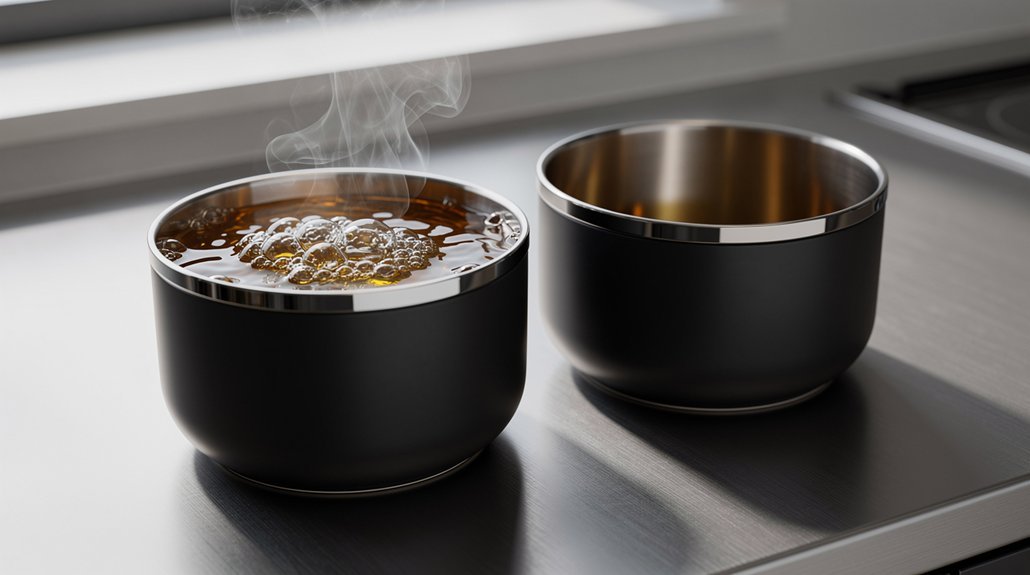
You’re probably wondering which pot will keep your brine safe while you bring it to a boil. The 21.5 L enamel canning pot offers a non‑reactive interior and a chrome‑plated rack that resists leaching, while the Supa Ant 20 Qt stainless steel kit promises rugged, corrosion‑free performance for long heating cycles. Both come with heat‑efficient bases and secure lids, yet each has trade‑offs that could affect your batch’s flavor and safety. Let’s compare them.
| 21.5 L Enamel Canning Pot with Lid and Holder |  | Best Overall | Capacity: 21.5 L (≈ 21.5 qt) | Material: Enamel‑coated steel | Rack Compatibility: Holds 7 qt, 9 pt, or 12 ½ pt jars | CHECK ON AMAZON | Read Our Analysis |
| Supa Ant 20 Qt. Stainless Steel Canning Kit |  | Beginner’s Choice | Capacity: 20 qt | Material: Food‑grade stainless steel | Rack Compatibility: Adjustable rack fits various jar sizes | CHECK ON AMAZON | Read Our Analysis |
More Details on Our Top Picks
21.5 L Enamel Canning Pot with Lid and Holder
Looking for a pot that handles high‑acid pickles without overheating? The 5 L enamel canning pot with lid and holder delivers fast, even heat thanks to its enamel‑coated steel body. You’ll value the chrome‑plated steel rack that securely fits seven quart jars, nine pint jars, or twelve half‑pint jars, letting you batch‑process small‑scale preserves. Its design targets jams, jellies, pickles, and salsa, providing reliable water‑bath canning that prevents localized overheating and glass breakage. The enamel is food‑safe, free of PFOA and PTFE, so you can preserve acidic foods confidently while keeping your kitchen safe and efficient.
- Capacity:21.5 L (≈ 21.5 qt)
- Material:Enamel‑coated steel
- Rack Compatibility:Holds 7 qt, 9 pt, or 12 ½ pt jars
- Lid Type:Special solid lid
- Included Accessories:Pot, lid, chrome‑plated steel rack
- Acid‑Food Suitability:Designed for high‑acid foods (jams, pickles, salsa)
- Additional Feature:Fast, even heat distribution
- Additional Feature:No PFOA/PTFE materials
- Additional Feature:Multi‑layer safety rack
Supa Ant 20 Qt. Stainless Steel Canning Kit
If you’re a beginner or a seasoned home‑preserver who needs a reliable, all‑in‑one solution for heating acidic pickles, the Supa Ant 20 Qt. stainless steel canning kit delivers. Its food‑grade, corrosion‑resistant steel holds up to high acidity and rapid temperature shifts without leaching flavor. The solid lid traps heat, while the foldable‑handle rack fits snugly for safe jar lifting. You’ll get a pot, lid, rack, measuring cup set, funnel, jar lifter, bubble popper, magnetic lid lifter, jar wrench, tongs, and 90 “Homemade” labels—all in one box. Easy to clean, durable, and versatile, it handles jars of all sizes and makes a perfect gift for any preserving enthusiast.
- Capacity:20 qt
- Material:Food‑grade stainless steel
- Rack Compatibility:Adjustable rack fits various jar sizes
- Lid Type:Solid stainless steel lid
- Included Accessories:Pot, lid, rack with foldable handles, measuring cup set, funnel, jar lifter, bubble popper, magnetic lid lifter, jar wrench, tongs, labels
- Acid‑Food Suitability:Suitable for high‑acid foods and extreme temperature changes
- Additional Feature:Foldable rack handles
- Additional Feature:Magnetic lid lifter
- Additional Feature:90 “Homemade” labels
Factors to Consider When Choosing Pickle Pots for Safe Acid Solution Heating
When you pick a pickle pot, check the material’s capacity to handle acidic brine without warping. Make sure the heat spreads evenly, and decide whether enamel’s non‑reactive surface or stainless steel’s durability fits your needs. Finally, look for a tight‑sealing lid and a rack that offers versatile positioning for safe heating.
Material Capacity Compatibility
Choosing the right capacity is essential: a pot that matches your jar sizes ensures the water fully covers each container, preventing overheating and keeping the acid solution stable. First, gauge the total volume of jars you’ll process—quarts need more water than pints or half‑pints. Pick a pot whose interior can hold at least 10‑15 % extra water to accommodate displacement and avoid boiling dry. Next, confirm the rack fits your jar count and arrangement; a mismatched rack forces you to overfill or leave jars partially exposed. Finally, check that the pot’s material and enamel are food‑safe, free of PFOA/PTFE, and capable of withstanding sustained high‑acid boiling without warping or leaching. These steps keep your pickling operation safe and efficient.
Heat Distribution Uniformity
Because uneven heat can ruin an acid bath, you’ll want a pot that spreads temperature evenly across its surface. Choose a pot with a heavy, even base—enamel or stainless steel both work—because the mass absorbs and radiates heat uniformly, eliminating hot spots. A thick, flat bottom is essential; it distributes heat across the entire cooking surface, reducing localized overheating that can degrade your acid solution. Look for materials with high thermal conductivity that resist warping when temperatures shift, ensuring the pot maintains consistent heat transfer over long runs. Pair the pot with a well‑designed lid and a compatible rack; they promote even circulation around jars, keeping every batch at the same temperature throughout the heating process.
Enamel Versus Stainless
Uniform heat distribution is only half the story; the material of the pot determines how reliably that heat stays stable and how safely it interacts with acidic contents. Enamel pots heat quickly and evenly on low‑to‑medium flames, keeping your water‑bath temperature steady while the non‑reactive glaze stops acid from leaching metal flavors or colors. Just make sure the coating is PFOA/PTFE‑free and handle it gently—chips expose the base metal and defeat the safety benefit. Stainless steel, on the other hand, excels at retaining heat and resisting wear, making it ideal for long canning cycles where temperature constancy matters. Choose a corrosion‑resistant grade and a snug lid to keep the acid solution hot and safe throughout the process.
Lid Sealing Efficiency
A well‑fitting lid is the single most effective way to keep heat in and temperature steady when you heat acidic pickle solutions. You’ll want a lid that seals uniformly across the rim, so steam can’t escape and temperature spikes stay minimal. Look for a flush‑fit design that eliminates gaps; even a millimeter of clearance lets convection currents alter acid concentration. Choose corrosion‑resistant materials—high‑grade stainless or coated alloys—that won’t warp after repeated acidic cycles, because warping breaks the seal. Multi‑piece or rack‑compatible lids spread pressure evenly over each jar mouth, enhancing sealing efficacy. Consistent pressure prevents leaks, maintains the intended temperature profile, and protects the acid’s integrity throughout the heating process.
Rack Versatility Options
Looking for a pot that adapts to any batch size? Choose one with a rack that holds multiple jar sizes—7‑quart, 9‑pint, 12‑half‑pint—so you can scale up or down without swapping equipment. Multi‑layer or safety racks let you stack jars securely, reducing movement and breakage during water‑bath heating. Easy‑lift designs let you remove or place jars quickly, minimizing heat loss and keeping the acid solution stable. Compatibility with both quart and pint jars gives you flexibility for jams, pickles, salsas, and other high‑acid foods, eliminating the need for separate pots. Look for foldable or adjustable racks; they compact for storage, travel well, and fit various pot capacities, keeping your kitchen organized and ready for any recipe.
Material Safety Standards
What material should you trust when heating acidic pickle solutions? Choose a food‑grade pot that’s free of hazardous coatings, because leaching can spoil flavor and health. Enamel, stainless steel, and glass all meet this criterion, offering non‑reactive, corrosion‑resistant interiors that survive high‑acid mixtures. Avoid any pot with PFOA or PTFE in the lining; those chemicals can migrate into your brine. Verify that the vessel is BPA‑free and complies with food‑contact regulations, ensuring it passes water‑bath canning standards. Look for certifications or manufacturer statements confirming the material’s stability under prolonged heat and acid exposure. By prioritizing these safety standards, you protect both your pickles and your peace of mind.
Ease of Cleaning
Most picklers appreciate a pot that cleans up quickly, and that starts with a smooth, non‑porous interior. You’ll want enamel or stainless steel so food residue doesn’t cling and stains stay at bay. A wide mouth and straight walls let you scrub without wrestling with tight corners, cutting down the time you spend on stuck sediment. If the pot includes removable racks that are dishwasher‑safe, you can toss them in after a hot‑water bath and avoid hand‑washing every component. Look for lids that seal firmly yet open wide enough to reach the bottom; this prevents hidden grime in high‑acid recipes. Together, these design choices keep cleanup simple, fast, and hygienic.
Durability Over Time
A clean pot is only half the battle; lasting performance hinges on durability. You’ll want a pot made from corrosion‑resistant stainless steel, because repeated acid exposure won’t degrade it over time. Enamel‑coated steel can spread heat quickly, but make sure the coating is rated for prolonged acid contact; otherwise chipping can trap corrosion. Look for a robust lid and rack that stay straight under high‑heat water‑bath canning, preventing warping and preserving structural integrity. Heat‑treated or thick‑gauge metals resist dents and warping from frequent boiling, extending the pot’s life. Smooth interior surfaces that resist staining and pitting keep acid residues from building up, making cleaning easier and durability longer. Choosing these features ensures your pickle pot survives years of acidic use.
Frequently Asked Questions
How Do I Sterilize the Pot Before Use?
You should rinse the pot, then soak it in a boiling water‑vinegar solution for ten minutes, scrub with a brush, rinse again with hot water, and let it air‑dry before use.
Can I Use a Glass Lid for Acid Heating?
Yes, you can use a glass lid for acid heating, but make sure it’s tempered, fits tightly, and can tolerate the temperature range you’ll reach; otherwise, it might crack or shatter.
What Temperature Range Is Safe for Acid Solutions?
You should keep acid solutions between 20 °C and 80 °C; staying under 80 °C prevents rapid vaporization and splattering, while staying above 20 °C ensures proper reaction rates without overheating.
Do I Need a pH Meter for Monitoring?
Yes, you should use a pH meter to monitor the acid solution. It gives real‑time, accurate readings, letting you adjust heating or dilution instantly, preventing dangerous pH spikes and ensuring safety.
Will the Pot Affect the Flavor of the Pickles?
Yes, the pot can affect flavor. If you use a reactive metal, it may leach metallic notes, while non‑reactive ceramics or stainless steel preserve the brine’s intended taste and aroma.

Leave a Reply