
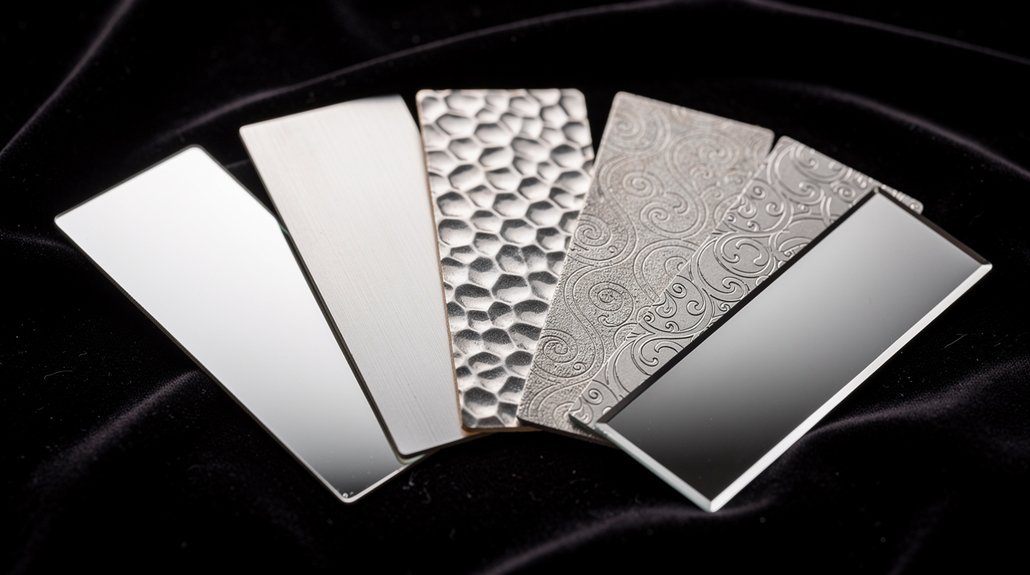
You’re looking for silver sheet that balances durability, workability, and finish, and the 2026 market offers a concise lineup that hits those marks. From dead‑soft 925 sterling for intricate stamping to rugged nickel‑silver for textured cuffs, each gauge and finish serves a specific design need. The US‑made options guarantee consistent thickness and reliable reworking, while the polished and unpolished surfaces let you control tarnish resistance and patina development. The real question is which combination will best suit your next collection’s aesthetic and production timeline.
| JewelrySupply Nickel Silver Sheet 20 Gauge 6″x3″ Unpolished Finish |  | Professional Grade | Material: Nickel silver alloy | Dimensions (inches): 6 × 3 | Gauge (thickness): 20 gauge | CHECK ON AMAZON | Read Our Analysis |
| 28 Gauge 925 Sterling Silver Stamping Blank USA Made |  | Best Value | Material: 925 sterling silver | Dimensions (inches): 6 × 3 | Gauge (thickness): 28 gauge | CHECK ON AMAZON | Read Our Analysis |
| JewelrySupply Nickel Silver Sheet 22 Gauge 6″x3″ (Unpolished) | | Versatile Choice | Material: Nickel silver alloy | Dimensions (inches): 6 × 3 | Gauge (thickness): 22 gauge | CHECK ON AMAZON | Read Our Analysis |
| 26 Gauge 6″x3″ Sterling Silver Stamping Blank USA Made | | Premium Thickness | Material: 925 sterling silver | Dimensions (inches): 6 × 3 | Gauge (thickness): 26 gauge | CHECK ON AMAZON | Read Our Analysis |
| Fine Silver Sheet 3″x 2″ Solid Fine.999 Dead Soft Made in USA (26 Gauge) |  | Pure Fine Silver | Material: .999 fine silver | Dimensions (inches): 3 × 2 | Gauge (thickness): 26 gauge | CHECK ON AMAZON | Read Our Analysis |
| Solid .999 Silver Sheet 3″x1″ 18 Gauge USA Made |  | Softest Option | Material: .999 fine silver | Dimensions (inches): 3 × 1 | Gauge (thickness): 18 gauge | CHECK ON AMAZON | Read Our Analysis |
More Details on Our Top Picks
JewelrySupply Nickel Silver Sheet 20 Gauge 6″x3″ Unpolished Finish
If you’re crafting cuff bracelets or sizable pendants, the 20‑gauge, 6 × 3‑inch unpolished nickel‑silver sheet from JewelrySupply is the perfect foundation. You’ll value its sturdy 20‑gauge thickness, which holds shape while you bend, stamp, or engrave. The unpolished mill finish invites texturing and patina, letting you imprint custom designs without extra prep. Made in the USA from premium nickel silver, it resists wear and maintains a bright, lasting luster after polishing. Its 6 × 3‑inch dimensions give ample workspace for components, and the material’s durability ensures your pieces stay intact through daily wear. This sheet balances flexibility and strength, ideal for both beginner and seasoned jewelry makers.
- Material:Nickel silver alloy
- Dimensions (inches):6 × 3
- Gauge (thickness):20 gauge
- Finish / Hardness:Unpolished (mill) finish
- Country of Origin:USA
- Primary Use:Jewelry making (cuffs, pendants)
- Additional Feature:Mill‑finish surface ready
- Additional Feature:USA‑crafted premium alloy
- Additional Feature:Ideal for cuff bracelets
28 Gauge 925 Sterling Silver Stamping Blank USA Made
Crafted for artisans who demand both consistency and speed, the 28‑gauge 925 sterling silver stamping blank from CRAFT WIRE delivers a dead‑soft, 6 × 3‑inch sheet that’s perfect for intricate designs and rapid production. You’ll appreciate its 0.33 mm thickness, which lets you press fine details without cracking, while the 1.35 oz weight keeps the blank manageable. Made in the USA, it carries a reputation for uniform alloy composition and reliable dead‑soft behavior. With a 4.8‑star rating from 244 reviewers, this best‑seller ranks high in jewelry metal stamping tools, offering a dependable foundation for your fine‑jewelry projects.
- Material:925 sterling silver
- Dimensions (inches):6 × 3
- Gauge (thickness):28 gauge
- Finish / Hardness:Dead‑soft (stamping blank)
- Country of Origin:USA
- Primary Use:Metal stamping (jewelry components)
- Additional Feature:Dead‑soft for easy stamping
- Additional Feature:1.35 oz lightweight sheet
- Additional Feature:Best‑seller metal‑stamping tool
JewelrySupply Nickel Silver Sheet 22 Gauge 6″x3″ (Unpolished)
Looking for a reliable, professional‑grade sheet that balances durability with easy workability? The JewelrySupply Nickel Silver Sheet 22 Gauge, 6″×3″, unpolished mill finish gives you a premium alloy that’s made in the USA and ready for customization. At 22 gauge it’s thick enough for sturdy pendants and cuffs yet thin enough for precise cutting, stamping, and shaping. Its smooth, consistent surface lets you achieve clean lines, and each sheet passes a strict quality check for thickness and texture. Weighing just 0.16 oz, it’s lightweight for intricate work, and the mill finish lets you apply your own patina or polish exactly how you envision.
- Material:Nickel silver alloy
- Dimensions (inches):6 × 3
- Gauge (thickness):22 gauge
- Finish / Hardness:Unpolished (mill) finish
- Country of Origin:USA
- Primary Use:Jewelry making (pendants, cuffs)
- Additional Feature:Balanced durability and workability
- Additional Feature:0.16 oz lightweight sheet
- Additional Feature:Premium‑grade nickel silver
26 Gauge 6″x3″ Sterling Silver Stamping Blank USA Made
For jewelers who demand consistent thickness and reliable workability, the 26‑gauge 6″ × 3″ sterling‑silver stamping blank from Craft Wire hits the mark. Made in the USA, this 925 silver sheet measures 152.4 mm × 76.2 mm and is .02 inches (0.41 mm) thick, weighing 1.71 oz. Its coil form lets you cut precisely, while the soft‑annealed finish eases stamping, engraving, and forming without cracking. The blank’s uniform gauge ensures repeatable results across pendants, charms, and in. With Craft Wire’s reputable manufacturing and a clear ASIN (B098JDXD8Z), you can trust its quality for professional jewelry projects.
- Material:925 sterling silver
- Dimensions (inches):6 × 3
- Gauge (thickness):26 gauge
- Finish / Hardness:Dead‑soft (stamping blank)
- Country of Origin:USA
- Primary Use:Metal stamping (jewelry components)
- Additional Feature:Dead‑soft ideal for intricate designs
- Additional Feature:1.71 oz substantial weight
- Additional Feature:Coil form for easy handling
Fine Silver Sheet 3″x 2″ Solid Fine.999 Dead Soft Made in USA (26 Gauge)
If you’re a jeweler who needs a reliable, ultra‑soft canvas for intricate hand‑hammered designs, the 3 × 2‑inch, 26‑gauge Fine .999 sheet is the perfect starting point. This dead‑soft, 99.9% pure silver is stamped in the USA, giving you a uniform 26‑gauge thickness that bends easily without cracking. Its modest 3‑by‑2 size lets you work comfortably on rings, pendants, or tiny components, and the solid fine composition holds detail when you texturize or emboss. Protect the surface by avoiding harsh chemicals, perfume, or chlorinated water, and store it in a dry pouch. If anything feels off, the seller offers a 30‑day exchange or refund.
- Material:.999 fine silver
- Dimensions (inches):3 × 2
- Gauge (thickness):26 gauge
- Finish / Hardness:Dead‑soft
- Country of Origin:USA
- Primary Use:Fine‑silver forming (hammering, shaping)
- Additional Feature:Pure .999 fine silver
- Additional Feature:Small 3×2″ format
- Additional Feature:100% satisfaction guarantee
Solid .999 Silver Sheet 3″x1″ 18 Gauge USA Made
The 18‑gauge, dead‑soft .999 silver sheet—3 × 1 inches, made in the USA—offers the perfect balance of purity and pliability for jewelers who need to hand‑hammer intricate textures without the metal fighting back. At 0.774 oz, this 3‑by‑1 piece is light enough for delicate work yet sturdy enough to hold fine details. Its extreme softness lets you stamp, emboss, and shape motifs effortlessly, making it ideal for both professional studios and hobby benches. Keep it away from ammonia, chlorine, and harsh cosmetics; rinse after swimming and store in a dry pouch to preserve its shine. Bedrock Jewelry’s discontinued but reliable sheet still ranks high among craft suppliers.
- Material:.999 fine silver
- Dimensions (inches):3 × 1
- Gauge (thickness):18 gauge
- Finish / Hardness:Dead‑soft
- Country of Origin:USA
- Primary Use:Fine‑silver forming (hammering, shaping)
- Additional Feature:Extremely soft 18‑gauge
- Additional Feature:0.774 oz lightweight sheet
- Additional Feature:Discontinued limited edition
Factors to Consider When Choosing Silver Sheet Metal for Fine Jewelry Making
When you pick silver sheet, start with purity standards because they affect tarnish resistance and hypo‑allergenic properties. Choose a gauge that balances flexibility for intricate details with enough thickness to hold up in cuffs, and consider how the finish—polished, matte, or textured—will influence both aesthetics and workability. Finally, assess the metal’s softness and overall durability to ensure it can endure everyday wear without compromising your design.
Metal Purity Standards
Wondering which silver grade best balances workability and durability for your designs? You’ll typically choose between fine silver (.999) and sterling silver (.925). Fine silver gives you near‑pure metal, making it ultra‑soft and malleable—great for delicate filigree but prone to bending under stress or Sterling silver, with 92.5 % silver and 7.5 % copper alloy, offers more strength and resistance to deformation, so it holds up better during stamping and shaping. The temper matters, too: dead‑soft or annealed sheets stay pliable, yet they can warp without support. Higher purity also means lower corrosion resistance, so you’ll need careful handling and a protective finish. Match purity and temper to the complexity of your texture and the durability you expect from the final piece.
Gauge Thickness Selection
How thick should your silver sheet be for the piece you’re crafting? Your gauge choice directly impacts malleability and durability. For cuffs or structural pendants, pick a heavier gauge—22 to 26 ga (≈0.41‑0.64 mm). The extra stiffness prevents unwanted bending, though you’ll need more force to cut, stamp, or texturize. If you’re stamping delicate motifs or need easy shaping, a lighter 28 ga (≈0.33 mm) works better, but expect it to dent or deform under stress. Dead‑soft variants soften shaping even further, yet they may spring back, affecting precise dimensions. Balance workability against the intended wear: thicker sheets for robust, load‑bearing parts; thinner sheets for intricate, decorative elements. Choose the gauge that matches your design’s structural demands and finishing workflow.
Finish Type Impacts
Which finish will best serve your design’s look and workflow? Unpolished mill finishes give you a textured surface that welcomes added patina, dyes, or etching, making them a versatile base for customization. Their matte, non‑reflective quality contrasts sharply with bright, highly polished areas, letting you control light reflection and overall aesthetic. Because finished surfaces affect how chemicals adhere, you’ll find patinas develop more evenly on unpolished metal, while polished sheets can repel some reagents. Tool marks appear more readily on raw finishes, so you may need extra leveling or sanding before stamping and filing. Consistency matters too—uniform unpolished surfaces ensure predictable stamping depth and texture across multiple pieces, reducing surprises in production.
Workability and Softness
A few key factors determine how easily your silver sheet will bend, stamp, or texture. Dead‑soft or soft alloys—like 28 ga .925 sterling or fine .999 silver—give you low resistance when hammering and stamping, letting you shape intricate details without excessive force. Thinner gauges (26–28 ga) amplify malleability, so you can achieve fine textures and sharp bends, while heavier gauges (18–22 ga) add structural support but demand more pressure and careful work‑hardening control. Fine silver generally offers slightly better ductility than sterling, making it a favorite for delicate work. An unpolished, mill‑finish surface welcomes textures and patinas, affecting how filing and stamping behave. Finally, sheet dimensions—such as a 6″ × 3″ piece—play into workflow efficiency; smaller, thinner sheets reduce tool wear and enable tighter bends, whereas larger, thicker sheets resist deformation and require stronger tooling.
Durability for Cuffs
Ever wondered why some cuffs stay perfectly round while others lose their shape after a few wears? You’ll notice that thicker gauges—20 to 22 GA—give the rigidity needed to keep a cuff’s curve intact. Nickel‑silver alloys at those gauges are especially sturdy and resist tarnish, making them ideal for structural bands. If you opt for sterling silver, stick to 26–28 GA for lighter, decorative cuffs, but expect more flex; they’re better suited to delicate accents than load‑bearing loops. Dead‑soft finishes on sterling blanks form easily, yet they may need reinforcement or patterning to avoid deformation. Unpolished mill finishes on nickel silver let you add texture or hammering, which boosts grip and overall integrity for everyday wear.
Surface Preparation Needs
How you prep the surface of silver sheet metal determines whether your texture, stamping, or patina work will look flawless or flake apart. Unpolished mill‑finished sheets need sanding and profiling to erase marks and create a smooth base. Choose a uniform thickness—20–22 gauge for sterling or nickel silver—to keep sanding and deburring consistent across the piece. When you work with dead‑soft .925 or .999 sheets, sand gently and seat files carefully to avoid dents. Pre‑cut sheets list gauges (26–28 ga), and thinner gauges demand more initial surface work to reach uniformity. After the first polish, run a fine‑grit (400–600) or micro‑mesh sequence to achieve a ready‑to‑work finish before any stamping or texturing. This preparation ensures crisp detail and prevents flaking.
Compatibility With Findingsamping
Why does the alloy and gauge matter when you attach findings? Sterling‑silver sheets (92.5% Ag) resist tarnish better than nickel‑silver, which contains more copper and can weaken under repeated crimping. Dead‑soft, annealed metal stamps easily, but if you bend or crimp often you’ll need to re‑anneal to prevent cracking. Choose a thicker gauge—20–22 for cuffs or sturdy components—so jump rings and clasps sit securely without denting. Thinner gauges (26–28) work for delicate pieces, yet they’re prone to denting when you force findings into place. An unpolished mill finish eases soldering and filing, letting you seat findings without interference. Align sheet thickness and alloy composition with standard finding tolerances to guarantee proper fit and a reliable connection.
USA Made Quality Assurance
A reliable USA‑made silver sheet gives you traceability, consistent specs, and industry‑standard warranties that keep your fine‑jewelry work on track. When you pick a domestic product, you benefit from local manufacturing standards that align with U.S. jewelry regulations, so you can verify origin and compliance easily. Look for listings that detail gauge, thickness, dimensions, and weight—these specs let you predict stamping and forming outcomes without guesswork. U.S. makers often attach certifications confirming uniform thickness and surface finish, which is essential for precision settings. Warranty information is clear and backed by American support teams, ready to address defects or process issues. Finally, care guidelines tailored to jewelry making help you maintain the metal’s luster and structural integrity throughout production.
Frequently Asked Questions
How Do I Prevent Oxidation on Nickel‑Silver Sheets?
You prevent oxidation by coating the nickel‑silver sheets with clear lacquer, applying a thin layer of wax, storing them in a dry airtight container, and regularly cleaning with a soft, non‑abrasive cloth.
Can I Anneal These Sheets Without Damaging the Finish?
Yes, you can anneal the sheets without ruining the finish—just heat them gently to 650‑750 °F, hold briefly, then cool slowly in a clean, dust‑free environment.
What’s the Best Method for Cutting 6‑Inch Sheets Cleanly?
You should use a jeweler’s rotary cutter with a fine‑tooth blade, securing the sheet on a sacrificial back, then guide the cutter slowly to achieve a clean 6‑inch cut without tearing.
Do These Sheets Require Special Polishing Compounds?
Yes, you’ll need polishing compounds specifically formulated for silver. Use a fine‑grit rouge or a mild abrasive paste, then finish with a polishing cloth to achieve a high‑she,, tarnish‑free surface.
How Does Gauge Affect Solder Flow in Fine‑Jewelry Projects?
You’ll find thinner gauge lets solder flow more easily, filling gaps quickly, while thicker gauge resists flow, requiring higher heat or more flux. Adjust heat and flux accordingly to ensure smooth, consistent joints.

Leave a Reply