
You’re looking for the most reliable tumbling media to achieve flawless jewelry finishes this year, and the market offers a surprisingly varied lineup. From 304 stainless steel cone‑shaped balls that sharpen edges to ceramic pellets that mute vibration, each option targets a specific challenge in the polishing process. Understanding how these media differ in durability, speed, and finish quality will shape your workflow—and the choice you make could dramatically affect your production efficiency. Let’s explore the details that matter most.
| BC Precision 2 lb Stainless Steel Tumbling Media |  | Professional Grade | Material: Stainless steel (BC Precision) | Shape: Diagonal pieces | Diameter / Size: 1/8″ | CHECK ON AMAZON | Read Our Analysis |
| 304 Stainless Steel Tumbling Media Balls 2 lb (1/8″) |  | Versatile Performer | Material: 304 stainless steel | Shape: Cone‑shaped balls | Diameter / Size: 1/8″ | CHECK ON AMAZON | Read Our Analysis |
| 1/8″ Ceramic Tumbling Media – 2 lb Fast Cut Deburr |  | Fast Deburr | Material: Ceramic | Shape: Balls, triangles, cut cylinders | Diameter / Size: 1/8″ | CHECK ON AMAZON | Read Our Analysis |
| National Geographic Rock Tumbling Media – Reusable GemFoam Foam | 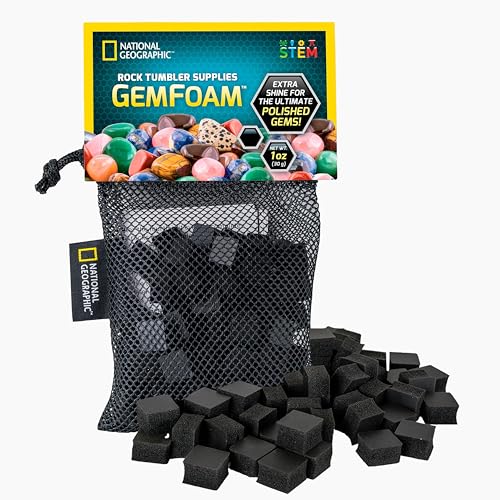 | Shine Specialist | Material: Reusable foam (GemFoam) | Shape: Foam pellets (irregular) | Diameter / Size: Not specified (foam) | CHECK ON AMAZON | Read Our Analysis |
| National Geographic Ceramic Tumbling Pellets (1.5 lb) | 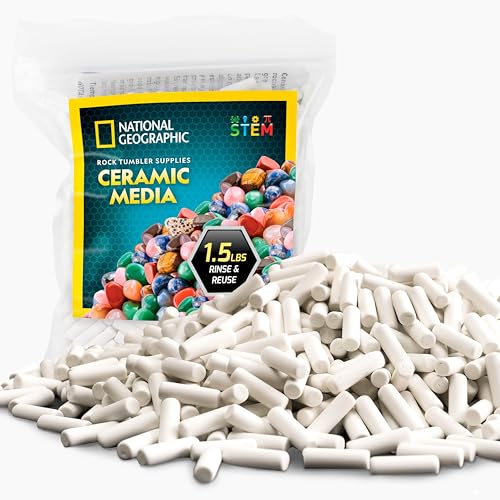 | Quiet Filler | Material: Ceramic | Shape: Pellets (cylindrical) | Diameter / Size: Not specified (pellets) | CHECK ON AMAZON | Read Our Analysis |
| 8lb Ceramic Rock Tumbling Filler Pellets (3/16″x3/8″) |  | Heavy‑Duty Filler | Material: Ceramic | Shape: Cylindrical pellets (3/16″ × 3/8″) | Diameter / Size: 3/16″ × 3/8″ | CHECK ON AMAZON | Read Our Analysis |
| Novabright 6.6 lb Rust‑Cutting Resin Tumbler Media (0.39″) |  | Rust‑Cutting Pro | Material: Synthetic resin | Shape: Triangular pieces | Diameter / Size: 0.39″ (≈1 cm) | CHECK ON AMAZON | Read Our Analysis |
More Details on Our Top Picks
BC Precision 2 lb Stainless Steel Tumbling Media
Looking for a durable, rust‑proof media that delivers consistent polish on delicate pieces? You’ll appreciate BC Precision’s 2 lb stainless‑steel tumbling media. Its 1/8‑inch diagonal shape maximizes cleaning and polishing action, making it perfect for rotary and vibratory tumblers. You can use it on jewelry, brass, reloading and other metal‑finishing projects without fearing corrosion. The media’s stainless‑steel construction resists rust, and its reusable nature keeps costs low while maintaining performance over many cycles. Pair it with compatible tumblers and follow standard media cycles for reliable, high‑quality finishes every time.
- Material:Stainless steel (BC Precision)
- Shape:Diagonal pieces
- Diameter / Size:1/8″
- Weight per Package:2 lb
- Reusability:Reusable
- Compatibility with Tumblers:Rotary & vibratory tumblers
- Additional Feature:Diagonal shape enhances polishing
- Additional Feature:Ideal for jewelry finishing
- Additional Feature:Cost‑effective reusable media
304 Stainless Steel Tumbling Media Balls 2 lb (1/8″)
If you need a reliable, high‑performance media for both small‑scale home projects and large‑volume workshop runs, the 2 lb (1/8″) 304 stainless‑steel cone‑shaped balls are the perfect match. Their 304 alloy resists deformation, wear, and rust, so you can tumble wet or in humid conditions without worry. The cone design pushes into tight nooks, delivering uniform, smooth finishes on tiny components. They work in rotary and vibratory machines, making them versatile for jewelry polishing, burr removal, and general finishing. After each cycle, filter the media, dry it on a towel under sunlight, and reuse it repeatedly, cutting waste and costs.
- Material:304 stainless steel
- Shape:Cone‑shaped balls
- Diameter / Size:1/8″
- Weight per Package:2 lb
- Reusability:Reusable
- Compatibility with Tumblers:Rotary & vibratory tumblers
- Additional Feature:Cone shape reaches tight areas
- Additional Feature:Uniform smooth finish guarantee
- Additional Feature:Simple dry‑towel recycling
1/8″ Ceramic Tumbling Media – 2 lb Fast Cut Deburr
Jewelry makers who demand rapid, clean deburring will appreciate the 1/8‑inch ceramic tumbling media’s fast‑cut performance, delivering consistent results in both vibrating and rotating tumblers. You’ll find 2 lb of balls, triangles, and cut cylinders that bite aggressively yet stay gentle enough for delicate pieces. Add a liquid compound or water, then tumble—no special prep needed. The media stays dry and clean in its bottle, so storage is hassle‑free. Expect uniform edge removal, reduced cycle times, and minimal wear on your workpieces. It’s a versatile, cost‑effective choice that fits any professional tumbler setup.
- Material:Ceramic
- Shape:Balls, triangles, cut cylinders
- Diameter / Size:1/8″
- Weight per Package:2 lb
- Reusability:Reusable
- Compatibility with Tumblers:Rotary & vibrating tumblers
- Additional Feature:Fast cut deburring action
- Additional Feature:Works with liquid compounds
- Additional Feature:Includes multiple shapes
National Geographic Rock Tumbling Media – Reusable GemFoam Foam
Professional jewelers seeking that final, mirror‑like brilliance will love National Geographic’s reusable GemFoam foam, which delivers unprecedented shine after the last grit cycle. After the final grit stage, you drop the foam, water, and stones back into the tumbler and run it up to three days. The foam’s porous structure lifts microscopic scratches, creating a glass‑smooth surface. You can reuse it for six cycles, storing it in the included mesh bag, which saves space and cost. It works with any durable tumbler, though National Geographic tumblers and accessories give the best results. Pair it with their ceramic media, grit, and refill packs for a complete polishing workflow.
- Material:Reusable foam (GemFoam)
- Shape:Foam pellets (irregular)
- Diameter / Size:Not specified (foam)
- Weight per Package:Not specified (bag)
- Reusability:Reusable (up to 6 cycles)
- Compatibility with Tumblers:Any durable rock tumbler
- Additional Feature:Unprecedented final‑grit shine
- Additional Feature:Up to six polishing cycles
- Additional Feature:Includes mesh storage bag
National Geographic Ceramic Tumbling Pellets (1.5 lb)
The most compelling reason to choose National Geographic Ceramic Tumbling Pellets (1.5 lb) is their ability to dramatically improve rock‑tumbling results while keeping noise to a minimum—ideal for anyone who wants consistent, high‑quality polish without sacrificing time or equipment. You’ll notice smoother grit delivery and fewer broken stones, because the ceramic pellets act as a quiet, durable filler for small batches. They’re reusable across every grit cycle, outlasting plastic media and staying effective even as they wear down. Just a little goes a long way; after each run, rinse and store them for future use. They fit any tumbler model, delivering reliable, professional‑grade results.
- Material:Ceramic
- Shape:Pellets (cylindrical)
- Diameter / Size:Not specified (pellets)
- Weight per Package:1.5 lb
- Reusability:Reusable
- Compatibility with Tumblers:Any rock tumbler
- Additional Feature:Noise‑reducing filler pellets
- Additional Feature:Reduces rock breakage
- Additional Feature:Small quantity, long‑lasting
8lb Ceramic Rock Tumbling Filler Pellets (3/16″x3/8″)
If you’re looking for a low‑noise, high‑precision tumbler that protects delicate stones, the 8 lb ceramic filler pellets (3/16” × 3/8”) are the ideal choice. Their non‑abrasive composition cushions stones, cutting breakage while still delivering grit efficiently. You can toss them into any brand’s tumbler for every polishing cycle, and they’ll reuse cycle after cycle without losing shape. The cylindrical size fits standard barrels, and the quiet operation lets you work without constant clatter. With a 100 % satisfaction guarantee, these pellets promise consistent, professional‑grade results for every jewelry project.
- Material:Ceramic
- Shape:Cylindrical pellets (3/16″ × 3/8″)
- Diameter / Size:3/16″ × 3/8″
- Weight per Package:8 lb
- Reusability:Reusable
- Compatibility with Tumblers:Any brand tumbler
- Additional Feature:Non‑abrasive ceramic cylinders
- Additional Feature:Enhances grit delivery
- Additional Feature:Quiet‑operation tumbler
Novabright 6.6 lb Rust‑Cutting Resin Tumbler Media (0.39″)
Looking for a rust‑cutting tumbler media that handles heavy corrosion without sacrificing surface polish? You’ll like the Novabright 6.6 lb resin pieces,0.39‑inch triangular pieces that bite into rust, scale, and old paint while staying wear‑resistant. The synthetic resin holds up through long cycles, so you save time and labor on nut, bolt, or hardware restoration. It also deburrs, radii edges, and smooths surfaces, giving jewelry‑grade finishes on small metal parts. One 6.6‑lb pack feeds a standard tumbler for days, letting metal‑restoration pros, antique tool enthusiasts, and small workshops achieve consistent, polished results without extra steps.
- Material:Synthetic resin
- Shape:Triangular pieces
- Diameter / Size:0.39″ (≈1 cm)
- Weight per Package:6.6 lb
- Reusability:Reusable
- Compatibility with Tumblers:Metal restoration tumblers (rotary)
- Additional Feature:Triangular resin pieces
- Additional Feature:Removes heavy rust efficiently
- Additional Feature:Multi‑function polishing capability
Factors to Consider When Choosing Tumbling Media for Professional Jewelry Results
When you pick tumbling media, start by matching its material and hardness to the jewelry pieces you’re polishing. Then, consider the shape, geometry, and particle size distribution to control how the media contacts each surface. Finally, balance cycle time and desired surface‑finish consistency for optimal results.
Material Compatibility and Hardness
One key factor in selecting tumbling media for professional jewelry is matching the material’s hardness to the piece you’re working on. Stainless steel media delivers high hardness and durable abrasion, so it excels on robust metal components while resisting rust over many cycles. When you need a gentler touch, ceramic media offers non‑metallic hardness that deburrs and shapes without marring delicate surfaces. For small parts, 304 stainless steel balls combine corrosion resistance with strong cutting action, ensuring uniform finishing across intricate designs. Pairing resin or ceramic filler pellets with your media helps control grit delivery and cuts noise, keeping results consistent across various jewelry substrates. Always align the media’s hardness with the workpiece’s material to avoid over‑polishing or under‑processing.
Media Shape and Geometry
Matching a piece’s hardness with the right media is only half the battle; the shape of that media determines how well it reaches every nook and cranny. You’ll find that cone‑shaped media push into tight corners, giving uniform coverage on intricate settings. Pointed or diagonal geometries hug edges, boosting deburring where a flat ball would miss. A 1/8‑inch diameter hits the sweet spot: it penetrates small features yet keeps the tumbler’s flow smooth. Ceramic options—balls, triangles, cut cylinders—each create distinct penetration patterns, letting you tailor a fast cut or a delicate polish. Resin or stainless‑steel pieces shaped like triangles or cones concentrate contact, trimming remaining burrs and delivering a smoother surface without over‑aggressive wear.
Particle Size Distribution
How does particle size distribution shape your final finish? If you choose smaller media—say 1/8″ diameter—you’ll get fine detailing because the particles can nest into tiny crevices and polish uniformly. Larger media, such as 3/16″–0.39″ shapes, deliver robust deburring and broader surface contact, useful for bulk material removal on varied geometries. Cone or triangular pieces improve coverage in tight recesses, boosting uniformity on intricate components. Ceramic pellets and resin‑based media break differently, altering the size distribution over successive grit cycles. Reusing media that retains consistent sizing cuts variability, keeping your finish steady across runs. A mixed approach—pairing small, detail‑oriented media with larger deburring pieces—optimizes both fine polishing and efficient material removal for professional jewelry.
Cycle Time Optimization
When you prioritize cycle‑time efficiency, choose media that maximizes polished contact per rotation; dense cone or triangular resin pieces, as well as small‑diameter 1/8″ particles, reach tight crevices and remove burrs quickly, cutting the number of passes needed. Opt for ceramic or ceramic‑fill media because their abrasive grit stays sharp, letting you finish deburring in fewer cycles. Metal media with diagonal or pointed geometry adds a scrubbing action that accelerates edge cleanup, so you spend less time on each batch. Pick reusable media that retains cutting power across stages; it reduces downtime for media swaps and keeps the tumbler running at peak speed. By matching shape, material, and durability to your part geometry, you shrink overall processing time while still achieving professional results.
Surface Finish Consistency
What determines the uniformity of a jewelry piece’s surface? The shape and material of your tumbling media. Cone‑shaped 304 stainless steel media reaches into tiny details, delivering a smooth, even finish on intricate components. If you need fast edge deburring, 1/8″ ceramic media cuts consistently, so each batch ends up with the same refined edges. Tensor media—balls, triangles, cylinders—alter contact points and pressure, letting you fine‑tune rounding and overall uniformity. Rust‑cutting resin media strips corrosion, giving a clean, repeatable metal base before polishing. Finally, keep media dry and clean between cycles; proper maintenance eliminates variability and ensures every run reproduces the same surface quality.
Media Reusability and Cost
Ever wondered why some tumbling setups stay affordable year after year while others drain your budget? You’ll save money when you pick media that can be reused many times instead of tossing it after one batch. Choose corrosion‑resistant stainless steel, wear‑resistant ceramic, or tough resin pieces; they survive countless cycles and keep replacement costs low. After each run, dry and dry the media—air‑drying or towel‑drying prevents rust and cracking, preserving its shape and effectiveness. Look for designs with a larger effective radius, like cone‑shaped or triangular pieces; they wear slower, so you replace them less often. By selecting durable, easy‑to‑clean media, you cut consumable waste and lower your overall cost per use.
Chemical Compatibility With Polishing Compounds
Why does chemical compatibility matter for your polishing compounds? If the media reacts with the compound, you’ll see staining, uneven finishes, or even media degradation. Stainless steel media resists rust and works well in wet tumblers, letting you maintain consistent metal surfaces across cycles. Ceramic media stays chemically inert, so it won’t interact with most compounds and remains stable through grit changes. Resin‑based media give unique abrasion but must match the chemistry of your polish; otherwise you risk incompatibility or surface discoloration. Plastic or synthetic media can swell or leave residues when exposed to acids or solvents, so you need to pair them with a compatible formulation. Always choose media designed for the same tumbler process—wet or dry, vibrating or rotating—to keep reactions controlled and results reliable.
Noise and Vibration Management
How much noise and vibration you tolerate directly affects the quality and efficiency of your jewelry tumbling process. Choose ceramic or resin media to keep the sound low; they generate less clatter than bulk metal and dampen impact forces, so the tumbler runs smoother over many cycles. Reusable ceramic pellets and foam media further reduce vibration, especially when you avoid over‑packing. If you opt for cone‑shaped or irregular media, load them properly—dense packing can boost contact efficiency but also raise noise. Smaller‑diameter media (about 1/8 inch) yields fine, uniform polishing with gentler impacts, lowering peak vibration. Finally, match the media to your tumbler type (rotary or vibratory) and follow the recommended grit cycles to prevent excess noise and mechanical resonance.
Frequently Asked Questions
Can I Reuse Ceramic Media After Polishing?
Yes, you can reuse ceramic media after polishing; just rinse it thoroughly, inspect for cracks or worn surfaces, and dry it before the next batch to maintain consistent results.
How Does Media Size Affect Burr Removal Speed?
You’ll find that larger media cuts burrs faster because it removes material more aggressively, while smaller media smooths edges gently but takes longer; choose size based on the balance you need between speed and finish.
Are Stainless Steel Media Safe for Gold Plating?
Yes, stainless‑steel media are safe for gold plating as long as you keep the media clean, avoid cross‑contamination, and monitor pH levels. They won’t strip the coating if you follow proper tumbling protocols.
What Temperature Range Is Optimal for Resin Media?
You should keep resin media between 50 °F and 95 °F (10 °C‑35 °C). Staying in that range prevents overheating, maintains flexibility, and guarantees consistent polishing without degrading the media’s performance.
Do Foam Media Impact Final Surface Hardness?
Yes, foam media can affect final surface hardness. They’re softer, so they’ll leave a slightly more pliable finish compared to abrasive media. If you need a harder polish, combine foam with a grit‑based step.

Leave a Reply