

You’ll succeed with continuous casting by selecting the right machine size for your production capacity, implementing robust preventive maintenance schedules for hydraulic and lubrication systems, and mastering precise temperature control between 600°C-700°C. Invest in thorough operator training, monitor metal purity from melt to solidification, optimize mold design with advanced cooling techniques, and establish strategic quality control checkpoints with real-time testing equipment. These proven strategies will transform your casting operations and reveal the detailed techniques that maximize performance.
Choose the Right Machine Size and Capacity for Your Production Needs
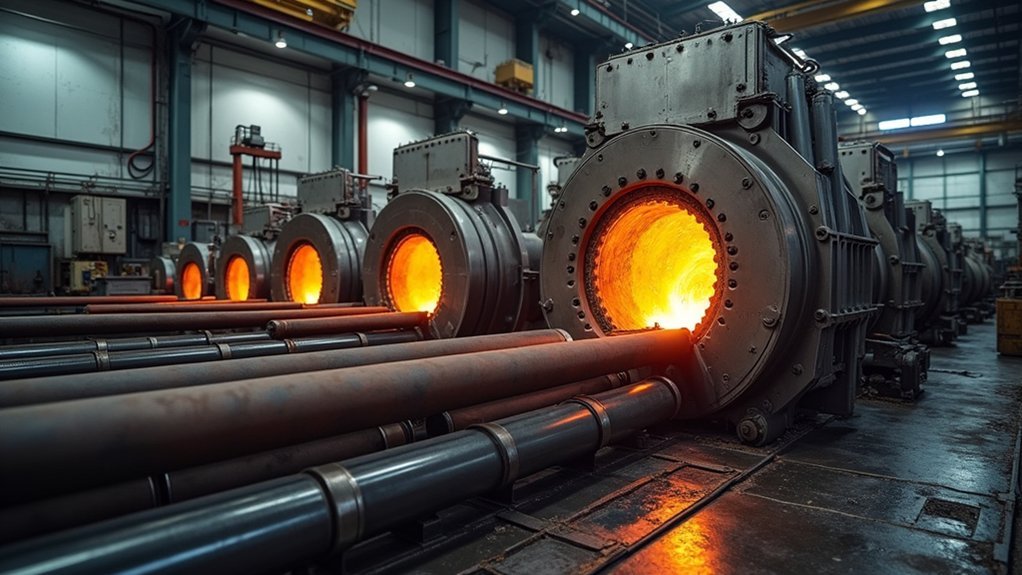
When selecting continuous casting equipment, you’ll need to match your machine’s size and capacity to your specific production requirements. For small-scale operations, choose continuous casting machines with 12-50 lbs per run capacity, perfect for creating solid, round cross-sections with diameters of 1/4 inch or smaller.
Since most machines target larger outputs, medium-sized units work better for iron alloys while smaller setups can be custom-built for precious metals.
Consider the trade-offs between size and efficiency carefully. Larger machines offer higher throughput but require greater initial investment and operational complexity.
Your production scale should drive this decision without compromising quality or introducing defects. Consult manufacturers about modifications to existing equipment or specialized machines designed specifically for small-scale continuous casting applications to guarantee peak performance.
Implement Preventive Maintenance Schedules for Critical Components
Since continuous casting equipment operates under extreme conditions with molten metals and high-pressure systems, you’ll need a robust preventive maintenance schedule to avoid costly breakdowns and production delays.
Focus on critical components that directly impact your production efficiency and equipment longevity.
Schedule regular pressure tests on your hydraulic system to detect leaks and weaknesses before they cause failures.
Don’t overlook lubrication system inspections—ensure dry oil pipelines remain clear and leak-free to keep rollers operating smoothly.
Your cooling system requires constant attention to water quality monitoring.
Poor-quality cooling water creates thermal stress on rollers and leads to expensive repairs from corrosion or blockages.
Finally, evaluate spare parts and raw materials regularly, replacing unqualified components immediately to maintain casting process integrity.
Master Temperature Control and Cooling System Management
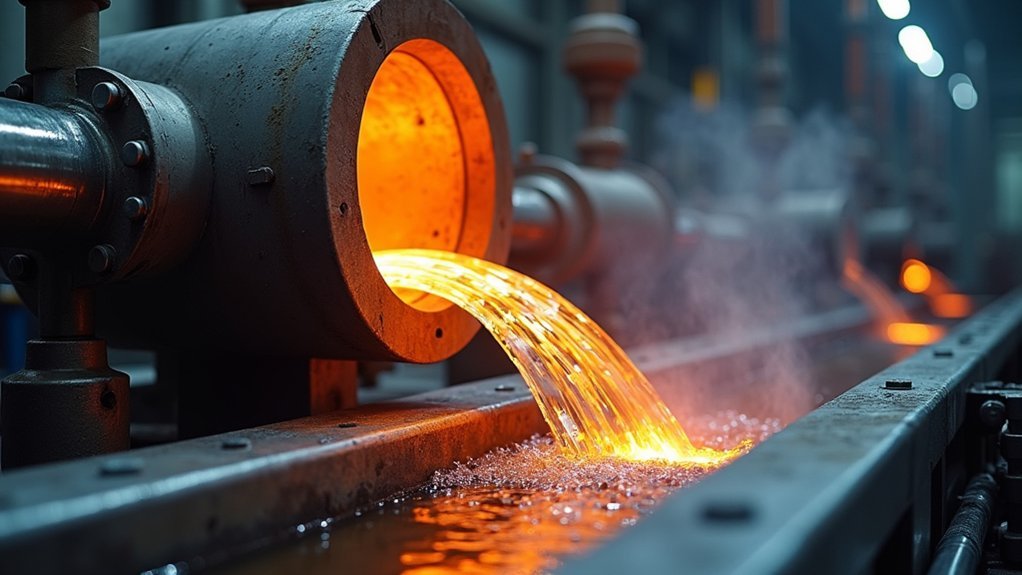
You’ll achieve consistent casting quality by maintaining precise mold temperatures within the ideal range for your specific metal.
Monitor your cooling water flow rates continuously to prevent blockages and guarantee uniform heat removal throughout the process.
Implement gradual temperature shifts to avoid thermal shock events that can damage equipment and compromise product integrity.
Optimize Mold Temperature Control
Although temperature fluctuations can derail your entire casting operation, mastering mold temperature control between 600°C to 700°C guarantees uniform solidification and prevents costly defects.
Your continuous casting equipment requires precise cooling water management with continuously monitored flow rates to maintain consistent performance.
Install thermal imaging cameras to monitor mold temperature in real-time, enabling immediate cooling rate adjustments when needed.
Don’t neglect regular maintenance of your heating system – conduct pressure testing and inspect for leaks or blockages to ascertain effective heat transfer.
Integrate automation into your cooling system management to dynamically adjust parameters based on real-time data.
This optimization approach improves production efficiency while maintaining superior quality standards throughout your casting process.
Monitor Cooling Water Flow
Monitor your cooling water flow rates meticulously to prevent overheating that can compromise your cast product quality. You’ll need to verify that flow rates consistently meet specified parameters for efficient and stable operation.
Implement pressure testing on your cooling water pipelines to detect leaks and maintain necessary system pressure. Temperature monitoring is vital—fluctuations often signal blockages or inefficiencies that require immediate attention.
Schedule regular inspections of your entire cooling system during maintenance windows. Don’t overlook pipelines and connections, as hidden issues can disrupt your operation unexpectedly.
Strengthen your water quality inspections to prevent corrosion and scaling buildup. These contaminants reduce cooling efficiency and lead to expensive repairs.
Prevent Thermal Shock Events
When temperature fluctuations occur too rapidly in your continuous casting system, thermal shock events can crack molds, damage equipment, and create costly production delays.
You’ll need to maintain stable cooling water temperatures throughout your continuous casting machine operations to prevent these devastating failures.
Install real-time temperature monitoring systems that alert you to any deviations from ideal parameters. This allows immediate corrective action before thermal shock develops.
Regular maintenance of your cooling water pipelines prevents blockages that cause uneven metal cooling. Clean pipelines ensure consistent water flow rates.
Use high-quality cooling water to avoid corrosion and mineral buildup that compromises system efficiency.
Schedule routine maintenance checks to identify potential leaks or system failures early. These proactive measures protect your equipment investment and maintain consistent production quality.
Invest in Proper Operator Training and Safety Protocols
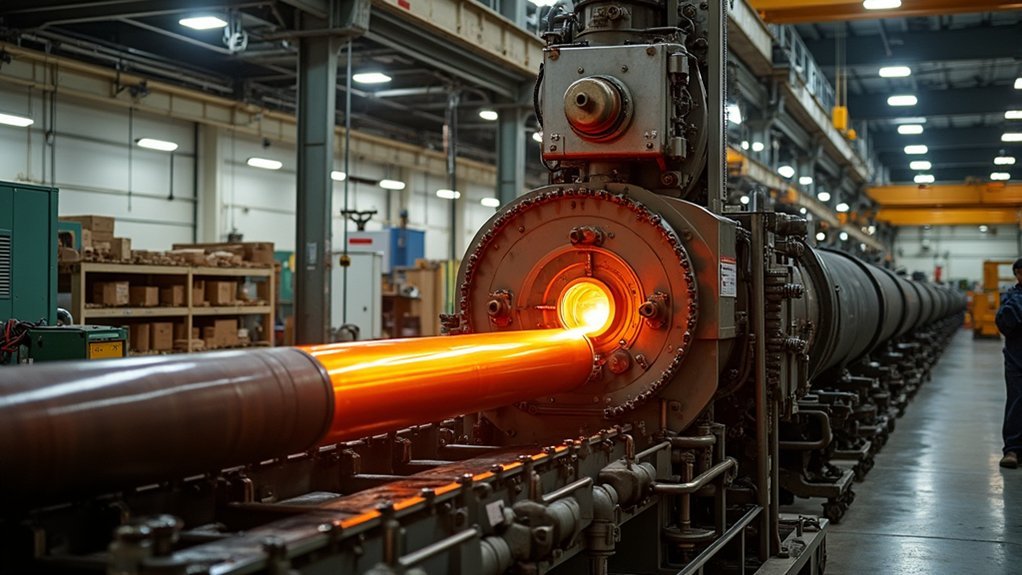
Recognize that your continuous casting operation’s success hinges on having skilled operators who can precisely control temperature and speed throughout the casting process.
These precise controls directly impact your final product quality, making thorough operator training essential.
Implementing robust safety protocols protects your workforce while maintaining productivity in high-temperature, high-pressure environments.
Robust safety protocols ensure workforce protection while sustaining productivity in demanding high-temperature, high-pressure industrial casting environments.
To maximize your continuous casting success:
- Develop extensive training programs that reduce operational errors and enhance safety awareness
- Conduct regular safety drills to keep operators informed about emergency procedures and equipment handling
- Foster a safety culture that maintains compliance with industry standards and regulations
- Partner with technical institutions to create specialized courses covering the latest continuous casting technology advancements
This investment enhances productivity while greatly decreasing workplace accidents.
Monitor Metal Quality and Purity Throughout the Process
Maintaining superior metal quality requires vigilant oversight of composition and purity from the initial melt through final solidification. You’ll need thorough monitoring systems throughout your continuous casting operation to detect variations and enable immediate corrective actions.
| Monitoring Stage | Key Parameters | Critical Actions |
|---|---|---|
| Pre-casting | Chemical composition | Sample and analyze metal |
| Melting phase | Non-metallic inclusions | Implement advanced filtration |
| During casting | Temperature control | Maintain consistent heat levels |
| Cooling system | Water contamination | Inspect cooling circuits regularly |
| Lubrication | System purity | Monitor for contaminants |
Real-time monitoring systems detect quality deviations instantly, preventing defects that compromise structural integrity. You should utilize advanced filtration techniques during melting to remove inclusions and conduct periodic inspections of cooling water and lubrication systems to prevent contamination affecting your metal quality.
Optimize Mold Design and Lubrication Systems
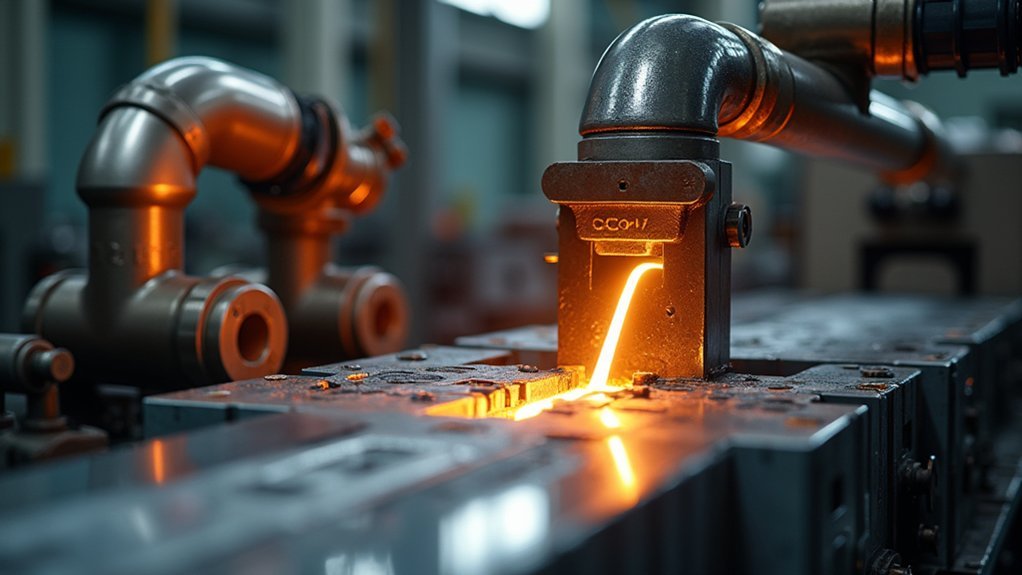
Your continuous casting success depends heavily on properly engineered molds and lubrication systems that work in harmony with your quality monitoring efforts.
When you optimize mold design, you’ll achieve superior casting quality while minimizing operational disruptions.
Focus on these critical optimization strategies:
- Advanced Materials and Cooling – Use cutting-edge materials with enhanced cooling techniques to guarantee uniform heat transfer and reduce thermal stress that causes defects.
- Effective Dry Oil Lubrication – Implement systems that reduce friction between moving parts, extending equipment lifespan and boosting efficiency.
- Precise Mold Geometries – Tailor designs to your specific product requirements for improved quality and reduced waste.
- Regular Monitoring and Maintenance – Conduct routine inspections of lubrication systems and adjust pressure levels to prevent roller seizure while identifying potential issues early.
Establish Quality Control Checkpoints and Testing Procedures
While optimized mold design creates the foundation for quality casting, establishing strategic quality control checkpoints throughout your production process guarantees you’ll catch defects before they compromise your final product.
You’ll need to implement regular inspection points monitoring temperature, speed, and cooling rates during continuous casting operations.
Deploy automated testing equipment for real-time assessment, detecting surface defects and dimensional inaccuracies immediately.
Sample and test solidified steel parts at various stages, validating tensile strength and hardness against industry standards.
Create feedback loops connecting quality control data directly to your production team, enabling instant parameter adjustments.
Maintain thorough documentation of all results to identify trends and drive continuous improvement in your casting operations.
Frequently Asked Questions
What Are the Disadvantages of Continuous Casting?
You’ll face high setup costs, technical complexities requiring skilled operators, rapid equipment wear from extreme conditions, energy inefficiency in older machines, and market volatility that disrupts maintenance planning and production stability.
What Are the Defects of Continuous Casting?
You’ll encounter surface cracks from thermal stress, non-metallic inclusions from impurities, composition segregation from uneven cooling, dimensional inaccuracies from poor mold design, and porosity from trapped gases during solidification.
What Is the Advantage of Continuous Casting?
You’ll achieve higher production efficiency by eliminating extra steps from traditional casting. You’ll get uniform metal strands with fewer defects, reduce waste, lower costs, and meet modern demands through improved automation.
What Is the Principle of Continuous Casting Process?
You pour molten metal into a water-cooled mold where it begins solidifying. As you continuously withdraw the partially solidified metal through rollers, controlled cooling creates uniform, long metal shapes without traditional ingot casting steps.
In Summary
You’ll maximize your continuous casting success by focusing on these seven core areas. Don’t underestimate the importance of proper machine sizing and regular maintenance schedules. You’ve got to master temperature control while ensuring your operators are well-trained. Keep monitoring your metal quality and optimize those mold systems. Most importantly, you can’t skip quality control checkpoints – they’re your final safety net for consistent, high-quality output.



Leave a Reply