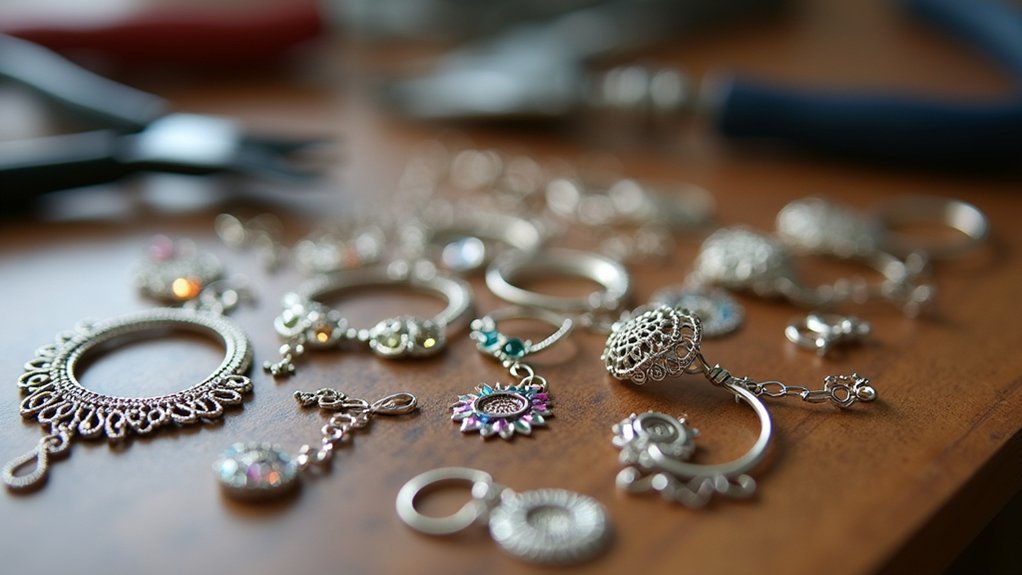
You’ve likely admired those intricate filigree ear cuffs in jewelry stores, wondering how artisans create such delicate masterpieces. The truth is, mastering this ancient technique isn’t just about having steady hands—it’s about understanding the fundamental principles that separate amateur attempts from professional results. From selecting the proper wire gauge to achieving flawless solder joints, there are specific techniques that’ll transform your metalworking skills and help you craft pieces that rival high-end boutique collections.
Selecting the Right Wire Gauge for Filigree Work
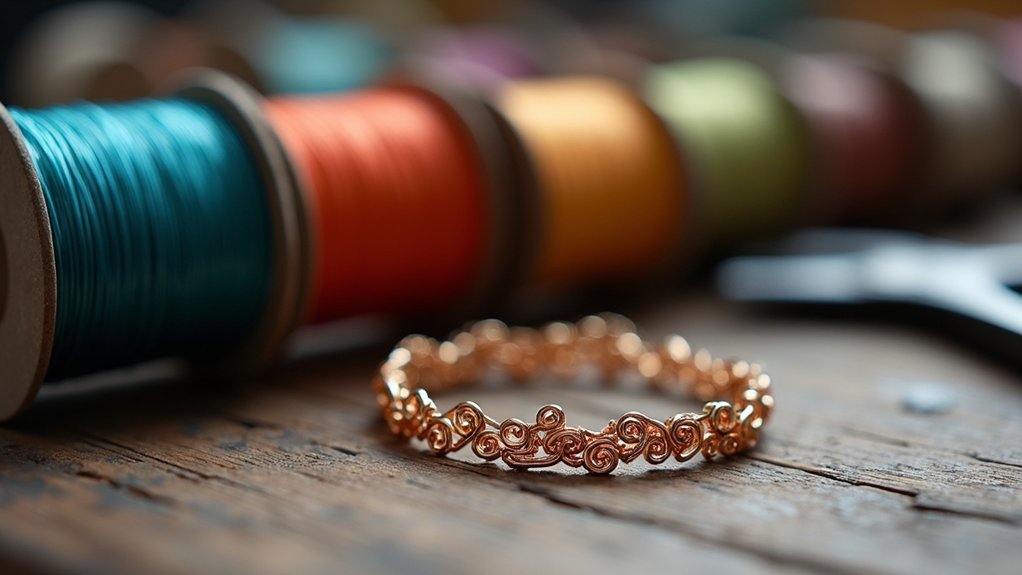
Three key factors determine your success when selecting wire gauge for filigree ear cuffs: flexibility, strength, and workability.
For filigree work, you’ll find 20 or 24 gauge wire strikes the perfect balance between these elements. If you’re creating delicate, intricate patterns, 24 gauge offers exceptional flexibility for detailed designs. However, thicker gauges provide better structural support for larger pieces.
Choose soft or half-hard wire over hard wire, as it’s easier to manipulate and won’t become brittle during shaping. Hard wire creates challenges during soldering and can crack under stress.
Consider your design’s complexity and size when making your selection. Lighter, more delicate ear cuffs benefit from finer gauges, while substantial pieces need thicker wire for durability.
Always test a small section first to verify the wire meets your flexibility, soldering, and strength requirements.
Creating Precise 1:1 Scale Design Templates
Creating a precise 1:1 scale design template forms the foundation of your successful filigree ear cuff project. Start by using the wrapping paper method to measure your ear accurately, ensuring proper fit. Draft your design on paper with a ruler, incorporating all intended curves and decorative elements that’ll appear in your final piece.
| Design Element | Measurement Method | Key Considerations |
|---|---|---|
| Ear contour | Wrapping paper trace | Exact curve replication |
| Wire placement | Ruler markings | Symmetrical positioning |
| Decorative details | Proportional scaling | Clear, uncluttered lines |
Ensure your template remains symmetrical and balanced throughout. Mark specific bending and soldering points to guide your crafting process. Keep lines clean and avoid excessive details that might complicate interpretation during actual jewelry creation.
Mastering Wire Annealing Techniques for Flexibility
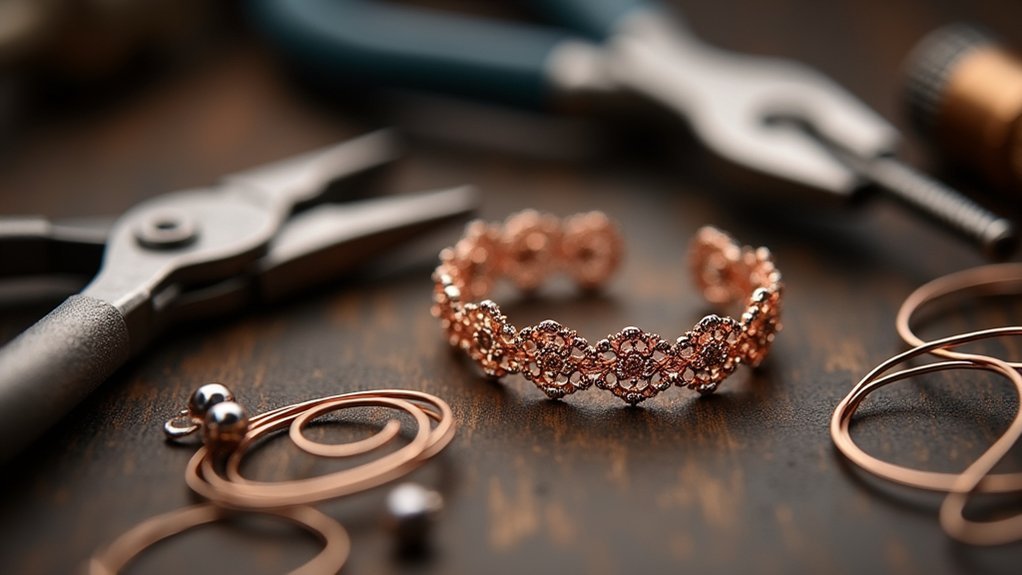
You’ll need to master three key aspects of wire annealing to achieve the perfect flexibility for your filigree ear cuff.
First, choose between torch heating and kiln methods based on your precision needs.
Then, learn to control temperature timing to avoid over-softening the metal.
Finally, develop reliable techniques for testing wire softness so you’ll know exactly when your wire reaches ideal workability.
Heat Application Methods
The art of annealing transforms stiff, unworkable wire into pliable material that bends effortlessly for delicate filigree patterns.
Proper heat application during annealing dramatically increases your wire’s malleability, making intricate filigree designs achievable. You’ll need precise control and safety awareness throughout this process.
Follow these essential heat application methods:
- Use propane or butane torch – Move the flame slowly around the wire for even heating rather than focusing on one spot
- Wear safety equipment – Always use safety goggles and work in well-ventilated areas to prevent fume inhalation
- Heat until red-hot – Continue heating until the wire glows red, which relieves internal tensions effectively
- Cool naturally – Let the wire air-cool completely; rapid quenching causes brittleness
Test your annealed wire by gently bending it. Properly heated wire bends smoothly without snapping.
Temperature Control Timing
When timing your heat application, precision becomes the difference between perfectly malleable wire and damaged material that cracks under pressure.
Temperature control during annealing wire requires heating sterling silver to approximately 1,470°F until it glows red-hot. You’ll need a soldering torch with controlled flame settings to achieve consistent results without overheating.
Apply flux before heating to prevent oxidation that compromises your filigree design quality.
Monitor your wire’s color carefully—once it reaches that cherry-red glow, remove heat immediately. Allow slow cooling to preserve maximum malleability; rushed cooling creates stress fractures.
You’ll know it’s time to re-anneal when the wire feels stiff during manipulation. Frequent bending requires repeated annealing cycles, so plan accordingly for complex filigree patterns requiring multiple directional changes.
Wire Softness Testing
Several simple tests determine whether your annealed wire has achieved perfect flexibility for intricate filigree work.
The most reliable method involves taking a small wire piece and attempting to bend it gently. Properly annealed wire should curve smoothly without resistance or breaking. If you notice stiffness or cracking, you’ll need additional annealing cycles.
Here’s your wire softness testing checklist:
- Bend test – Wire should curve easily without snapping or showing stress marks
- Color verification – Confirm wire reached red heat during annealing for complete flexibility
- Oxidation removal – Use pickle solution to clean annealed wire before soldering operations
- Repeat testing – Check softness after each shaping step, re-annealing as needed
Remember to cool wire slowly after each annealing session to maintain peak flexibility.
Building Strong Outer Frame Foundations
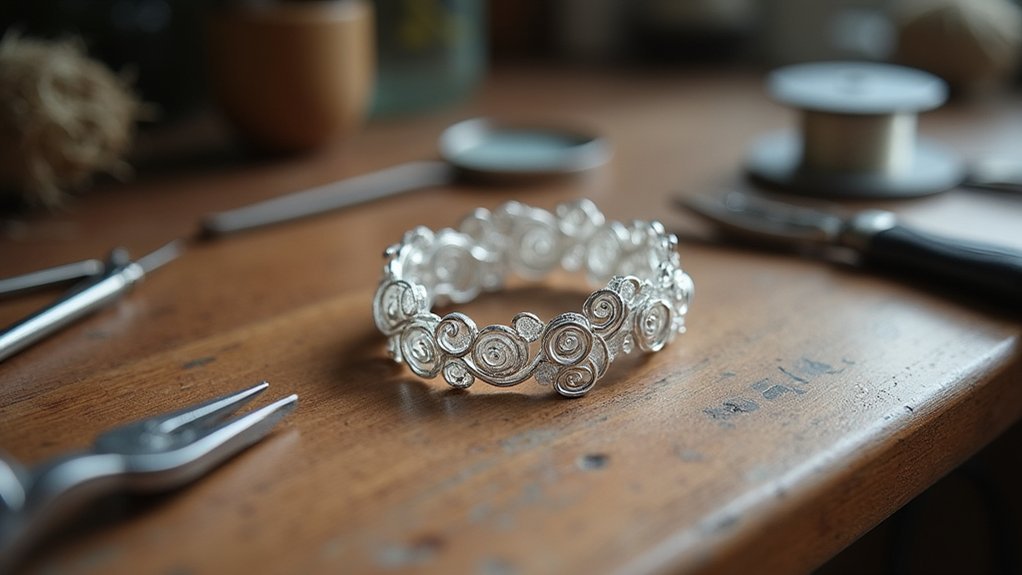
You’ll need to start with proper wire selection and preparation to guarantee your ear cuff’s outer frame can withstand daily wear.
Choose 20-gauge sterling silver wire for the ideal balance of strength and workability, then flatten it using a rolling mill to increase surface area and structural integrity.
Master your frame soldering techniques early, as clean joints and proper flux application will determine whether your foundation holds together or fails under stress.
Wire Selection and Preparation
The foundation of any exceptional filigree ear cuff begins with selecting 20-gauge sterling silver wire for your outer frame. This gauge provides ideal strength while maintaining malleability for intricate shaping. Proper wire selection and preparation guarantees your design’s structural integrity.
Follow these essential preparation steps:
- Flatten the wire using a rolling mill to half its original diameter, increasing surface area for superior soldering adhesion.
- Anneal the wire by heating to red color, relieving internal tensions and preventing misalignment during framing.
- Apply flux to all solderable pieces before heating, preventing oxidation and guaranteeing strong, clean joints.
- Use pickling solution after soldering to remove oxidation, creating a bright, clean surface for subsequent filigree work.
These foundational techniques assure professional results in your ear cuff creation.
Frame Soldering Best Practices
While proper wire preparation sets the stage for success, mastering frame soldering techniques guarantees your ear cuff’s structural foundation will withstand daily wear.
You’ll need to verify all frame pieces maintain close contact before applying heat, preventing misalignment and creating stronger bonds.
Apply flux generously to inhibit oxidation, which blocks proper solder flow and weakens joints.
Control temperature by heating larger areas first, then gradually focusing on contact points for even distribution throughout your frame.
After soldering, use pickling solution to remove oxidation and flux residue that compromises both appearance and structural integrity.
Practice patience during this critical phase—rushing leads to overheating or insufficient solder flow, ultimately weakening your entire frame structure.
Perfecting Soldering Joints and Heat Distribution
Since creating seamless filigree work depends entirely on precise soldering techniques, mastering heat distribution becomes your most critical skill.
Temperature control and proper joint preparation determine whether your delicate ear cuff components bond successfully or fall apart.
Perfect temperature control and meticulous joint preparation separate successful filigree ear cuffs from costly failures.
Follow these essential steps for perfect soldering results:
- Prepare your joints – Confirm all pieces make direct contact and apply flux to prevent oxidation during heating.
- Control heat application – Apply even heat across the entire piece before focusing on specific contact points.
- Monitor temperature – Keep your torch at the right setting to flow solder without overheating or melting components.
- Clean afterward – Use pickling solution to remove any oxidation and achieve a polished finish.
Consistent practice with these techniques creates stronger, cleaner filigree connections.
Crafting Intricate Twisted Wire Elements
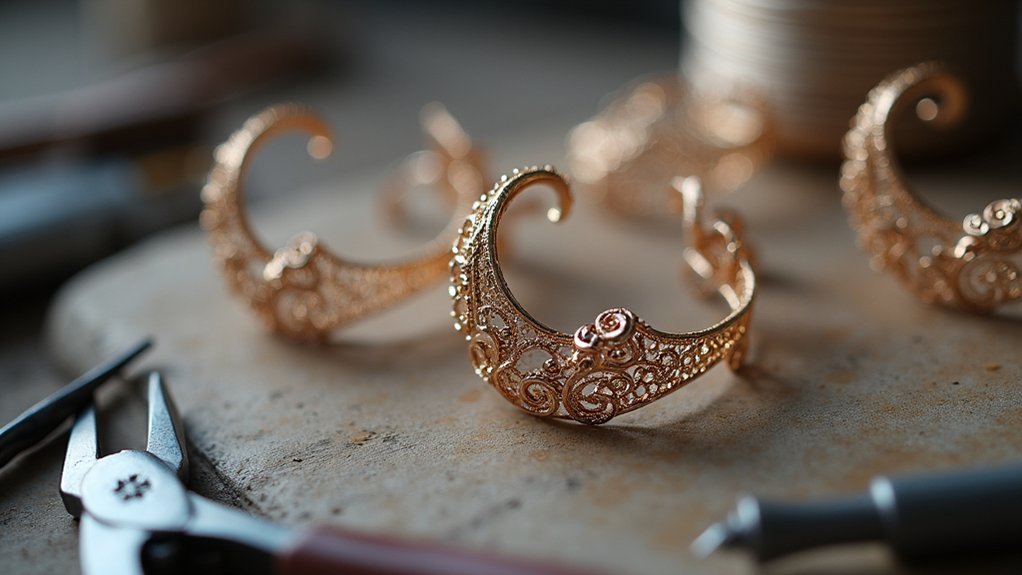
You’ll master twisted wire elements by using a drill to create consistent, uniform curls that form the backbone of your filigree design.
Before shaping these twisted sections, you must anneal the wire to restore its softness and prevent cracking during manipulation.
Focus on perfecting your twisting technique first, then move into proper annealing methods, and finally tackle the delicate art of shaping those graceful curls.
Wire Twisting Techniques
Creating intricate twisted wire elements forms the backbone of sophisticated filigree ear cuff designs, transforming simple metal strands into enthralling decorative features.
Mastering wire twisting techniques requires careful attention to material selection and manipulation methods.
Essential steps for successful twisted wire creation:
- Select appropriate gauge wire between 20-24 gauge for ideal balance between delicacy and structural integrity.
- Anneal the wire before twisting to soften the metal and prevent breakage during manipulation.
- Use a drill with twisting attachment to achieve consistent, professional results throughout your design.
- Experiment with varying tension while twisting to create diverse textures and patterns.
After completing your twists, consider flattening the twisted wire with a rolling mill or light hammering.
This technique creates unique visual effects while improving cohesion within your ear cuff’s overall design structure.
Annealing Twisted Elements
Three critical factors determine the success of annealing your twisted wire elements: temperature control, timing, and cooling method.
You’ll need to heat your twisted wire until it glows red, indicating that internal tensions have been released. This process restores the wire’s softness and ductility, making manipulation and shaping considerably easier during your filigree work.
Use a torch with a fine flame to distribute heat evenly across all sections. Avoid overheating specific areas, as this can compromise the wire’s integrity.
After reaching the proper temperature, let the wire cool naturally rather than quenching it in water, which causes brittleness.
Regular practice of these annealing techniques will enhance your craftsmanship and prevent misalignment issues in subsequent steps.
Shaping Delicate Curls
Once your twisted wire elements have been properly annealed and cooled, you can begin shaping them into the delicate curls that form the heart of filigree work. The annealing process guarantees your twisted wire remains soft and pliable, preventing breakage during manipulation.
For precise shaping delicate curls, follow these essential steps:
- Use a drill to create consistent curls, guaranteeing uniformity in size and shape throughout your design.
- Run the twisted wire through a rolling mill to flatten it for a refined, delicate appearance.
- Carefully position each curl within your frame before using solder to secure them permanently.
- Smooth rough edges with sandpaper after pickling to achieve a polished finish.
This methodical approach ensures professional results in your filigree ear cuff creation.
Positioning Delicate Filigree Components Within Frames
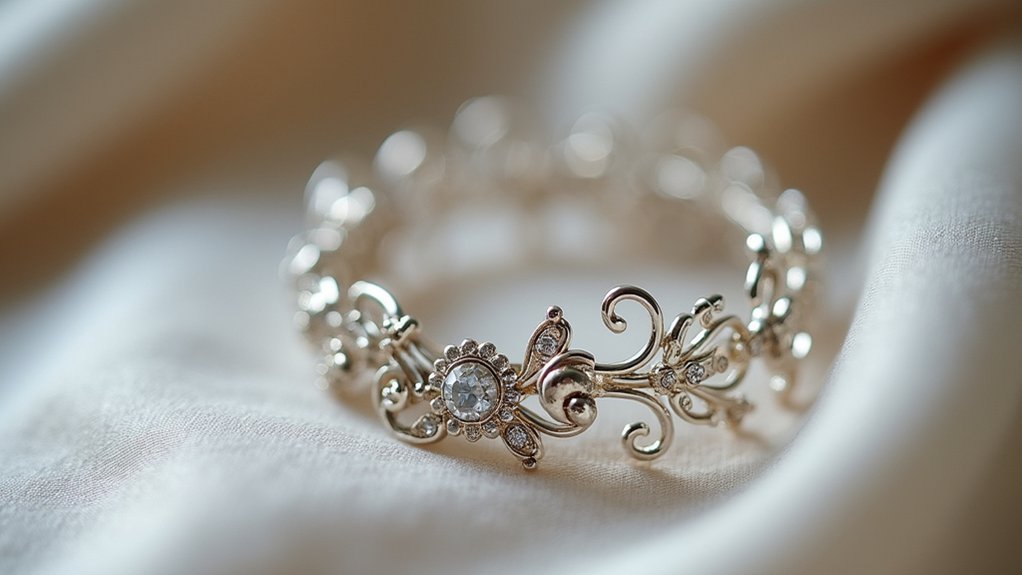
When positioning delicate filigree components within frames, you’ll need to start by annealing your twisted wire to restore its softness and malleability. This process makes manipulation easier and prevents breakage during placement.
Apply flux generously to all solderable areas before positioning—this prevents oxidation and guarantees strong connections between your filigree elements and frame.
During soldering, distribute heat evenly across contact points to avoid damaging delicate pieces. Focus on maintaining consistent temperature rather than rushing the process.
For shaping purposes, use wooden dowels instead of metal tools to prevent accidental bending or breaking of intricate structures.
After completing your soldering work, pickle the piece to remove flux residue, then use fine sandpaper to smooth any rough edges for a professional finish.
Achieving Professional Finishing With Pickling Solutions
After completing your soldering work, you’ll achieve that coveted professional finish by properly using pickling solutions to remove stubborn oxidation and flux residues from your filigree ear cuff.
Sodium bisulfate or citric acid solutions are essential for this clean finish.
Follow these steps for best results:
- Immerse your piece in the pickling solution for 10-15 minutes, monitoring carefully to prevent overexposure.
- Use non-reactive tongs when handling the jewelry to avoid contamination and skin contact.
- Rinse thoroughly under running water to neutralize the acid and prevent corrosion.
- Polish gently with a soft cloth or polishing compound to enhance your filigree’s shine.
The pickling process transforms your ear cuff from amateur to professional look, ensuring every intricate detail sparkles beautifully.
Shaping Ear Cuffs for Comfortable Fit and Wear
The foundation of a well-crafted filigree ear cuff lies in achieving the perfect balance between secure fit and comfortable wear.
Begin shaping your ear cuff by using an ultra-fine Sharpie as a mandrel, carefully wrapping the wire around it to follow your ear’s natural curve. When you bend the wire, maintain smooth movements to avoid creating sharp edges that’ll dig into skin.
After initial shaping, you’ll need to adjust the cuff’s ends to prevent overtightening or looseness.
Design your ear cuff with distinct short and long wings—this enhances stability and prevents slipping during wear.
Test the comfortable fit by gently placing the cuff on your ear, making fine adjustments to eliminate any pinching or irritation while ensuring secure positioning.
Adding Decorative Elements and Final Polish Techniques
Once you’ve achieved the perfect fit, elevating your filigree ear cuff with decorative elements transforms it from functional jewelry into a stunning statement piece.
You’ll want to select charms, beads, or chains that complement your base design.
When adding these elements, follow these essential steps:
- Secure attachment – Use jump rings or wire wrapping techniques to prevent detachment during wear.
- Post-soldering care – Pickle your piece after soldering to remove oxidation before polishing.
- Professional finish – Apply polishing techniques using fine steel wool or polishing cloth for ideal shine.
- Balance consideration – Experiment with different arrangements while maintaining comfort during wear.
These polishing techniques and thoughtful decorative placement will help you achieve unique looks that stand out while ensuring your ear cuff remains comfortable throughout extended wear.
Frequently Asked Questions
How Do I Price My Handmade Filigree Ear Cuffs for Selling Online?
You’ll calculate material costs, add labor time at your desired hourly rate, then include overhead expenses. Research competitor pricing for similar handmade jewelry. Factor in your skill level and unique design elements when setting final prices.
What’s the Best Way to Photograph Filigree Jewelry for Social Media Marketing?
You’ll capture filigree’s intricate details best using natural lighting near a window. Position your jewelry against solid backgrounds, shoot multiple angles, and use macro mode. Don’t forget close-ups showcasing the delicate metalwork patterns.
How Long Does It Typically Take to Complete One Filigree Ear Cuff?
You’ll spend 8-12 hours creating a basic filigree ear cuff, though intricate designs can take 20+ hours. Your skill level, wire gauge choice, and detail complexity directly affect completion time.
Can Filigree Ear Cuffs Be Worn by People With Sensitive Skin Allergies?
You can wear filigree ear cuffs with sensitive skin if they’re made from hypoallergenic metals like sterling silver, surgical steel, or titanium. Avoid nickel-containing alloys that’ll trigger allergic reactions.
What Tools Are Absolutely Essential for Beginning Filigree Ear Cuff Makers?
You’ll need fine-gauge silver wire, precision pliers, a small soldering torch, flux, solder, tweezers, and a jeweler’s saw. Don’t forget safety glasses, a steel block, and files for finishing your delicate filigree work.
In Summary
You’ve now mastered the essential techniques for creating stunning filigree ear cuffs. Remember that practice makes perfect—don’t get discouraged if your first attempts aren’t flawless. Keep refining your wire gauge selection, template precision, and soldering skills. Focus on building strong foundations before adding delicate details. With patience and persistence, you’ll develop the muscle memory and artistic eye needed to craft professional-quality filigree jewelry that’s both beautiful and comfortable to wear.