
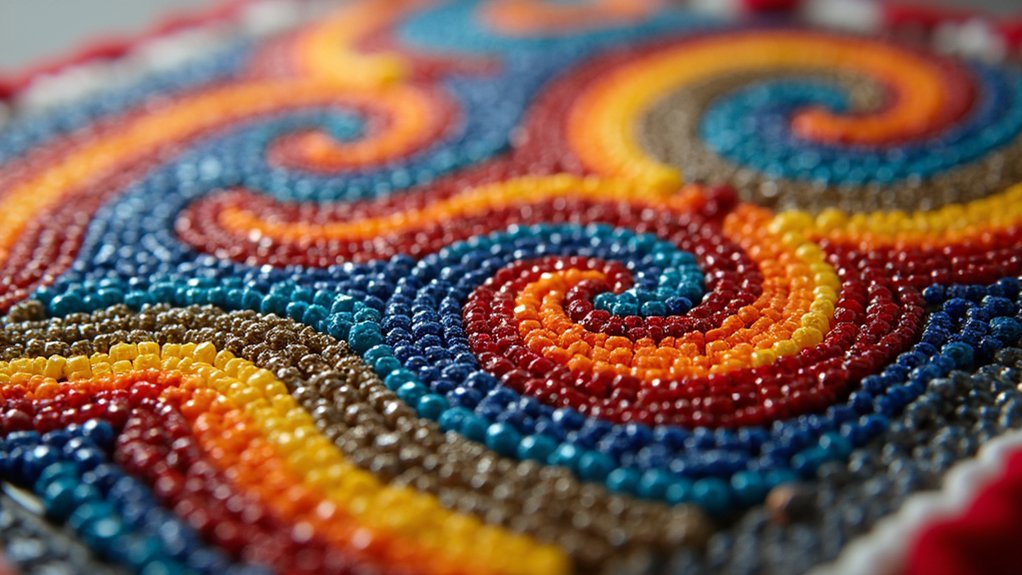
Traditional Indigenous beadwork transforms simple materials like bone, shell, stone, and glass into intricate storytelling vessels that carry deep spiritual significance and cultural identity. You’ll discover fundamental techniques including peyote stitch, loom weaving, and lazy stitch, each serving specific artistic purposes. Regional variations showcase unique tribal aesthetics—Sioux artists favor bold colors on white backgrounds, while Ojibwa styles feature floral motifs with darker tones. Contemporary artists now blend these ancestral methods with modern materials, creating innovative pieces that honor tradition while engaging current cultural dialogues and ensuring these sacred techniques continue flourishing.
The Cultural Heritage and Spiritual Significance of Indigenous Beadwork

When you examine traditional Indigenous beadwork, you’ll discover it serves as far more than decorative art—it functions as a powerful vessel for storytelling and cultural identity. Each intricate pattern carries deep spiritual significance, connecting you to ancestral narratives and beliefs that have shaped tribal communities for generations.
This cultural heritage reflects the interconnectedness between Indigenous peoples and their environment through symbolic motifs representing animals and nature.
You’ll find that traditional techniques have evolved to incorporate contemporary elements while maintaining their sacred foundation. Colors and designs vary dramatically between tribes, with each hue carrying unique meanings that express spiritual values.
Modern Indigenous artists continue honoring these time-tested methods, ensuring beadwork remains a dynamic expression of identity that bridges ancient wisdom with present-day artistic innovation.
Essential Materials and Tools Used in Traditional Beading Arts
Before you can create meaningful Indigenous beadwork, you’ll need to understand the essential materials that form the foundation of this ancient craft. Traditional techniques begin with selecting appropriate beads—natural elements like bone, shell, stone, and wood formed the original palette, while glass beads from European trade expanded artistic expression possibilities dramatically.
Understanding the sacred materials of Indigenous beadwork—from ancient bone and shell to traded glass—honors generations of artistic tradition.
Your essential tools include specialized needles designed for bead stitching, strong thread for securing materials, and fabric bases like leather or felt.
You’ll master stitching methods such as peyote stitch, loom weaving, and lazy stitch, each requiring specific approaches for different textures.
Indigenous cultures historically used stone tools for shaping beads, demonstrating remarkable craftsmanship.
Modern artists often incorporate dyes and paints, blending traditional materials with contemporary practices to honor ancestral techniques.
Fundamental Beading Techniques: From Loom Work to Peyote Stitch

As you develop proficiency in Indigenous beadwork, you’ll discover that mastering fundamental techniques opens doors to creating both traditional and contemporary pieces with cultural significance.
Loom beading creates strips without backing fabric using bead looms, a technique Plains Indian artists popularized after the Civil War. The lazy stitch involves stitching beads only at their ends, creating ridged textures perfect for intricate patterns on moccasins.
Peyote stitch enables net-like structures using tiny seed beads for jewelry making. Overlaid stitch allows careful pattern planning by threading beads sequentially and securing each one individually.
Beaded applique lets you work detailed designs on smaller fabric pieces before attachment.
These beadwork techniques form the foundation for authentic Indigenous beadwork traditions while enabling contemporary artistic expression.
Regional Styles and Tribal Variations in Beadwork Patterns
While these foundational techniques remain consistent across Indigenous communities, each tribe developed distinctive visual languages through their unique beadwork patterns, color palettes, and design motifs.
You’ll notice Sioux tribal variations feature white backgrounds with bold blues, yellows, greens, and pinks, while Cheyenne artists also preferred white but incorporated turquoise and red.
The Ojibwa created striking regional styles using multi-colored backgrounds with floral motifs and darker tones.
Cherokee Indigenous beadwork stands out through its strategic use of black in designs, adding remarkable visual diversity.
Plains Indians refined techniques and styles that reflected local resources and evolving aesthetics.
These intricate designs serve beyond decorative purposes, carrying deep cultural significance as they preserve stories of ancient cultures within every carefully placed bead.
Contemporary Applications and Modern Adaptations of Ancient Methods

Though rooted in centuries-old traditions, Indigenous beadwork has evolved into a dynamic contemporary art form that bridges ancestral wisdom with modern innovation.
You’ll find contemporary Indigenous artists masterfully blending traditional beading techniques like peyote and loom stitching with modern materials, creating innovative pieces that speak to today’s audiences.
These contemporary applications demonstrate how sustainable practices can honor ancestral traditions while embracing environmental responsibility.
Artists like Jamie Okuma and Catherine Blackburn exemplify modern adaptations, incorporating elements that engage with current cultural dialogues.
You’ll discover that educational programs are essential for transferring these skills to younger generations, ensuring the evolution of practices continues.
This fusion creates new artistic expressions that showcase Indigenous identities within contemporary fashion and art contexts.
Frequently Asked Questions
What Are the Techniques of Beadwork?
You’ll find five main beadwork techniques: Lazy Stitch for ridged patterns, Loom Beading for strips, Gourd Stitch for net-like structures, Beaded Applique for intricate designs, and Overlaid Stitch requiring careful planning.
What Are the Two Different Types of Native American Beadwork?
You’ll find two primary types of Native American beadwork: loom beading, which creates long strips without backing, and applique beading, where you stitch beads onto fabric before attaching to items.
What Is Indigenous Beadwork?
You’ll find indigenous beadwork is a traditional craft where artisans stitch beads onto fabric or string, creating decorative items, jewelry, and ceremonial regalia that reflects cultural heritage and artistic expression.
How Did Native Americans Do Beadwork?
You’d use techniques like lazy stitch, loom beading, and peyote stitch to sew shells, bones, stones, or glass beads onto leather, fabric, or other materials, creating intricate patterns with cultural significance.
In Summary
You’ve discovered how traditional indigenous beadwork connects sacred heritage with artistic mastery. You’ll find that each technique, from loom work to peyote stitch, carries generations of cultural wisdom. As you explore regional variations and tribal patterns, you’re witnessing living art forms that continue evolving. Whether you’re learning these ancient methods or adapting them for contemporary use, you’re participating in a timeless tradition that honors indigenous creativity and spiritual expression.




Leave a Reply