
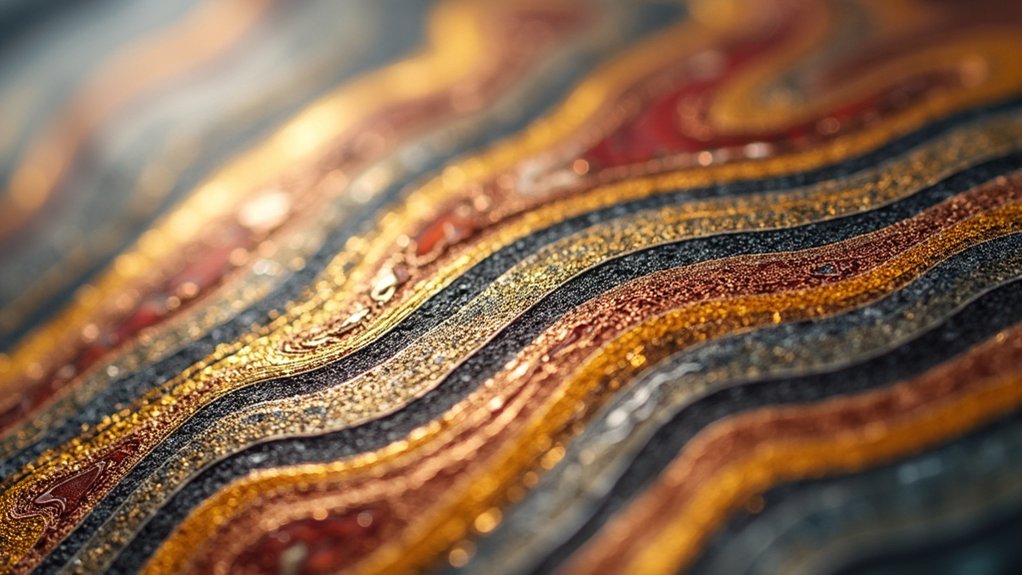
You’ll create stunning mokume gane patterns by mastering punch and gouge techniques with consistent hammer strikes on heated sheets. Experiment with twisting and rolling methods to achieve dynamic visual effects and consistent cross-sections. Strategically combine contrasting metals like yellow, white, and rose gold for maximum color depth. Utilize modern CNC technology to enhance traditional methods with precise, intricate designs. Apply proper forging and controlled heat treatment to reveal hidden layer patterns—discover advanced techniques that’ll elevate your craftsmanship further.
Master the Fundamental Punch and Gouge Techniques for Pattern Creation

Two fundamental techniques form the backbone of mokume gane pattern creation: the punch method and the gouge method.
You’ll use the punch method by applying various punches to heated mokume sheets stabilized in pitch bowls, creating consistent patterns through uniform hammer strikes.
The gouge method involves cutting deep into layers using a Hatsuri-Tagane chisel, then forging to flatten for complex designs.
Deep cuts with Hatsuri-Tagane chisels followed by careful forging create the intricate layered patterns that define advanced mokume gane artistry.
When executing pattern creation, verify your punch depth doesn’t exceed half the sheet’s thickness to prevent curling.
Use U-shaped channels during gouging to protect the layered structure from cracking.
You’ll discover that combining both techniques opens doors to unique patterns and pattern development.
This approach encourages personal design expression, allowing you to create distinctive mokume gane jewelry that reflects your artistic vision.
Experiment With Twisting and Rolling Methods to Achieve Dynamic Visual Effects
After mastering punch and gouge techniques, you’ll discover that twisting mokume and rolling methods reveal dynamic visual effects that convert your mokume gane into striking jewelry pieces. Start by cutting billets into long rectangles, then focus on soldering ends before twisting to create cord-like patterns that captivate jewelry industry professionals.
| Technique | Key Equipment | Visual Result |
|---|---|---|
| Twisting | Square-wire-rolling-mill | Cord-like patterns |
| Rolling | Standard rolling mill | Smooth changes |
| Combined | Both mills | Complex patterns |
When rolling mokume sheets, insert the thinner end first while maintaining steady pressure to prevent warping. These patterning techniques guarantee consistent cross-sections throughout your work. Combining both methods creates complex patterns that showcase unique artistic expressions, elevating your mokume gane beyond traditional approaches.
Combine Multiple Metals Strategically for Maximum Color Contrast and Depth

When you strategically combine multiple metals in mokume gane, the resulting color contrast transforms ordinary patterns into extraordinary visual experiences.
Select contrasting metals like yellow gold, white gold, and rose gold to create striking visual depth that enhances your design’s aesthetics. Using three or four different metals yields dynamic color interplay, making wedding rings and jewelry pieces truly unique.
Ensure your chosen metals have similar melting points to avoid fusion complications that create uneven patterns.
Experiment with layering techniques—alternate thicker gold layers with thinner silver sections to amplify contrast and richness.
Consider oxidation effects on sterling silver, which provides darker hues that beautifully accentuate lighter metals. This strategic approach maximizes the visual impact of your mokume creations.
Utilize Modern CNC Technology to Enhance Traditional Patterning Methods
Although traditional mokume gane techniques have captivated artisans for centuries, integrating CNC technology revolutionizes your pattern-making capabilities while preserving the craft’s artistic essence. You’ll enhance design precision through CAD software visualization before physical production, reducing errors while exploring innovative designs. This metalworking technique enables intricate designs like back-to-back trapezoidal shapes with concave indentations that manual methods can’t achieve.
| Traditional Mokume Techniques | CNC-Enhanced Process |
|---|---|
| Hand-forged patterns | Automated milling precision |
| Limited geometric complexity | Complex patterns achievable |
| Time-intensive creation | Noticeably reduced production time |
| Skill-dependent consistency | Consistent quality across pieces |
| Manual pattern creation | Digital manipulation capabilities |
Apply Proper Forging and Heat Treatment to Reveal Hidden Layer Patterns
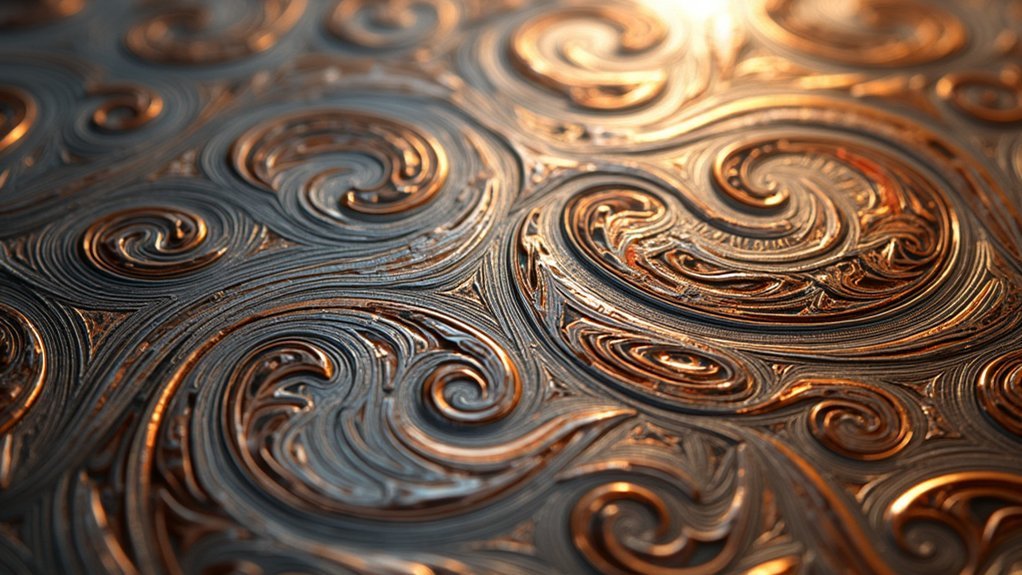
While CNC technology provides exceptional precision in initial pattern creation, the transformative magic of mokume gane emerges through masterful forging and heat treatment that discloses the metal’s hidden beauty.
Your forging techniques must emphasize consistent hammer strikes and even pressure to reveal those breathtaking hidden layer patterns.
Heat treatment becomes your secret weapon—you’ll want to heat your billet just below the melting point for ideal fusion without compromising layer integrity.
- Apply multiple rounds of forging and heat treatment to build complexity in your decorative designs
- Round the edges during pattern creation to prevent cold seams that disrupt visual flow
- Anneal your mokume gane after forging to relieve internal stresses completely
- Use controlled heating cycles to enhance pattern depth and intricacy
Frequently Asked Questions
Does Mokume Gane Tarnish?
Yes, your mokume gane jewelry can tarnish, especially if it contains copper or silver. You’ll notice less tarnishing with gold content. Regular polishing and proper storage in airtight containers help prevent oxidation.
What Metals for Mokume Gane?
You’ll typically use gold alloys, sterling silver, and palladium for mokume gane. You can combine two to four compatible metals with similar melting points, avoiding copper since it corrodes over time.
Can Mokume Gane Rings Be Resized?
You can resize mokume gane rings, but you’ll need a jeweler experienced with this technique. They’ll carefully cut and re-fuse the layers while preserving the pattern’s integrity and aesthetic appeal.
How to Make Mokume Patterns?
You’ll stack compatible metals like copper and silver, then use punching and gouging techniques to create patterns. Twist cut billets for cord effects, then roll everything smooth while filling depressions with solder.
In Summary
You’ve now got the essential techniques to create breathtaking mokume gane patterns. Don’t be afraid to experiment with different metal combinations and patterning methods. Remember, each piece you forge will teach you something new about how the metals behave together. Start with simple patterns and gradually work toward more complex designs. With practice, you’ll develop your own signature style that sets your jewelry apart from others.



Leave a Reply