
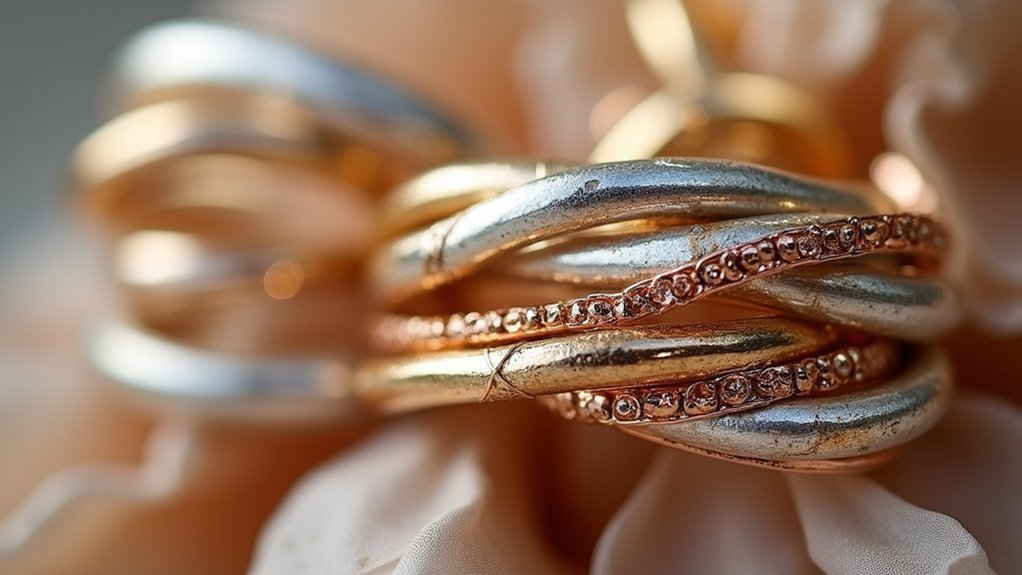
You’ll transform your jewelry collection from predictable to enthralling when you embrace mixed metals, breaking free from outdated etiquette that once confined designs to single metal types. This creative approach lets you combine silver, yellow, and pink metals for versatile pieces that shift seamlessly from casual mornings to elegant evenings. Mixed metals enhance your personal style while creating sophisticated visual depth through contrasting tones and textures. Discover how strategic combinations can elevate your entire jewelry wardrobe.
Breaking Traditional Jewelry Rules for Creative Expression
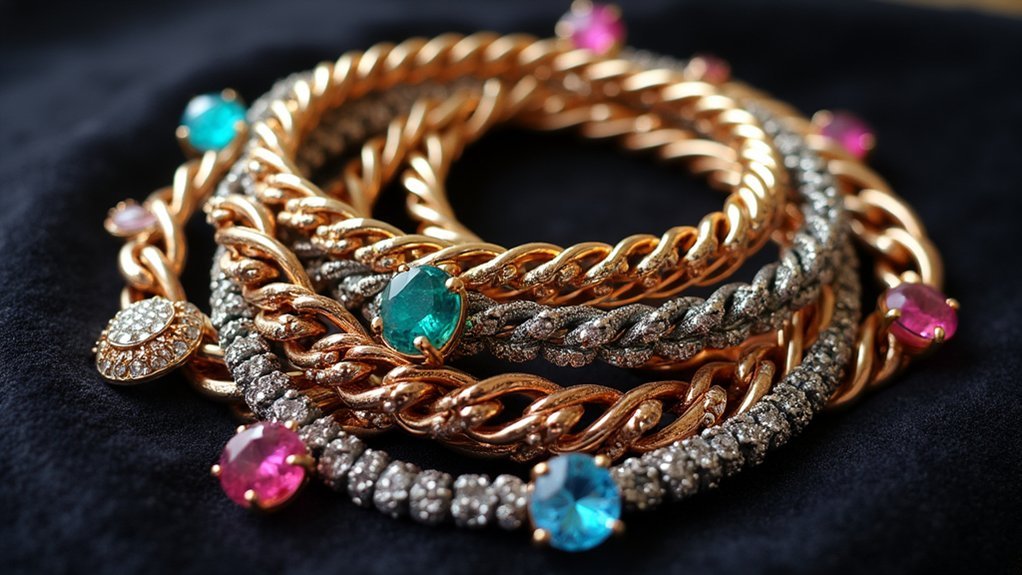
While traditional jewelry etiquette once demanded that you stick to one metal type, today’s fashion landscape celebrates the bold art of mixing metals as a powerful form of creative expression.
By breaking away from these conventional rules, you’re opening up endless possibilities to showcase your individual style and personality through your jewelry choices.
The mixed-metal trend, which emerged in the 1990s, represents a fundamental shift toward embracing unique combinations that add visual depth and character to your pieces.
When you combine different metal tones—like pairing yellow gold with silver or incorporating rose gold accents—you create sophisticated looks that reflect your personal aesthetic.
This approach to creative expression allows you to move beyond restrictive traditional guidelines and craft distinctive, layered combinations that truly represent your unique fashion sensibilities.
Understanding Metal Classifications and Color Tones
Before you can master the art of mixing metals, you’ll need to understand how jewelry metals are classified into three distinct color families. This knowledge forms the foundation for creating stunning mixed metals jewelry that complements your unique style.
The three primary metal categories include:
- Silver metals – white gold, sterling silver, and platinum with cool undertones
- Yellow metals – yellow gold and its alloys featuring warm, golden hues
- Pink metals – primarily rose gold with romantic, warm pink tones
- Rose gold versatility – bridges yellow and silver metals seamlessly
Understanding these classifications helps you make informed choices based on your skin tones. Silver metals typically flatter cooler complexions, while yellow metals enhance warmer skin tones.
Rose gold’s adaptability makes it perfect for experimenting with mixed metal combinations.
Creating Versatile Pieces That Transition From Day to Night
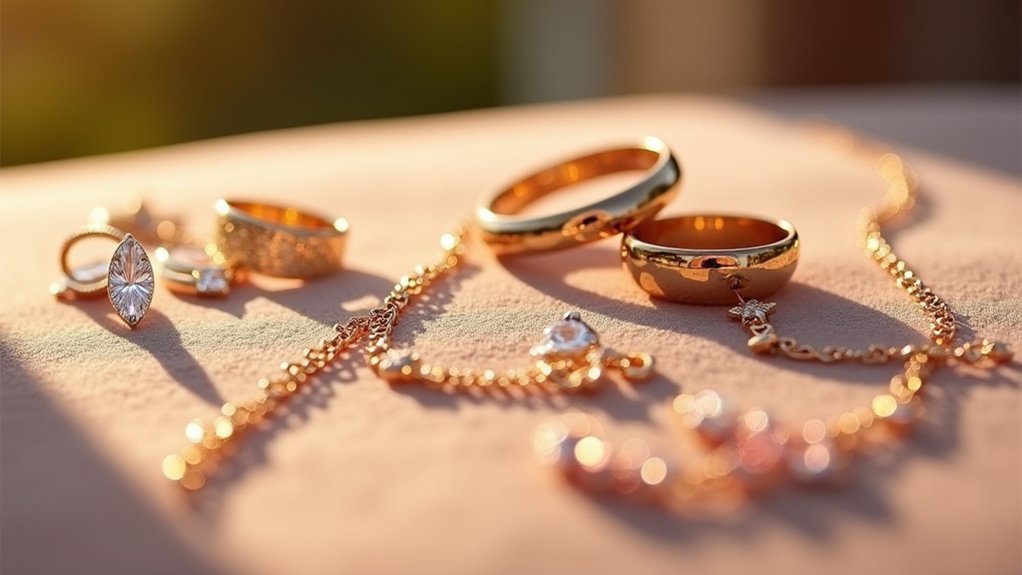
When you combine different metals in a single piece, you’re creating jewelry that effortlessly adapts to any occasion throughout your day. These versatile pieces simplify your styling decisions by naturally bridging casual and formal aesthetics.
| Time | Setting | Metal Combination |
|---|---|---|
| Morning | Office meetings | Yellow gold with silver |
| Afternoon | Lunch dates | Rose gold with white gold |
| Evening | Dinner parties | All three metals layered |
You’ll discover that when you mix metals, you’re investing in unique looks that work seamlessly across different outfits. Layering a rose gold bracelet with silver creates visual depth that’s equally appropriate for daytime errands and evening events. This approach encourages self-expression while maintaining sophistication, allowing your personal style to shine through any setting.
Enhancing Personal Style Through Strategic Metal Combinations
Three fundamental principles guide successful metal mixing: understanding your skin’s undertones, recognizing metal compatibility, and balancing proportions.
When you master these elements, mixing metals becomes a powerful tool for expressing your personal style while expanding your jewelry collection’s versatility.
Strategic combinations allow you to:
- Match warm metals like gold and copper with warm undertones, while cool metals like silver and platinum complement cool undertones
- Layer different textures and finishes to create visual depth and dimension in your overall look
- Break traditional styling rules by confidently pairing unexpected combinations that reflect your unique personality
- Shift seamlessly between casual and formal occasions with versatile pieces that work across multiple settings
Your thoughtful approach to metal combinations transforms ordinary accessories into signature style statements.
Building Confidence With Single Mixed Metal Statement Pieces
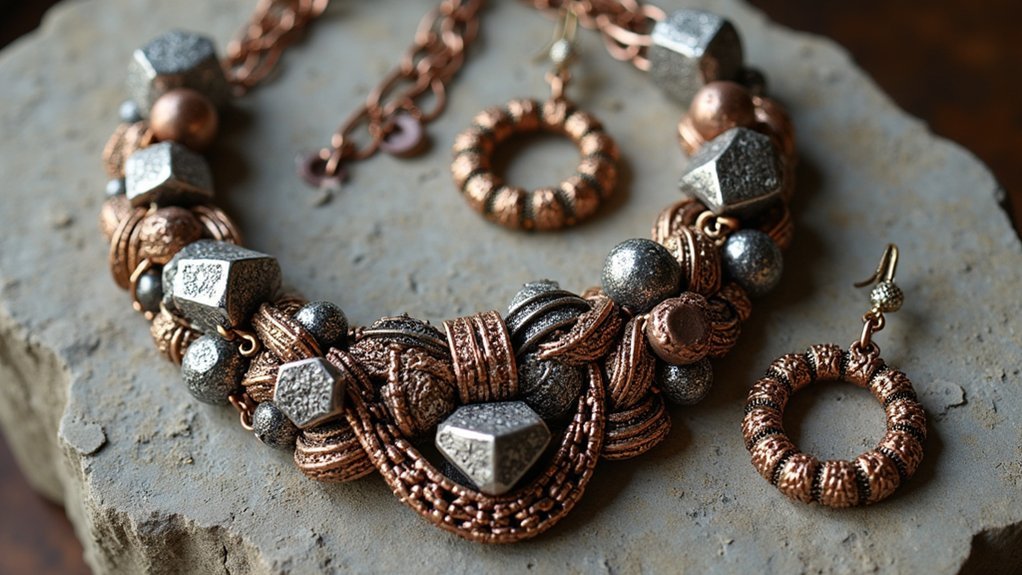
Single mixed metal statement pieces offer the perfect entry point for anyone hesitant about combining different metals on their own. These jewelry pieces eliminate guesswork by expertly blending yellow gold, white gold, and silver into one cohesive design.
Mixed metal statement pieces eliminate the intimidation factor by expertly combining different metals into one perfectly balanced, cohesive design.
You’ll find that investing in these mixed metal pieces simplifies your styling process while creating visual interest that elevates your entire collection.
A bold statement piece serves as your foundation, bridging various jewelry styles and providing versatile styling options. You can confidently build around these metal tones, developing your mixing skills through layering and stacking techniques.
This approach reduces complexity while boosting your confidence to experiment further. You’ll discover that these sophisticated pieces enhance any outfit’s aesthetic without overwhelming your look.
Mastering the Art of Jewelry Stacking and Layering
Anyone can transform their jewelry collection from basic to breathtaking through strategic stacking and layering techniques.
When you’re ready to mix and match different metals, focus on creating balanced proportions using the “Rule of Thirds” – guarantee no single metal dominates your arrangement.
Start your stacking jewelry journey with these essential approaches:
- Begin with dainty, smaller pieces to build confidence before incorporating bolder statement items
- Combine yellow, white, and rose gold for a versatile aesthetic that works for any occasion
- Create a focal point using a statement piece or unique texture to guide your choices
- Layer mixed metals strategically to achieve visual interest through contrasting tones and textures
This method creates chic, harmonious looks that seamlessly shift between formal and casual settings.
Achieving Perfect Balance With the 50/50 Metal Ratio
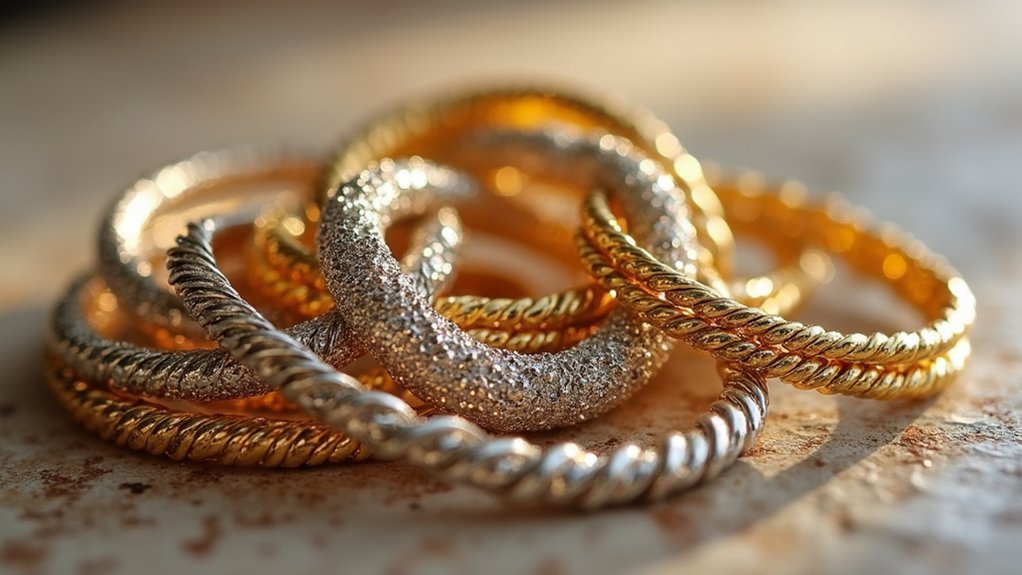
You’ll discover that mastering metal proportion rules transforms your jewelry combinations from chaotic to cohesive, with the 50/50 ratio serving as your foundation for success.
This balanced approach creates visual harmony that lets each metal shine while preventing any single element from dominating your overall look.
Once you understand these styling principles, you can confidently mix gold, silver, and other metals to create sophisticated pieces that work for any occasion.
Understanding Metal Proportion Rules
When you’re starting your journey into mixing metals, the 50/50 ratio serves as your foundational guide for creating balanced and visually appealing jewelry combinations.
This rule prevents any single metal from overwhelming your design while allowing each material’s unique characteristics to shine through.
The 50/50 ratio offers several key advantages:
- Eliminates guesswork – You won’t second-guess your proportions when layering gold and silver pieces
- Creates visual harmony – Neither metal competes for attention, resulting in sophisticated compositions
- Builds styling confidence – Perfect for beginners who want reliable results without complex calculations
- Showcases contrast effectively – Highlights the beautiful differences between metals without creating chaos
Visual Harmony Through Balance
While understanding the 50/50 ratio provides your foundation, implementing it successfully requires recognizing how visual weight affects your jewelry’s overall balance. When you maintain this recommended proportion between mixed metals, you’ll create visual harmony that prevents any single metal from dominating your design.
| Balance Element | Harmonious Approach | Result |
|---|---|---|
| Metal Distribution | Equal 50/50 ratio | Prevents overpowering |
| Style Selection | Similar designs across metals | Avoids visual dissonance |
| Tone Integration | Seamless blending | Creates cohesion |
| Outfit Pairing | Versatile matching | Simplifies styling |
You’ll find that selecting similar styles across your metals eliminates visual dissonance while creating sophisticated, timeless pieces. This 50/50 ratio simplifies styling decisions, allowing your jewelry to complement various outfits without clashing or overwhelming your ensemble.
Styling Tips for Ratios
Understanding visual harmony sets the stage for mastering practical application of the 50/50 metal ratio in your daily styling routine. Achieving this perfect balance requires strategic thinking about how you distribute different metals across your jewelry ensemble.
- Layer strategically – When stacking rings or necklaces, alternate between gold and silver pieces to maintain your 50/50 ratio while creating visual depth.
- Scale matters – Guarantee larger statement pieces don’t overwhelm the balance by pairing them with appropriately sized contrasting metal accessories.
- Mix textures thoughtfully – Combine polished gold with brushed silver, or hammered copper with smooth platinum to add sophistication while maintaining ratio.
- Experiment boldly – Try unconventional mixed metals like rose gold with white gold to discover unique combinations that highlight each metal’s beauty.
Selecting Metal Combinations That Complement Your Skin Tone
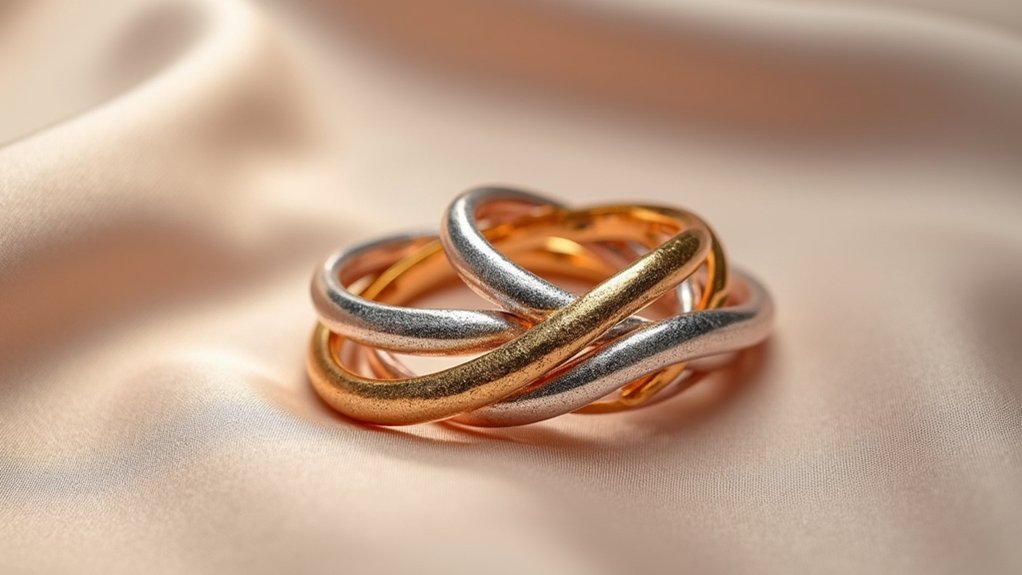
How do you determine which metal combinations will make your skin look radiant rather than washed out?
Start by identifying your undertones. If you have warmer skin with yellow or golden undertones, yellow gold enhances your natural glow beautifully.
For cooler skin with pink or blue undertones, white gold and silver provide complementary contrast that highlights your complexion.
Rose gold offers versatility, pairing elegantly with both warm and cool tones while adding subtle sophistication.
When mixing metals, you’ll create balanced looks by combining yellow gold with white or rose gold.
These metal combinations harmonize various skin tones while generating visual interest.
Incorporating Natural Diamonds to Elevate Mixed Metal Designs
When you add natural diamonds to your mixed metal jewelry, you’re instantly transforming ordinary pieces into luxurious statements that catch light from every angle.
These timeless gems create sophisticated contrasts against both gold and silver, making your mixed metals work harmoniously together while adding incredible value to your designs.
Diamonds bridge the gap between gold and silver, creating seamless harmony while transforming mixed metal pieces into valuable luxury statements.
Diamonds enhance your jewelry designs by:
- Creating stunning focal points that highlight unique textures and metal combinations
- Adding quiet luxury that makes everyday pieces feel extravagant and special
- Providing versatile beauty that complements any metal pairing you choose
- Increasing depth and dimension through strategic placement within mixed metal frameworks
You’ll discover endless creative possibilities when incorporating diamonds into your mixed metals, as these versatile gemstones seamlessly adapt to any combination while elevating the overall aesthetic impact.
Using Contrast and Texture to Add Visual Interest
Beyond the sparkle that diamonds bring to your mixed metal pieces, the strategic use of contrast and texture becomes your secret weapon for creating jewelry that stops people in their tracks.
When you mix metals like yellow gold with oxidized silver, you’re creating striking visual tension that adds depth and complexity to your designs. The smooth finish of gold against matte oxidized silver creates enchanting textural interplay that draws the eye.
You can amplify this effect by incorporating various metal shades—rose, white, and yellow gold—to accentuate each metal’s distinct characteristics.
This contrast also serves as the perfect backdrop for highlighting gemstones, making them pop against contrasting backgrounds. The resulting light interplay between different surfaces adds dimension and creates that mesmerizing visual experience you’re after.
Developing Your Signature Look Through Metal Experimentation
The journey toward your distinctive jewelry style begins with bold experimentation across different metal combinations.
You’ll discover your personal favorite pairings through hands-on exploration, testing how yellow gold complements your warmer skin tones or how white gold enhances cooler undertones. This experimentation process helps you craft a signature look that’s uniquely yours.
- Start with single mixed metal pieces like rings or bracelets to simplify your design approach.
- Stack jewelry in various metal tones to add visual depth and explore different aesthetic directions.
- Consider how mixed metals shift seamlessly from casual daywear to formal evening looks.
- Pay attention to which combinations make you feel most confident and authentic.
Your signature look emerges naturally as you identify patterns in your preferences and understand which metal combinations truly resonate with your personal style.
Frequently Asked Questions
Should You Mix Metals With Jewelry?
You should mix metals in jewelry because it creates versatile styling options, complements different skin tones, adds visual contrast and depth, and allows seamless shifts between casual and formal occasions.
What Is the Rule for Mixing Metals?
You’ll want to follow the Rule of Thirds by using three different metal tones, maintain a 50/50 ratio for balance, stick to one overarching style, and carefully consider proportions throughout your design.
Why Would Transition Metals Be Good for Jewelry?
You’ll find shift metals excel for jewelry because they’re durable, resist corrosion, and maintain their shine. They’re hypoallergenic, conduct heat well for precision work, and you can alloy them for various colors and properties.
Why Do People Mix Gold With Other Metals?
You’ll mix gold with other metals because it creates versatile designs that complement different skin tones, enhances visual appeal, reflects your personal style, and produces sophisticated statement pieces that stand out elegantly.
In Summary
You’ll discover that mixing metals isn’t just a trend—it’s your pathway to authentic self-expression. Don’t let outdated rules limit your creativity when you can build a versatile jewelry collection that works across every occasion. Start with one mixed-metal piece you love, then experiment with combinations that flatter your skin tone. You’ll develop confidence in your choices and create a signature style that’s uniquely yours through fearless metal experimentation.


Leave a Reply