

Keum-boo is an ancient Korean jewelry-making technique where you fuse 24k gold foil directly onto fine silver using only controlled heat and pressure. You’ll heat the silver to 260-370°F, then carefully apply the gold foil while burnishing it down to create a permanent molecular bond. This process doesn’t require adhesives or solders, and it creates stunning contrast between the bright gold patterns and silver base. Discover the complete process, essential tools, and troubleshooting techniques below.
Origins and Cultural Heritage of the Ancient Korean Technique
When you explore the rich tapestry of Korean metallurgy, you’ll discover that keum-boo stands as one of the most sophisticated techniques to emerge from the Goryeo Dynasty (918-1392 AD).
This ancient technique, meaning “attached gold” in Korean, demonstrates your ancestors’ mastery of jewelry making through its precise diffusion bonding process.
You’re witnessing a method that fuses 24k gold foil to fine silver without adhesives or solders—a reflection of Korean innovation.
This remarkable fusion process achieves permanent gold-silver bonding through heat and pressure alone, exemplifying ancient Korean metallurgical mastery.
The cultural significance extends beyond mere decoration; keum-boo represents Korea’s historical expertise in precious metal manipulation.
When you practice this technique today, you’re connecting with centuries of Korean craftsmanship that influenced metallurgy across Asia, showcasing how traditional Korean artisans elevated functional metalwork into extraordinary art.
Essential Materials and Metal Requirements for Gold Fusion
You’ll need specific metal types to achieve successful keum-boo fusion in your jewelry projects.
The technique requires 24k gold foil paired exclusively with fine silver, as these materials create the ideal conditions for permanent bonding.
Your gold foil’s thickness becomes critical—choose carefully since overly thin foil can lead to diffusion problems that’ll compromise your final piece.
Required Metal Types
Although Keum-boo appears deceptively simple, it demands specific metal types to achieve the distinctive diffusion bond that defines this ancient Korean technique.
You’ll need 24k gold foil as your primary material, paired exclusively with fine silver that’s been prepared through depletion gilding. This preparation creates a pure silver surface essential for proper adhesion between the metals.
The thickness of your gold foil is critical—too thick prevents effective bonding, while too thin risks absorption into the silver.
Clean metals are absolutely essential for successful Keum Boo, as any contamination disrupts the fusion process.
Beyond traditional combinations, you can expand your design possibilities by incorporating other metal types like palladium, white gold, or platinum with your gold foil applications.
Gold Foil Specifications
Since successful keum-boo depends entirely on using the correct gold specifications, you must source 24k pure gold foil that measures between 23-30 microns in thickness.
This thin layer guarantees effective diffusion bonding when applied to clean metal surfaces through proper burnishing techniques.
The 24k gold purity is non-negotiable – lower karat gold won’t create the necessary molecular bond with fine silver.
Your foil’s thickness directly impacts adhesion quality; too thick prevents proper bonding, while too thin tears during application.
The bonding process occurs at temperatures between 260-370°C, allowing the gold to fuse permanently with the fine silver base.
When working with sterling silver, depletion gilding first creates the ideal fine silver surface for maximum gold foil adhesion during the fusion process.
Step-by-Step Process of Diffusion Bonding Gold to Silver
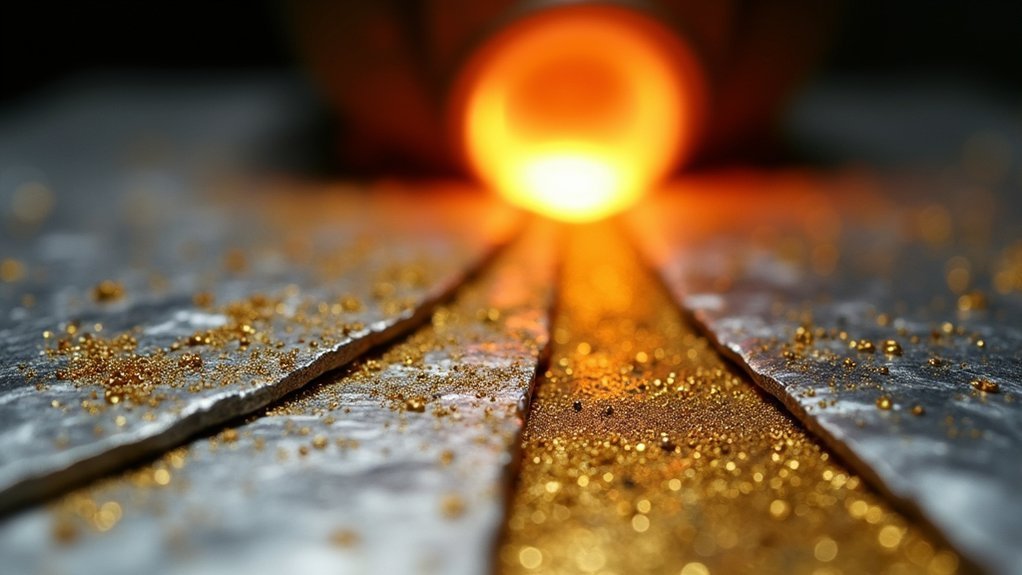
Three essential preparations set the foundation for successful Keum-Boo diffusion bonding: creating a perfectly clean silver surface, preparing your gold foil, and establishing the correct temperature range.
You’ll start by performing depletion gilding on your finished sterling silver piece, revealing the fine silver layer needed for ideal adhesion. Cleanliness becomes critical—any contaminants will sabotage your bonding process.
Heat your silver to 260-370°F, then carefully position the gold foil onto the prepared surface.
Using your burnishing tool, apply steady pressure across the foil while maintaining consistent heat. The diffusion bonding occurs as atoms migrate between the metals, creating a durable connection that’s greatly thicker than traditional plating.
This Keum-Boo technique produces lasting, beautiful results when executed properly.
Heat Sources and Temperature Control for Successful Application
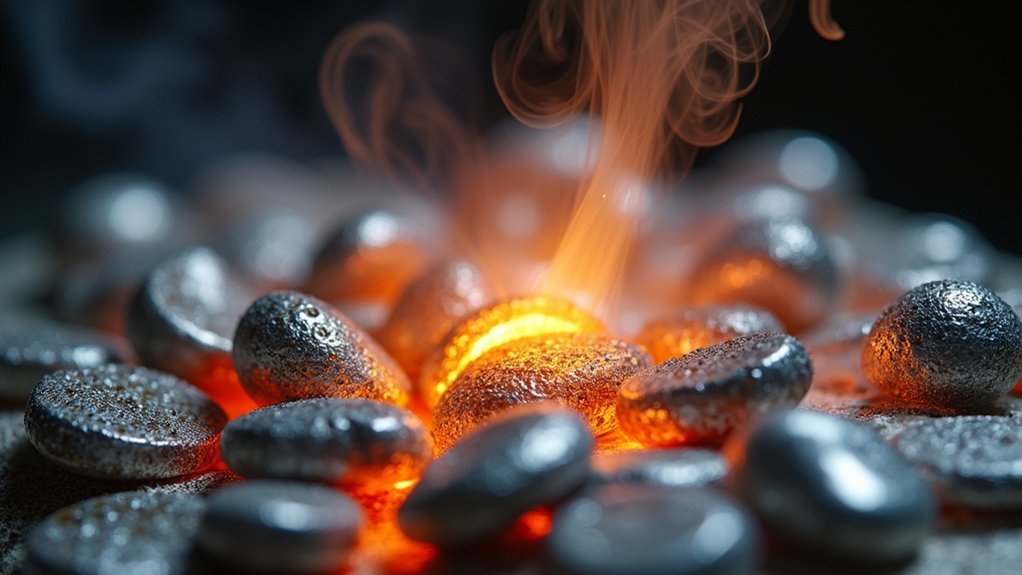
Achieving proper temperature control determines whether your Keum-Boo application succeeds or fails, making your choice of heat source one of the most important decisions in the process. You’ll need to maintain 650-950°F for effective diffusion bonding without exceeding gold foil’s melting temperature.
| Heat Source | Cost | Temperature Control |
|---|---|---|
| Electric Hot Plate | Low | Manual/Limited |
| Ultralite Kiln | High | Stable/Precise |
| Small Blowtorch | Low | Careful Handling Required |
An electric hot plate offers affordability but requires constant monitoring. The Ultralite kiln provides superior temperature control for consistent jewellery making techniques. A blowtorch demands careful handling to prevent overheating. Using a brass sheet on your hot plate improves heat distribution and creates a better adhesive bond while preventing oxidation during diffusion bonding.
Tools and Equipment Needed for Professional Results
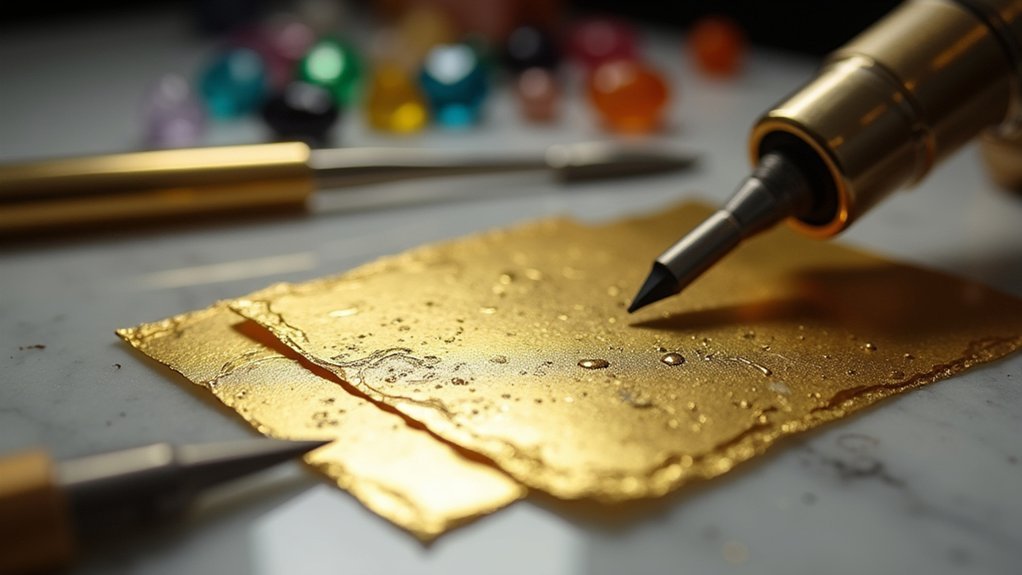
You’ll need specific tools and equipment to achieve professional-quality Keum-Boo results that showcase precise gold fusion work.
Your toolkit must include reliable heat sources for temperature control, metal preparation instruments for creating smooth silver surfaces, and specialized application equipment for handling delicate gold foil.
These essential components work together to guarantee you’ll create stunning jewelry pieces with seamless gold-to-silver bonds that last.
Essential Heat Source Options
While mastering the ancient Korean technique of Keum-Boo requires patience and practice, selecting the right heat source determines whether you’ll achieve professional-quality gold fusion or frustrating failures. Three primary heat sources dominate jewelry making workshops, each offering distinct advantages for temperature control and bonding success.
| Heat Source | Advantages | Disadvantages |
|---|---|---|
| Electric Hot Plates | Affordable, widely available | Manual adjustments, imprecise control |
| Ultralite Kilns | Steady temperature, purpose-built | Higher cost investment |
| Small Blowtorches | Versatile, cost-effective | Risk of melting gold foil |
Your choice impacts safety and results greatly. Electric hot plates suit beginners but require constant monitoring. Ultralite kilns excel at maintaining the vital 650-950°F range needed for proper fusion. Small blowtorches demand careful handling but offer excellent control once mastered.
Metal Preparation Tools Required
Precision marks the difference between amateur attempts and museum-quality Keum-Boo pieces, making your tool selection as vital as your technique.
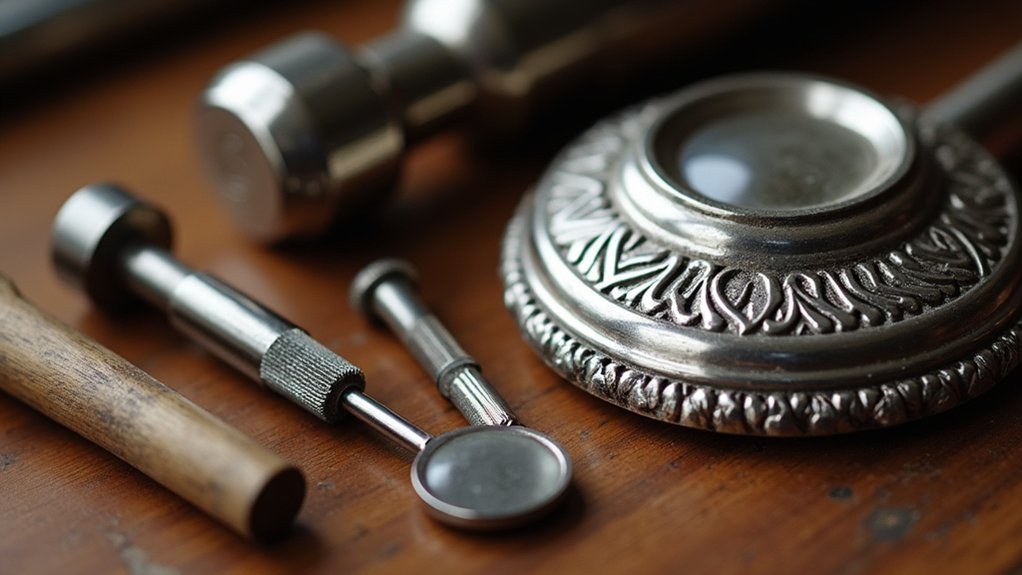
You’ll need a thorough soldering kit for preparing and finishing your silver pieces before applying gold foil. General jewelry-making tools including saws, files, and hammers are essential for shaping and refining your work prior to bonding.
For gold foil preparation, specialized cutting tools like craft paper punches and scissors guarantee accurate sizing. Templates and tracing paper help you create intricate design patterns and assure precise placement on silver surfaces.
The burnisher stands as your most important tool, applying necessary pressure for strong adhesion between metals. These tools collectively transform raw materials into professional-grade Keum-Boo jewelry pieces.
Gold Application Equipment Needed
Beyond basic metalworking tools, successful Keum-Boo demands specialized equipment for the gold application process itself. Your soldering kit becomes essential for preparing and finishing silver pieces before applying the Keum Boo technique.
General jewelry tools like saws, files, and hammers help you craft the perfect silver foundation. For gold foil application, you’ll need specific cutting tools such as craft paper punches or precision scissors, plus templates for accurate design placement.
A burnisher is absolutely vital—it applies the necessary pressure to create that strong diffusion bond between gold and silver. Finally, you must have a reliable heat source: an electric hot plate, ultralite kiln, or small blowtorch to maintain proper temperature throughout the fusion process.
- Gold foil shimmering against polished silver surfaces
- Burnisher gliding smoothly across delicate metal layers
- Heat radiating from your electric hot plate’s glowing surface
- Precision cutting tools creating intricate foil patterns
Common Challenges and Troubleshooting Tips
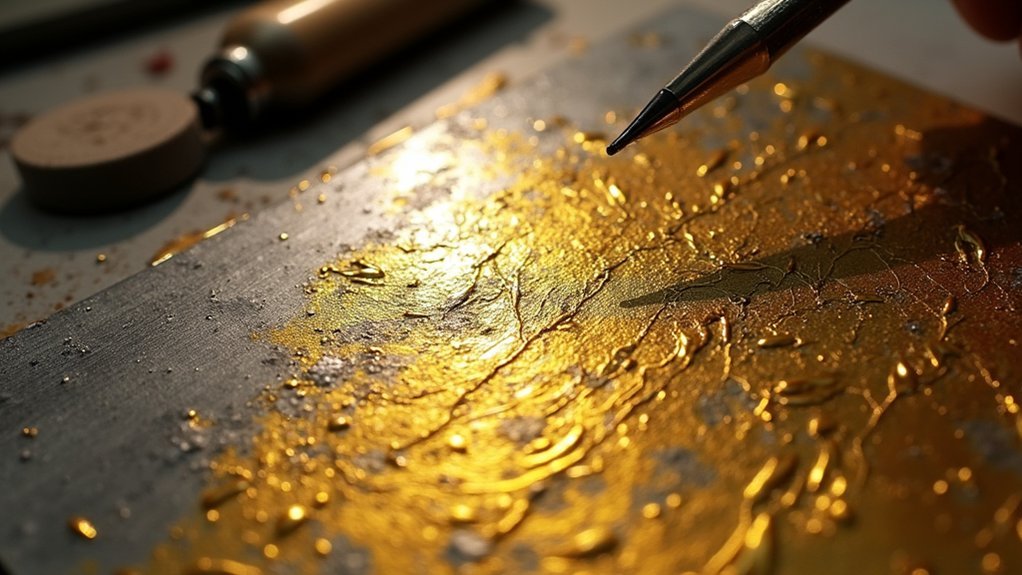
Despite its elegant simplicity, keum-boo presents several technical challenges that can frustrate even experienced metalsmiths. Adhesion failure often occurs when you use thicker gold foil or exceed proper bonding temperature ranges of 650-950°F. Overheating causes gold diffusion into silver, weakening the bond considerably.
Temperature control remains critical throughout the Keum Boo process. You’ll need consistent heat to avoid bonding issues that lead to peeling or poor adhesion.
Small bubbles frequently appear during fusion but respond well to careful burnishing techniques. Larger bubbles require re-heating and puncturing to eliminate completely.
When working with challenging surfaces, roughening them with acid improves adhesion quality dramatically.
These troubleshooting tips help you achieve professional results while avoiding common pitfalls that compromise your finished jewelry pieces.
Design Applications and Creative Possibilities
While traditional gold plating creates only surface-thin coverage, keum-boo opens extraordinary design possibilities by fusing substantial 24k gold layers directly into your silver jewelry pieces.
This ancient bonding technique transforms fine silver into stunning artworks through strategic gold foil placement and creative layering methods.
You’ll discover cost-effective ways to achieve rich surface decorations while experimenting with various textures and patterns. The process accommodates different foil thicknesses, producing unique color variations that enhance your jewelry designs beyond conventional limits.
- Delicate leaf patterns flowing across pendant surfaces like golden rivers
- Geometric designs creating bold contrasts between silver and gold sections
- Textured landscapes with rolling gold hills against silver valleys
- Intricate mandalas featuring layered gold circles radiating from silver centers
These creative possibilities guarantee each piece becomes distinctly yours.
Care and Maintenance of Keum-Boo Jewelry Pieces
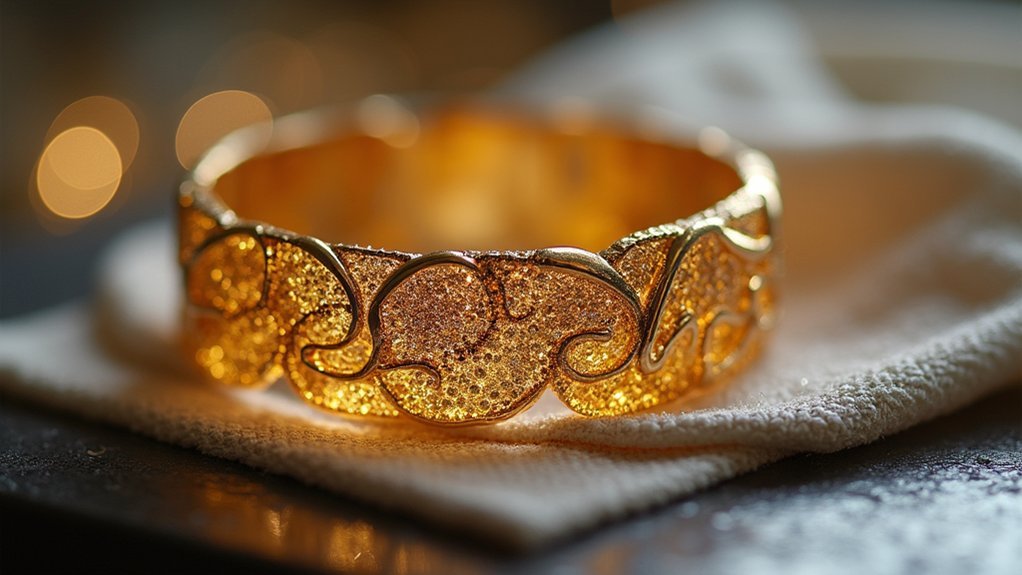
Creating stunning keum-boo jewelry represents only part of your artistic journey—protecting these precious pieces requires dedicated attention to preserve their beauty for years to come.
Regular wear actually benefits your Keum-boo jewelry, as natural skin oils help protect sterling silver from tarnishing. However, you’ll need proper maintenance practices to safeguard the delicate gold bond.
Remove your jewelry before showering, cleaning, or swimming to prevent exposure to harsh conditions. Household chemicals accelerate tarnishing and can damage the gold fusion.
For cleaning, use mild soap mixed with water and a soft microfiber cloth. When deeper care becomes necessary, apply a gentle baking soda paste.
Always avoid perspiration, chlorine, and rubber contact to maintain your jewelry’s exceptional craftsmanship.
Frequently Asked Questions
What Is Keum Boo Jewelry?
You’ll find keum boo jewelry uses an ancient Korean technique that bonds 24k gold foil to fine silver through heat and pressure, creating durable, beautiful pieces with minimal gold for cost-effective luxury.
What Is the Keum Boo Gold Foil Technique?
You’ll apply thin 24k gold foil sheets to heated fine silver using diffusion bonding. You’ll heat the silver to 260-370°C while burnishing the foil, creating permanent adhesion without melting either metal.
Is Keum Boo Permanent?
Yes, keum boo creates a permanent bond that’s hundreds of times thicker than traditional plating. You’ll get diffusion bonding that resists wear and tarnishing, making your gold-silver jewelry durable for years.
Is Keum Boo Durable?
Yes, you’ll find Keum Boo very durable since it creates a diffusion bond hundreds of times thicker than plating. You can wear it regularly, and it’ll last with proper care and chemical avoidance.
In Summary
You’ve discovered an ancient Korean technique that’ll transform your jewelry making. By mastering keum-boo’s heat and pressure application, you’re connecting with centuries of metalworking tradition while creating stunning gold-on-silver pieces. Don’t let initial challenges discourage you—practice makes perfect with temperature control and timing. Your finished keum-boo jewelry won’t just showcase technical skill; it’ll represent a beautiful fusion of historical artistry and your personal creative vision.


Leave a Reply