

You can identify pressure treated amber by examining several key characteristics. Look for an artificially smooth, glossy surface texture with distinctive incision marks about one inch long scattered across the piece. You’ll notice a strong chemical odor, especially in recently processed amber, and a greenish or bluish tint on freshly cut surfaces. Under UV light, chemical preservatives will fluoresce with bright, unnatural colors that don’t appear in genuine amber, and the overall finish will be remarkably consistent rather than naturally varied.
Visual Characteristics of Treated Amber
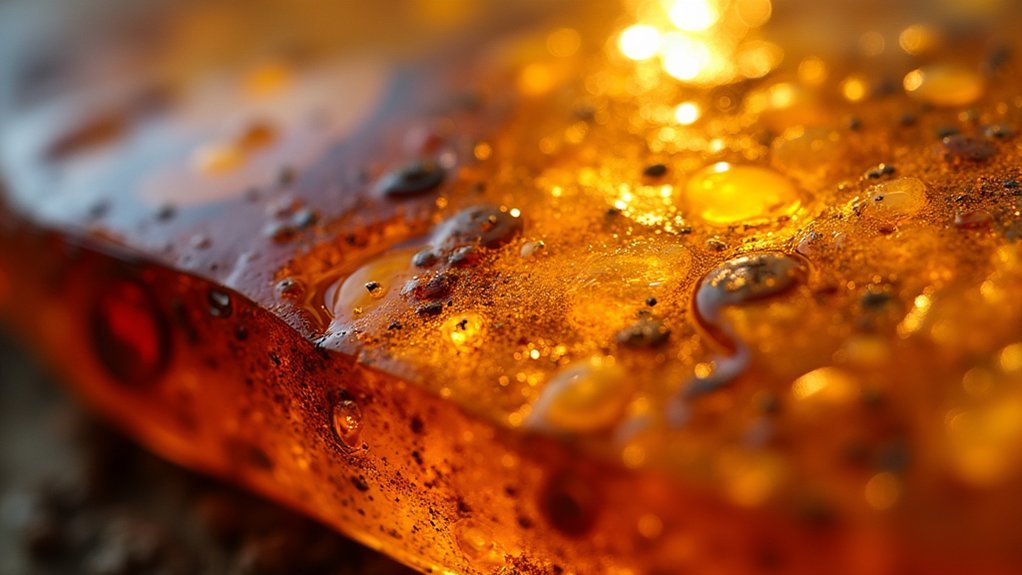
When examining pressure-treated amber wood, you’ll immediately notice its distinctive golden to amber coloration that appears more vibrant than untreated lumber due to the chemical preservatives.
During your visual inspection, look for a greenish or bluish tint that becomes especially apparent on freshly cut surfaces where the color of the wood reveals chemical alteration.
You’ll also spot incision marks approximately one inch long scattered across the surface, indicating deep preservative penetration during treatment.
The treated amber typically displays a remarkably smooth, consistent finish that distinguishes it from rough, untreated varieties.
The treated amber typically displays a remarkably smooth, consistent finish that distinguishes it from rough, untreated varieties.
Additionally, you can’t miss the strong chemical odor emanating from pressure-treated wood, particularly noticeable in recently processed pieces, confirming the presence of preservatives.
Chemical Testing Methods for Amber Authentication
Succinic acid analysis serves as the cornerstone of chemical amber authentication, as this organic compound occurs naturally in genuine amber but remains absent in most synthetic imitations.
You’ll need infrared spectroscopy to identify amber’s unique molecular absorption patterns, similar to how you’d identify treated lumber through chemical testing.
Density testing proves equally valuable—genuine amber maintains specific gravity between 1.08-1.10, helping you distinguish authentic pieces from pressure treated alternatives.
UV fluorescence testing reveals distinctive glowing patterns that synthetic materials can’t replicate.
Chemical testing kits detect additives or chemical treatment processes, confirming natural origins versus artificial production.
These methods work collectively, much like identifying treated wood requires multiple verification steps.
You’ll achieve reliable authentication by combining these chemical approaches rather than relying on single testing methods.
UV Light Examination Techniques
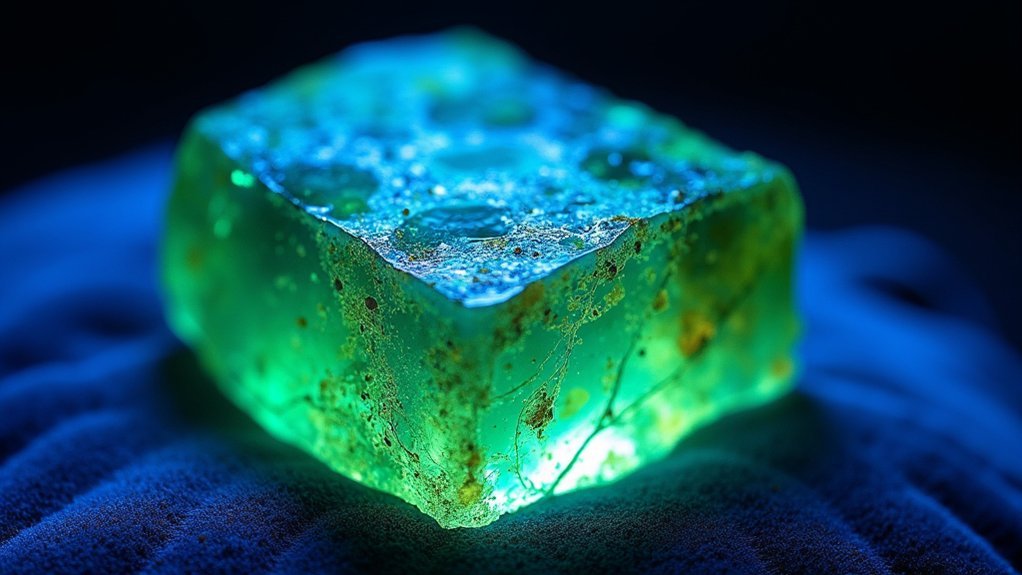
How can UV light examination help you distinguish between natural and pressure-treated amber? UV light reveals chemical treatments in pressure-treated lumber by causing certain preservatives to fluoresce under ultraviolet illumination.
UV light reveals chemical treatments in amber by causing certain preservatives to fluoresce under ultraviolet illumination, distinguishing natural from processed specimens.
When you’re examining amber samples, look for bright or unusual fluorescent colors that indicate chemical processing.
Here’s how to conduct effective UV light examinations:
- Create ideal conditions – Work in a dark environment to enhance fluorescence visibility and maximize detection of treated areas.
- Position correctly – Angle your UV light properly to differentiate between treated and untreated wood characteristics effectively.
- Observe color changes – Watch for unnatural fluorescent responses that distinguish processed amber from authentic specimens.
Remember that detection effectiveness varies depending on specific chemical preservatives used, as not all treatments will fluoresce under UV illumination.
Surface Texture and Clarity Analysis
Beyond UV examination, surface texture and clarity analysis provides essential visual clues for identifying pressure-treated amber. You’ll notice the pressure treatment process creates a distinctly smooth surface texture as chemicals compact the wood fibers. Look for a glossy finish that differs markedly from untreated amber’s natural appearance.
| Characteristic | Treated | Untreated | Emotional Impact |
|---|---|---|---|
| Surface Sheen | Glossy, artificial | Natural matte | Loss of authenticity |
| Texture | Smooth, compressed | Varied, organic | Missing natural beauty |
| Color Uniformity | Artificially consistent | Natural variations | Stripped of character |
| Incision Marks | Visible treatment cuts | Absent | Evidence of manipulation |
You’ll spot preservatives through slight surface sheens and incision marks from chemical penetration. Color variations between treated and untreated sections reveal uniform hues in processed areas, confirming artificial enhancement.
Heat Response Testing Procedures
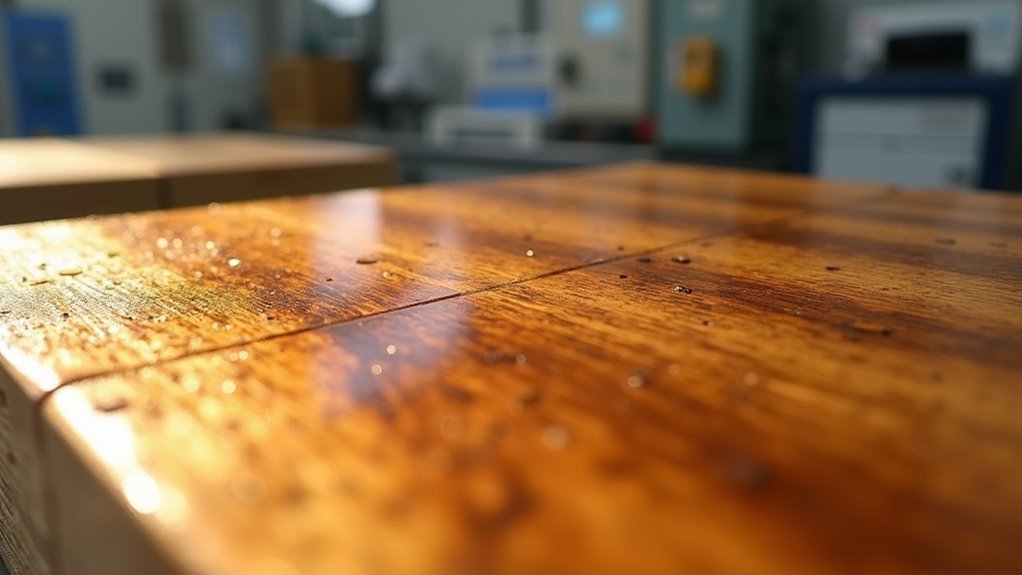
When you apply controlled heat to amber samples, you’ll trigger distinct chemical reactions that reveal pressure treatment modifications.
Heat response testing helps you identify chemicals used in amber processing by observing color changes and odor emissions during controlled heating.
Controlled heating reveals chemical treatments in amber through distinctive color shifts and odor emissions during testing.
You’ll need to conduct this test at temperatures between 200°F to 300°F, similar to testing wood products. Pressure-treated amber will exhibit distinctive responses when heated.
- Set up proper ventilation – Work in a well-ventilated area to safely dissipate harmful fumes released during testing.
- Monitor color changes – Watch for unusual color shifts that indicate chemical preservatives or treatments.
- Detect chemical odors – Strong, unnatural smells suggest the amber contains synthetic treatments.
Avoid burning treated samples excessively, as this can create toxic fumes and obscure your observations.
Professional Gemological Equipment Assessment
While heat testing provides valuable initial insights, professional gemological equipment offers far more precise analysis of amber’s authenticity and treatment history.
You’ll need refractometers and spectrometers to assess optical properties and chemical composition for accurate identification. Unlike pressure treated wood that shows obvious chemical alterations, treated amber requires sophisticated detection methods.
A polarizing microscope reveals internal inclusions and patterns that indicate natural versus synthetic origins.
You can perform specific gravity testing to differentiate amber from resins and plastics, as genuine amber has lower density.
UV light exposure helps identify natural fluorescence patterns.
For definitive results, use Fourier Transform Infrared Spectroscopy (FTIR) to analyze molecular structure, confirming authenticity and distinguishing amber from other organic materials with exceptional precision.
Frequently Asked Questions
How Can You Tell if Something Is Pressure Treated?
You’ll spot pressure treated wood by looking for white tags or colored stamps, checking for incision marks, noticing greenish or brown tints, smelling chemical odors, and requesting supplier fact sheets.
What Year Did They Stop Putting Arsenic in Treated Lumber?
You’ll find that arsenic was phased out of residential treated lumber in 2004. However, it’s still used in industrial applications like utility poles, so you should remain cautious with older wood.
How Is Pressure Treated Lumber Stamped?
You’ll find pressure treated lumber stamped with colored marks showing chemical preservatives like ACQ or Bor, treatment methods, EPA compliance, and intended use specifications for above or below ground applications.
How to Tell the Difference Between Pressure Treated and Non-Pressure-Treated Wood?
You’ll notice pressure-treated wood has greenish or brown coloring, chemical odors, incision marks, and official stamps or tags. Untreated wood displays natural coloring, pleasant wood scents, and lacks these identifying marks.
In Summary
You’ll need to combine multiple identification methods to accurately detect pressure treated amber. Don’t rely on just one test—use visual inspection, UV light examination, and heat response testing together. If you’re still uncertain, seek professional gemological assessment with specialized equipment. Remember that treated amber isn’t necessarily fake, but knowing its history helps you make informed purchasing decisions and understand the piece’s true value and authenticity.


Leave a Reply