You’ve spent countless hours perfecting your metalworking techniques and developing your signature style, but your jewelry portfolio isn’t attracting the attention you deserve. The difference between a hobbyist’s collection and a professional portfolio lies in strategic presentation and deliberate curation choices. Most jewelers focus solely on technical skill while overlooking the critical elements that transform beautiful pieces into compelling business assets that clients can’t ignore.
Developing Your Unique Design Aesthetic and Creative Vision

Authenticity becomes your greatest asset when developing a jewelry design aesthetic that truly represents your artistic vision.
Your authentic artistic vision serves as the foundation for creating a distinctive jewelry design aesthetic that resonates with your creative spirit.
You’ll need to reflect on your personal inspirations and examine previous work to identify recurring themes that define your style. Experiment boldly with various materials used in your pieces—metals, gemstones, and alternative elements help refine your creative vision and set you apart from competitors.
Create mood boards to visualize your design concepts effectively. These guide vital decisions about materials, colors, and overall aesthetics.
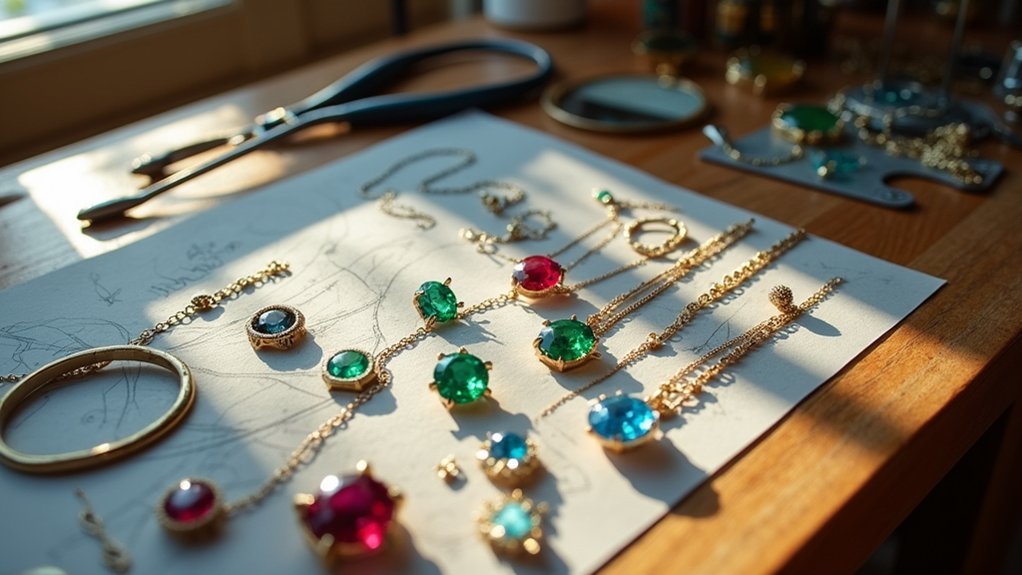
Document your creative process thoroughly, as this insight into your artistic evolution enhances your portfolio greatly. When presenting your portfolio, showcase what makes your work unique—whether it’s innovative techniques or distinctive material combinations that attract clients seeking originality.
Mastering Technical Craftsmanship and Jewelry-Making Techniques
The foundation of exceptional jewelry design rests on your ability to execute precise technical craftsmanship that transforms creative visions into tangible masterpieces. Mastering technical craftsmanship requires dedication to learning essential techniques like soldering, stone setting, and metalworking. Understanding material properties—gold’s malleability, silver’s conductivity, platinum’s durability—guides your design decisions and guarantees each finished piece meets professional standards.
| Technique | Essential Tools | Skill Development Time |
|---|---|---|
| Soldering | Torch, flux, solder | 6-12 months |
| Stone Setting | Beading tools, burins | 1-2 years |
| Lost-Wax Casting | Investment, crucible | 8-18 months |
| Metal Forming | Hammers, anvils, stakes | 1-3 years |
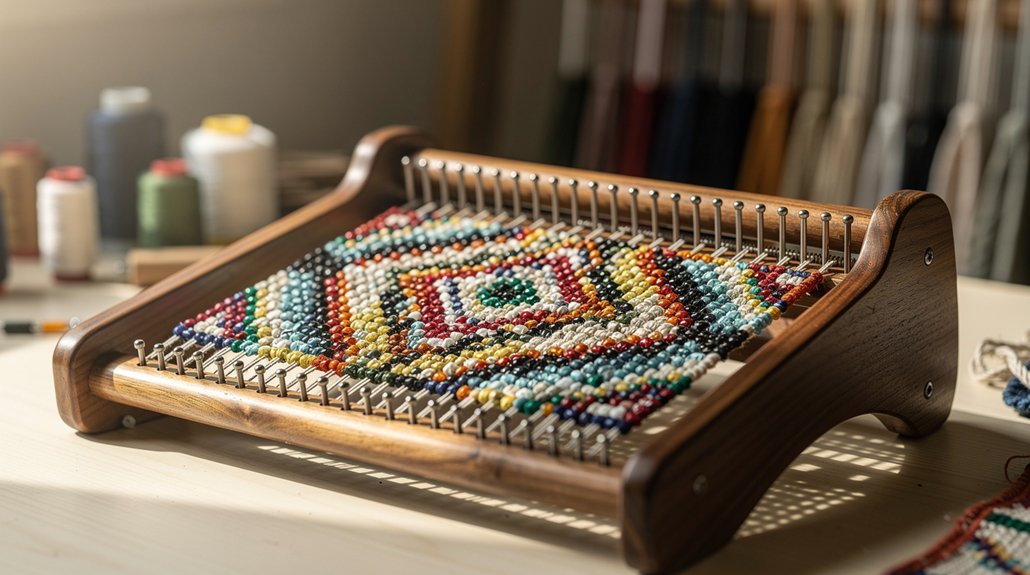
Experimenting with diverse techniques like bead weaving expands your creative repertoire. Continuous education through workshops and mentorship keeps your jewelry design portfolio current with industry innovations.
Professional Photography and Visual Presentation Skills

You’ll need to master camera setup and lighting fundamentals to capture jewelry that truly showcases your craftsmanship.
Professional-quality images require understanding how different lighting conditions affect gemstone brilliance and metal finishes.
Your styling and composition techniques will determine whether viewers focus on your jewelry’s most compelling features or get distracted by poor visual presentation.
Camera Setup and Lighting
Capturing stunning jewelry photographs requires mastering both camera setup and lighting techniques that showcase your pieces’ brilliance and craftsmanship.
Position your camera at eye level with the jewelry to create engaging shots, and use a tripod to eliminate blur in your finished pieces. Natural light or soft, diffused lighting minimizes harsh shadows—shoot during golden hour for ideal results.
A macro lens captures intricate details and textures, highlighting unique design elements.
Experiment with neutral fabrics or textured surfaces as backgrounds that complement without distracting. Consider investing in a lightbox for consistent lighting conditions and clean backdrops, which dramatically improves product image quality in controlled environments.
Proper camera setup and lighting transform ordinary jewelry photos into professional portfolio pieces.
Styling and Composition Techniques
While technical camera skills form your foundation, mastering styling and composition techniques elevates your jewelry photography from adequate to extraordinary.
You’ll create compelling visual narratives that showcase each piece’s unique character and craftsmanship. Your styling choices directly impact how viewers perceive your jewelry.
Consider these essential composition elements:
- Angle experimentation – Capture multiple perspectives to highlight texture, shine, and intricate design details
- Complementary props – Use neutral fabrics or natural elements that enhance without overwhelming your jewelry pieces
- Strategic backgrounds – Select surfaces that support your composition while keeping focus on the jewelry’s key features
Thoughtful styling transforms simple product shots into engaging portfolio pieces.
You’re not just documenting jewelry; you’re creating visual stories that demonstrate your artistic vision and technical proficiency to potential clients.
Curating and Organizing Your Strongest Work
You’ll transform your jewelry portfolio from overwhelming to irresistible by selecting only your most exceptional pieces that demonstrate technical mastery and artistic vision.
Focus on showcasing 15-20 of your strongest works rather than including every piece you’ve ever created, as potential clients and employers prefer depth over breadth.
Arrange these selected pieces in a logical sequence that guides viewers through your skills naturally, creating moments of visual impact while maintaining cohesive flow throughout your presentation.
Quality Over Quantity
Although the temptation exists to include every piece you’ve created, successful jewelry portfolios thrive on strategic curation rather than extensive collections.
Quality trumps quantity when presenting your work to potential clients, galleries, or employers. Each piece should demonstrate your mastery and artistic vision.
Focus on selecting works that showcase:
- Technical excellence – Pieces that highlight your finest craftsmanship and attention to detail
- Creative innovation – Unique designs that set your work apart from other jewelers
- Aesthetic cohesion – Works that complement each other while maintaining your signature style
Your portfolio becomes more impactful when viewers can appreciate the deliberate selection process.
Strategic Visual Flow
Once you’ve selected your strongest pieces, the arrangement and presentation become equally important for creating maximum impact. Lead with your most compelling work to immediately capture viewers’ attention and establish your skill level.
Your online portfolio should demonstrate strategic visual flow by organizing pieces thematically or chronologically, showing your artistic evolution and versatility.
Don’t bury exceptional pieces in later pages where they might go unnoticed. Instead, position them strategically throughout your portfolio to maintain engagement. Use high-quality images with consistent backgrounds to create professional visual continuity.
Establish clear navigation by categorizing your work by style, materials, or collections. This thoughtful organization makes it easier for potential clients to explore your range while ensuring they experience your strongest pieces at ideal moments throughout their viewing journey.
Building an Effective Online and Digital Presence

While traditional portfolios remain valuable, establishing a strong digital presence has become vital for jewelry designers seeking to expand their reach and attract clients in today’s market.
Your online portfolio serves as your virtual storefront, making first impressions significant for potential customers and collaborators.
Start by selecting user-friendly platforms like Artsthread and Instagram that showcase your work professionally. High-quality photography is non-negotiable—each piece of jewelry should be captured with proper lighting and clean backgrounds that highlight intricate details.
Essential strategies include:
- Regularly updating your portfolio with fresh designs to demonstrate growth
- Leveraging social media hashtags to increase visibility within jewelry communities
- Creating compelling narratives that explain your design process and inspiration
Consistent engagement with followers builds lasting relationships that translate into business opportunities.
Networking and Client Communication Strategies
Beyond establishing your online presence, success in jewelry design depends heavily on the relationships you build and how effectively you communicate with clients. Your networking efforts and client communication skills directly impact your portfolio’s reach and effectiveness.
Active listening guarantees your designs align with clients’ visions, while trade shows and craft fairs connect you with industry professionals. Social media platforms like Instagram showcase your portfolio while fostering direct engagement.
| Strategy | Platform/Method | Portfolio Benefit |
|---|---|---|
| Trade Shows | Industry Events | Professional Connections |
| Social Media | Instagram/Pinterest | Direct Client Engagement |
| Collaboration | Photographers/Stylists | Enhanced Presentation |
| Feedback | Clients/Peers | Design Refinement |
| Active Listening | Client Meetings | Vision Alignment |
Collaborating with photographers and stylists elevates your portfolio presentation, while regularly seeking feedback helps refine your approach.
Frequently Asked Questions
How to Create a Portfolio for Jewelry?
You’ll start by defining your unique aesthetic and target audience. Document each piece with high-quality photos, organize by style or collection, and create both digital and physical versions for maximum presentation flexibility.
What Skills Do You Need to Be a Jewelry Maker?
You’ll need technical skills like soldering, wire wrapping, and stone setting. Master different materials including metals and gemstones. Develop design principles, maintain precision in craftsmanship, and cultivate strong communication skills for client collaboration.
What Skills Do You Need to Be a Jewellery Designer?
You’ll need strong artistic vision to create appealing designs, technical skills in metalworking and gem setting, material knowledge, CAD software proficiency, and excellent communication abilities to collaborate effectively with clients.
What Makes a Good Jewelry Design?
You’ll create good jewelry design by balancing creativity with functionality. Focus on unique aesthetics, choose quality materials, guarantee comfortable wear, and execute precise craftsmanship. Your design should tell a story while meeting practical needs.
In Summary
You’ve now equipped yourself with the fundamental skills to build a compelling jewelry portfolio. Remember that developing your aesthetic, mastering technical techniques, and presenting your work professionally aren’t one-time achievements—they’re ongoing processes. Continue refining your craft, updating your portfolio regularly, and nurturing client relationships. Your portfolio will evolve as you grow as an artist, so embrace experimentation while staying true to your unique creative vision.