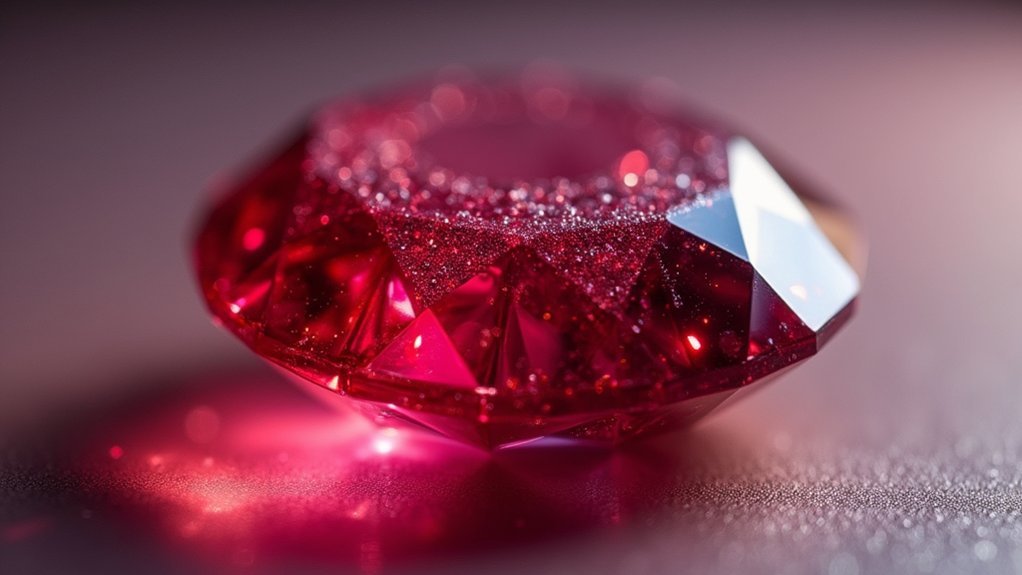
Lead glass-filled rubies typically last 5-15 years with careful handling, while natural rubies can endure for centuries. You’ll notice these treated stones are more vulnerable to heat, chemicals, and physical impacts due to foreign glass material filling their fractures. The lead glass filler can deteriorate over time, especially in high-contact areas, causing cloudiness, cracks, and surface dulling. Their substantially lower resale value reflects this reduced longevity, and understanding these differences will help you make better investment choices.
What Makes Lead Glass Filled Rubies Different From Natural Rubies

While natural rubies form deep within the Earth over millions of years through geological processes, lead glass-filled rubies are treated gemstones that undergo artificial enhancement to improve their appearance.
You’ll notice several key differences when comparing these stones. Natural rubies contain unique inclusions and color variations reflecting their geological origins, whereas lead glass filled ruby specimens often display overly uniform appearances with artificial red coloring.
The glass filling process creates trapped gas bubbles that you won’t find in authentic stones. You can identify differences through physical properties too – lead glass-filled rubies have lower refractive indexes (1.540-1.550) compared to natural rubies (1.770-1.780).
Under ultraviolet light, you’ll see natural rubies fluoresce red while treated versions show weak orange fluorescence or remain completely inert.
The Glass Filling Process and Its Impact on Ruby Structure
When you’re examining lead glass filled rubies, you’ll find that manufacturers heat natural stones in crucibles with lead glass powder, allowing the molten glass to infiltrate and fill existing fractures throughout the gemstone.
This infiltration process fundamentally alters the ruby’s internal structure by introducing foreign material that bonds with the natural crystal matrix.
You’ll notice that these structural changes affect both the stone’s physical properties and its long-term stability compared to untreated natural rubies.
Glass Infiltration Methods
Since the glass filling process fundamentally transforms a ruby’s internal structure, you’ll need to understand how this treatment method actually works. The infiltration occurs when lead glass penetrates existing fissures and cracks within the stone during high-temperature heating. This process permanently alters the ruby’s composition and structural integrity.
| Method Component | Process Details | Impact on Stone |
|---|---|---|
| Temperature Control | Crucible heating at precise levels | Enables glass penetration |
| Lead Glass Composition | Specialized powder formulation | Fills internal gaps |
| Infiltration Timing | Controlled exposure duration | Determines fill depth |
| Cooling Process | Gradual temperature reduction | Sets glass permanently |
Glass-filled rubies emerge from this treatment with enhanced appearance but compromised authenticity, as the lead glass becomes an integral part of their structure.
Structural Integrity Changes
Although lead glass infiltration enhances a ruby’s visual appeal, it fundamentally compromises the gemstone’s structural integrity in ways that affect its long-term durability.
When you examine lead glass-filled rubies closely, you’ll notice the foreign material creates weak points throughout the stone’s internal structure. The molten glass infiltration alters the natural crystalline formation, introducing substances that can’t withstand heat or chemical exposure as effectively as authentic ruby material.
You’ll find that these structural integrity changes manifest as surface imperfections, including bumpy or uneven textures that develop over time.
While the Mohs hardness stays at 9, the glass filling creates durability concerns that become apparent with everyday wear. The filled fractures and inclusions, though visually improved, represent compromised areas where damage is more likely to occur.
Factors That Affect Lead Glass Filled Ruby Longevity

Several key factors directly impact how long your lead glass-filled rubies will maintain their beauty and structural integrity.
The treatment process itself creates vulnerabilities that don’t exist in untreated stones. When lead glass fills fractures, it creates weak points that make your gems more susceptible to damage over time compared to natural rubies.
Chemical exposure poses a significant threat to treated stones’ longevity. Harsh substances like lemon juice can compromise the lead glass filler, causing deterioration and clarity loss.
Heat and physical impacts also present greater risks due to reduced robustness from treatment.
Your care routine dramatically influences lifespan. Regular cleaning with mild soap and warm water maintains appearance, while proper storage away from other gemstones prevents scratches and extends longevity.
Heat Sensitivity and Temperature-Related Damage
You’ll find that lead glass-filled rubies can’t handle extreme temperatures the way natural rubies can.
When exposed to heat around 200°F or higher, these treated stones face serious risks including thermal shock, cracking, and structural damage to the glass filler.
Understanding these temperature limits and implementing proper heat protection measures will greatly extend your ruby’s lifespan.
Temperature Threshold Limits
When temperatures exceed 200°C (392°F), lead glass-filled rubies face significant risk of damage due to their lower heat tolerance compared to untreated stones.
Understanding these temperature threshold limits helps you protect your investment from irreversible harm.
Your glass-filled rubies requires careful monitoring of heat exposure since they’re susceptible to damage at relatively moderate temperatures.
The lead glass filling becomes unstable when heated beyond its tolerance range, potentially compromising the stone’s structural integrity.
Critical temperature considerations include:
- Direct heat sources – Avoid cooking surfaces, open flames, and heating equipment
- Environmental extremes – Limit exposure to hot cars, direct sunlight, and heated storage areas
- Rapid temperature fluctuations – Prevent thermal shock by avoiding sudden temperature changes
Maintaining awareness of these limits guarantees your gemstone’s longevity and appearance.
Heat Exposure Consequences
Three primary mechanisms drive heat damage in lead glass-filled rubies, each threatening your gemstone’s structural integrity and visual appeal.
First, differential expansion occurs when lead glass and ruby expand at different rates during heating, creating internal stress that leads to cracking.
Second, thermal shock develops when you expose your ruby to sudden temperature changes, making stones previously weakened by heat treatment particularly vulnerable to fracturing.
Third, prolonged heat exposure degrades the lead glass filling itself, causing cloudiness and diminishing brilliance over time.
You’ll notice damage accelerates when using ultrasonic or steam cleaners, as these generate intense heat that compounds existing structural weaknesses.
Even extended direct sunlight exposure gradually compromises your ruby’s appearance, making careful temperature management essential for preserving its beauty.
Thermal Damage Prevention
Since lead glass-filled rubies can only withstand temperatures up to 300°F (150°C) before suffering permanent damage, protecting them requires deliberate temperature management in your daily handling and storage practices.
You’ll prevent thermal damage by implementing these protective measures:
- Store your rubies in temperature-stable environments away from direct heat sources like radiators, heating vents, or sunny windowsills.
- Avoid steam cleaning and ultrasonic cleaning methods that generate excessive heat and pressure.
- Remove ruby jewelry before activities involving high temperatures, such as cooking, hot yoga, or sauna sessions.
The lead glass filling expands and contracts differently than natural ruby material, creating stress fractures when exposed to temperature fluctuations.
You’re maintaining your ruby’s structural integrity by controlling its thermal environment consistently.
Chemical Exposure Risks and Ruby Deterioration
Chemical exposure poses one of the greatest threats to lead glass-filled rubies, as everyday substances can quickly compromise their structural integrity.
You’ll find that acidic substances like lemon juice can damage the glass filling and deteriorate your stone’s appearance. The lead glass fillers weaken your ruby’s overall integrity, making it vulnerable to even mild chemical contact.
Lead glass fillers make rubies extremely vulnerable to acidic substances, compromising both structural integrity and visual appearance.
You must avoid ultrasonic and steam cleaning methods, as these aggressive treatments can further damage the lead glass filling.
Instead, stick to gentle cleaning methods using warm, soapy water and a soft brush. Remember that your lead glass-filled ruby has markedly lower durability than untreated natural rubies, so careful handling during cleaning prevents unnecessary deterioration and extends its lifespan.
Physical Wear Patterns in Glass Filled Rubies

You’ll notice that glass-filled rubies develop distinct wear patterns that differ markedly from natural stones.
Surface deterioration becomes apparent through increased scratching and dulling, while the lead glass filler gradually breaks down around treated areas.
These degradation patterns create visible cloudiness and cracks that reveal where the filler material is losing its bond with the ruby matrix.
Surface Deterioration Over Time
While natural rubies can maintain their stunning appearance for centuries, lead glass-filled rubies face a different reality when it comes to surface durability.
You’ll notice that surface deterioration becomes increasingly apparent as your glass-filled rubies age, making proper maintenance essential for preserving their beauty.
The deterioration process affects your gemstone in several key ways:
- Cloudy appearance development – The lead glass filler begins breaking down, creating a hazy surface that diminishes clarity.
- Chemical sensitivity damage – Common household substances like lemon juice can cause discoloration and visible degradation.
- Increased scratch susceptibility – The treated surface becomes more vulnerable to chips and scratches compared to natural stones.
You’ll need frequent professional maintenance and gentle handling practices to minimize these wear patterns and extend your ruby’s lifespan.
Filler Loss Patterns
The most concerning aspect of surface deterioration is the progressive loss of glass filler that creates distinctive wear patterns across your ruby’s surface.
You’ll notice these patterns typically begin at high-contact areas where the stone experiences frequent abrasion. The filler loss manifests as irregular patches where the original chemical composition becomes compromised, revealing the underlying fractures that were initially filled.
As you wear ruby jewelry regularly, the lead glass gradually erodes from surface-level areas first, creating a mottled appearance.
Heat exposure accelerates this process by causing the filler to expand and contract repeatedly. Chemical cleaning agents further compromise the integrity, dissolving portions of the glass treatment.
Under magnification, you can observe these deterioration patterns as interconnected networks of exposed cavities and dulled surfaces.
Comparing Durability: Natural Vs Glass Filled Rubies
When examining durability differences between natural and glass-filled rubies, both varieties share the same 9 rating on the Mohs hardness scale, yet their real-world performance tells a different story.
Your natural ruby stone maintains superior structural integrity over time, while a Lead Glass-filled Ruby faces significant compromises in durability.
You’ll notice key differences in their resilience:
- Heat sensitivity – Glass-filled rubies can’t withstand high temperatures that won’t affect natural stones
- Chemical vulnerability – Lead glass fillers weaken when exposed to common cleaning solutions
- Structural flaws – Gas bubbles and cobweb patterns create weak points prone to breakage
These durability concerns directly impact ruby prices, as natural stones command premium values due to their proven longevity and resistance to everyday wear.
Signs of Aging in Lead Glass Filled Rubies

Over months and years of ownership, your lead glass filled ruby will begin displaying telltale signs that reveal its treated nature.
Over time, your lead glass filled ruby will gradually reveal its treated nature through visible deterioration and loss of original brilliance.
You’ll notice the stone gradually losing its lustrous shine and developing a dull appearance through regular wear. The glass filling becomes increasingly vulnerable, often developing visible cracks or fractures that compromise the ruby’s structural integrity.
Exposure to harsh chemicals accelerates deterioration, causing the filler to break down and become more noticeable.
Surface scratches and blemishes accumulate with time, becoming more pronounced against the softer glass material.
As signs of aging progress, you might observe gas bubbles or bumpy textures emerging on the surface, clearly indicating the declining quality of your treated ruby compared to its original appearance.
Proper Storage Techniques to Maximize Lifespan
Although lead glass filled rubies require more delicate handling than natural stones, you can greatly extend their lifespan through careful storage practices.
Proper storage techniques for these enhanced ruby stones involve protecting them from physical damage and environmental factors that could compromise the lead glass filling.
Essential storage guidelines include:
- Use individual soft pouches or lined jewelry boxes to prevent scratches from harder gemstones and provide cushioning
- Maintain stable temperature and humidity levels in your storage area to prevent degradation of the filling material
- Avoid direct sunlight exposure for extended periods, as UV rays can negatively impact color and clarity
You’ll also want to perform regular inspections of your stored stones, checking for any signs of damage or wear that require immediate attention.
Cleaning Methods That Preserve Ruby Integrity

Since lead glass filled rubies contain delicate filling material that can be compromised by harsh cleaning methods, you’ll need to adopt a gentler approach than you’d use with natural rubies.
Use only a soft cloth with mild soap and warm water to preserve ruby integrity without damaging the lead glass filling. Clean gently in circular motions, avoiding excessive pressure that could dislodge or crack the filling material.
After cleaning, rinse thoroughly to remove all soap residue, which can accumulate and dull your ruby’s brilliance over time.
Never use ultrasonic or steam cleaners, as these aggressive cleaning methods can compromise both the lead glass and the gemstone itself, potentially causing permanent damage to your investment.
Professional Maintenance and Restoration Options
When you need professional care for your lead glass filled ruby, trust only certified gemologists who understand the unique requirements of these treated stones.
These specialists provide essential professional maintenance that preserves your gemstone’s integrity and visual appeal.
Expert gemologists deliver specialized care that safeguards your treated ruby’s structural stability and maintains its stunning visual characteristics.
Your restoration options include:
- Re-filling treatments – Skilled gemologists can restore lost glass filler to maintain structural integrity
- Stability assessments – Regular professional inspections identify potential issues before they worsen
- Specialized cleaning – Gentle techniques using warm soapy water and soft brushes protect the delicate filler
A certified gemologist guarantees proper care protocols, avoiding damaging methods like ultrasonic or steam cleaning that compromise lead glass fillers.
Professional maintenance extends your ruby’s lifespan while maintaining its beauty and value through expert handling.
Making Informed Purchasing Decisions Based on Expected Lifespan
Before investing in a lead glass-filled ruby, you must weigh its shortened lifespan against your long-term expectations and intended use.
These treated gemstones offer visual appeal at lower prices but come with significant durability compromises. Heat and chemical exposure can quickly degrade the lead glass filler, making these stones unsuitable for daily wear jewelry like engagement rings or family heirlooms.
You’ll face substantially lower resale values compared to untreated rubies, reflecting their artificial enhancements and reduced longevity.
If you’re seeking a gemstone for occasional wear, lead glass-filled options might suffice. However, for pieces requiring durability and value retention, untreated rubies represent a better investment despite higher initial costs.
Always demand full disclosure about treatments before purchasing to make decisions aligned with your expectations regarding lifespan and performance.
Frequently Asked Questions
Are Glass-Filled Rubies Worth Anything?
You’ll find glass-filled rubies have minimal market value, typically under $10 per carat. They’re considered manufactured products rather than natural gemstones, making them poor investments with extremely limited resale potential.
How to Care for Lead Glass Filled Rubies?
Clean your lead glass filled rubies with mild soap and warm water using a soft cloth. Avoid harsh chemicals and ultrasonic cleaners. Store them separately in soft pouches to prevent scratches.
How to Tell a Glass Filled Ruby?
You’ll spot glass-filled rubies by checking for blue-orange flashes under magnification, gas bubbles, bumpy surfaces, and artificial inclusions. Test the refractive index or use gemological lab analysis for confirmation.
How Can You Tell a High Quality Ruby?
You’ll recognize high-quality rubies by their vibrant “pigeon blood” red color, excellent clarity with minimal inclusions, proper cut proportions, hardness of 9, and authentic certification from reputable gemological laboratories.
In Summary
You’ll find that lead glass filled rubies require careful handling and maintenance to maximize their lifespan. By avoiding heat exposure, chemical contact, and harsh cleaning methods, you can preserve their beauty for years. Store them properly, clean gently with mild soap, and consider professional maintenance when needed. Understanding these limitations before purchasing helps you make informed decisions about whether these enhanced gemstones fit your jewelry needs and lifestyle expectations.