You’ve probably wondered why some metal clay artists swear by investment casting while others stick to traditional kiln firing. The difference isn’t just about preference—it’s about achieving results that conventional methods simply can’t deliver. When you’re working with intricate designs or need professional-grade consistency, investment casting opens doors that standard firing keeps locked. There’s a compelling reason why this technique is transforming how artists approach their most ambitious projects.
Understanding the Investment Casting Method for Metal Clay
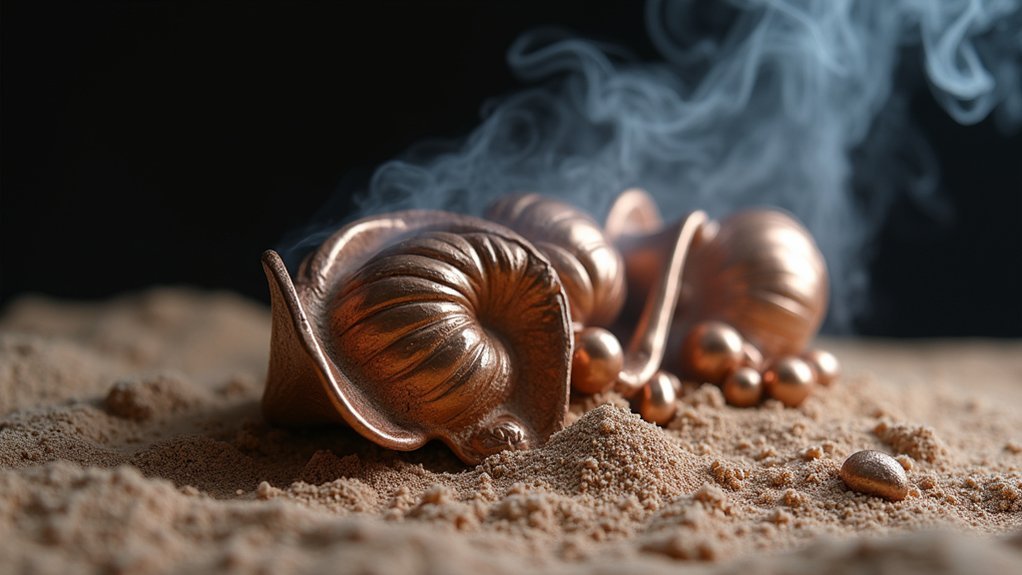
When you’re working with metal clay, investment casting offers a sophisticated firing method that transforms your creations through a precise molding process.
You’ll begin by creating a wax model of your desired piece, which serves as the foundation for the entire process. Next, you’ll coat this wax model in a ceramic shell, forming what’s called an investment mold.
The process continues as you heat the mold, melting away the wax and leaving behind a hollow cavity perfectly shaped to your original design.
You can then pour or inject your metal clay into this cavity. During firing, the metal particles in your clay sinter together, creating a durable final product that captures every intricate detail from your original wax model with remarkable precision.
Enhanced Detail Reproduction Through Investment Techniques
Although traditional firing methods can blur fine details, investment casting preserves every nuance of your original design with exceptional accuracy.
You’ll capture intricate textures, delicate engravings, and complex patterns that would otherwise be lost during conventional firing processes. The liquid investment material flows into every crevice of your metal clay piece, creating a precise mold that reproduces even microscopic details.
Investment casting maintains dimensional stability throughout heating and cooling cycles, preventing distortion that typically compromises fine features.
Investment casting eliminates the dimensional distortion that destroys delicate details, ensuring your intricate designs maintain perfect proportions from start to finish.
You can confidently create elaborate jewelry pieces, sculptural elements, and custom designs knowing your original vision will translate perfectly into the final metal piece.
This technique also enables seamless integration of mixed media components without sacrificing detail quality, expanding your creative possibilities beyond traditional metalworking limitations.
Superior Strength and Density Achievements
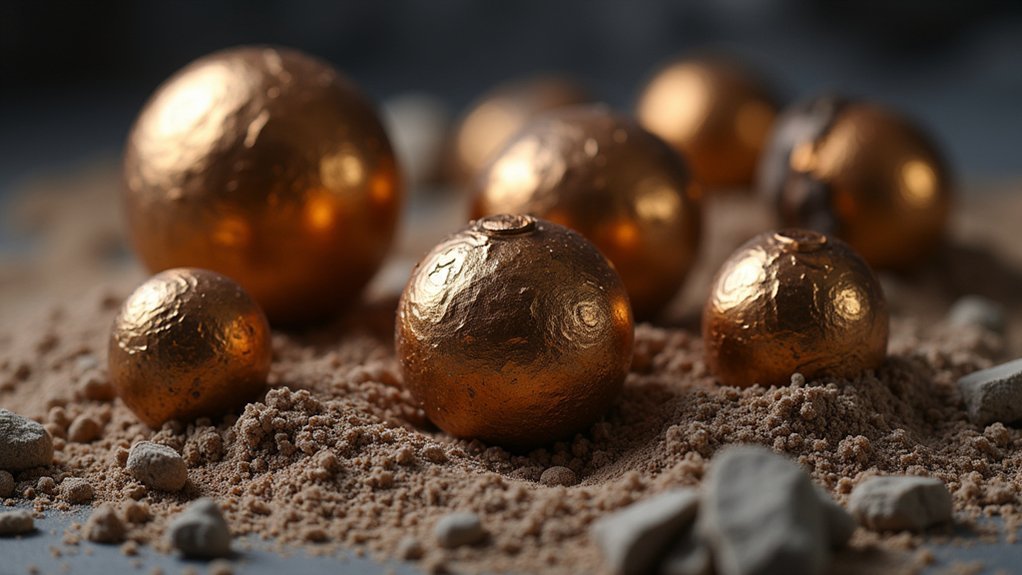
Transformation occurs at the molecular level when you fire metal clay through investment casting, creating pieces with remarkable strength that rivals traditionally cast metals.
You’ll achieve superior mechanical properties as the sintering process allows metal particles to fuse more thoroughly than other firing methods. This enhanced fusion creates a denser structure with lower porosity, dramatically improving your final piece’s durability and resistance to wear.
Your investment-cast pieces often exceed 90% of the metal’s theoretical density, delivering performance characteristics that surpass standard firing techniques.
The process maintains material integrity while minimizing distortion risks during firing. You’ll notice increased longevity in your jewelry applications, as the reduced porosity and enhanced density work together to create pieces that withstand daily use and environmental factors.
Complex Shape Capabilities and Design Freedom
Beyond achieving exceptional strength and density, investment casting reveals unprecedented design possibilities that transform how you approach metal clay artistry.
You’ll discover complex shape capabilities that were previously impossible with traditional casting methods. The firing process preserves intricate details while allowing you to sculpt directly without expensive tooling or molds.
Your creative freedom expands dramatically through these advantages:
- Hand-building techniques – You can carve, coil, and sculpt intricate textures and forms directly into your designs.
- Layered experimentation – Mix materials and create multi-dimensional elements that enhance aesthetic appeal.
- Delicate structure preservation – Fine details survive the firing process, delivering high-fidelity reproductions of your original vision.
This versatility lets you push artistic boundaries while maintaining professional quality results.
Eliminating Common Firing Problems and Defects

You’ll find that investment casting creates a protective environment that shields your metal clay from sudden temperature changes that cause thermal shock damage.
The controlled heating and cooling cycles prevent the rapid expansion and contraction that typically leads to cracking and structural failure.
This method also maintains uniform heat distribution around your piece, eliminating the hot spots and uneven heating that cause warping and distortion during traditional firing methods.
Preventing Thermal Shock Damage
When metal clay undergoes rapid temperature changes during firing, thermal shock can cause devastating cracks, warping, and structural failures that’ll ruin hours of careful work.
Investment casting creates a protective barrier that prevents these temperature fluctuations from damaging your pieces.
The investment material acts as a thermal buffer, distributing heat evenly around your metal clay and eliminating sudden temperature spikes.
You’ll achieve consistently successful results when you fire metal clay using this method.
Here are three key benefits of preventing thermal shock:
- Gradual temperature control – Investment casting allows for controlled heating schedules that protect delicate pieces.
- Even heat distribution – The investment material dissipates heat uniformly around your work.
- Enhanced structural integrity – Your finished pieces maintain their intended shape and strength without stress fractures.
Reducing Warping and Distortion
Since metal clay naturally shrinks and softens during the sintering process, your carefully crafted pieces become vulnerable to gravitational forces that can pull delicate elements out of shape.
Investment casting provides a rigid support structure that maintains your piece’s original form throughout firing. The investment material cradles every contour and detail, preventing sagging or collapse that commonly occurs when you fire a piece using traditional methods.
This controlled environment guarantees uniform heat distribution, eliminating uneven shrinkage that creates unwanted bends and twists.
Complex designs with thin sections, overhanging elements, or intricate textures remain perfectly aligned. Without investment casting’s protective shell, gravity inevitably distorts your work, turning precise geometric patterns into irregular shapes and causing carefully positioned components to shift.
Investment casting eliminates these frustrating setbacks, delivering consistently professional results.
Cost-Effective Production for Multiple Pieces
When you’re producing multiple pieces, investment casting with metal clay transforms your economics entirely.
You’ll cut material waste dramatically since unused clay can be reconditioned and reused, while the casting process itself delivers exceptional bulk production efficiency.
This combination drives down your per-unit costs considerably compared to traditional firing methods, making larger production runs both profitable and practical.
Reduced Material Waste
Efficiency transforms how you approach metal clay projects when you embrace investment casting. You’ll dramatically cut down on reduced material waste while maximizing every gram of your precious metal clay investment.
Unlike traditional methods that generate significant scrap, investment casting lets you utilize virtually every bit of material.
Here’s how investment casting minimizes waste:
- Multiple pieces creation – You can produce several items simultaneously from one mold setup, eliminating individual project waste.
- Precision molding – The exact casting process leaves minimal leftover material compared to hand-forming techniques.
- Reduced finishing needs – Smoother cast surfaces require less sanding and polishing, saving additional material loss.
This streamlined approach transforms your metal clay budget, making expensive materials stretch further while delivering professional results consistently.
Bulk Production Efficiency
Beyond reducing waste, investment casting transforms your production capacity by enabling cost-effective bulk manufacturing of metal clay pieces.
When you’re producing multiple identical items, the setup costs distribute across each piece, dramatically lowering your per-unit expenses. Instead of firing each metal clay piece individually, you’ll create one master model and generate multiple castings from a single investment mold.
This bulk production efficiency becomes particularly valuable when you’re fulfilling large orders or creating jewelry collections.
You’ll eliminate the repetitive labor of hand-forming each piece while maintaining consistent quality across your entire production run. The automated casting process frees you to focus on design development and creative work, while your molds handle the manufacturing.
This streamlined workflow maximizes your productivity and profitability.
Lower Per-Unit Costs
Investment casting’s greatest financial advantage lies in its ability to slash your per-unit costs through smart economies of scale.
When you create multiple pieces simultaneously, you’ll spread the initial mold setup expenses across your entire batch, dramatically reducing what each piece costs to produce.
Your cost savings come from three key areas:
- Shared Setup Costs – The expensive mold creation process gets distributed across multiple pieces instead of just one.
- Bulk Material Efficiency – You’ll use materials more efficiently with less waste per unit when producing larger quantities.
- Labor Distribution – Your time investment per piece drops considerably when handling multiple items together.
Investment casting transforms expensive one-off pieces into affordable production runs, making your metal clay jewelry business more profitable and sustainable.
Professional Quality Surface Finishes
When you fire metal clay through investment casting, you’ll achieve a professional-quality surface finish that rivals traditional casting methods. The precise mold captures intricate details while creating smooth surfaces that minimize extensive post-firing polishing.
This controlled sintering environment greatly reduces surface imperfections common with other firing techniques.
You’ll notice uniform thickness and consistent texture across your pieces—essential for professional jewelry production. Whether you’re crafting a delicate fine silver bezel or complex decorative elements, investment casting enables intricate patterns and textures that enhance visual appeal.
The process delivers superior aesthetic quality by maintaining fine details throughout firing. Your finished pieces will showcase the professional standards clients expect, with surfaces that require minimal finishing work while preserving design integrity.
Integrating Pre-Made Components During Casting

You can expand your metal clay designs by integrating pre-made components like bezel wire and findings directly during the investment casting process.
This technique lets you incorporate commercial elements that would be challenging to create from scratch while maintaining structural integrity throughout firing.
Understanding proper attachment methods guarantees these components fuse seamlessly with your metal clay, creating professional-quality pieces with enhanced detail and functionality.
Bezel Wire Integration
Since metal clay shrinks during firing while pre-made components don’t, integrating bezel wire requires careful planning to achieve precise stone settings.
You’ll need to account for shrinkage rates when positioning your bezel wire to guarantee proper stone fit after firing.
For successful bezel wire integration, you should use high-quality fine silver wire that can fuse directly to metal clay without soldering.
This simplifies your process while creating strong bonds.
Here’s how to achieve ideal results:
- Rough up contact surfaces and apply slip made from the same metal clay to enhance adhesion between components.
- Calculate shrinkage rates carefully when positioning bezel wire to compensate for dimensional changes during firing.
- Manage firing temperatures precisely to avoid damaging the bezel wire while guaranteeing strong fusion with your metal clay.
This technique delivers professional-quality stone settings with exceptional precision.
Finding Attachment Methods
Although bezel wire integration focuses on stone settings, finding effective attachment methods for other pre-made components during casting requires different strategies to achieve reliable bonds.
You’ll need to roughen contact points on pre-made elements through abrasion to enhance adhesion and prevent delamination during sintering. Use high-temperature resistant adhesives or clay to secure components before firing, ensuring they withstand the heat process.
Metal clay slip made from your working material creates exceptionally strong bonds between components and improves structural integrity.
You must calculate shrinkage rate differences between metal clay and milled components, making necessary adjustments for proper post-firing fit. Co-firing requires temperature management that accommodates your highest melting point material, preventing warping or damage to pre-made parts.
Temperature Control Advantages in Investment Firing
When you fire metal clay through investment casting, you’ll gain unprecedented control over temperature management that’s simply impossible to achieve with traditional firing methods.
This precise temperature control becomes your greatest advantage in creating professional-quality pieces consistently.
The investment material creates a stable thermal environment that protects your work from sudden temperature fluctuations.
You’ll prevent thermal shock that causes cracking and warping while guaranteeing thorough sintering throughout your piece.
Here are three key temperature control advantages:
- Gradual heating capability – You can reach higher temperatures slowly, enhancing strength and durability
- Steady temperature maintenance – Prevents oxidation while preserving metal properties
- Consistent results – Stable environment ensures uniform outcomes across multiple pieces
This controlled approach transforms your firing process from guesswork into precision craftsmanship.
Minimizing Post-Firing Cleanup and Refinishing

By firing metal clay through investment casting, you’ll dramatically reduce the hours typically spent on post-firing cleanup and refinishing.
The investment material captures every intricate detail of your design, delivering smoother surfaces straight from the mold. You won’t need extensive sanding or polishing since the controlled firing environment limits oxidation and surface imperfections that plague traditional firing methods.
The dimensional accuracy you’ll achieve means fewer adjustments and refinements after firing.
Whether the metal used is silver, copper, or gold clay, investment casting maintains precise details that would otherwise require laborious hand-finishing. Your finished pieces often need little to no additional work, dramatically enhancing your productivity.
This streamlined process lets you focus on creating rather than correcting imperfections.
Achieving Consistent Results Across Production Runs
Beyond the time savings in cleanup, investment casting delivers something even more valuable for serious metal clay artists: predictable, repeatable outcomes.
Investment casting transforms metal clay work from unpredictable experimentation into professional-grade manufacturing with guaranteed consistent results every single time.
When you fire metal clay through investment casting, you’re creating a controlled environment that guarantees consistent shrinkage rates and uniform sintering across every production run.
This systematic approach eliminates the variables that plague traditional firing methods:
- Precise duplication – Your designs maintain identical detail levels and surface textures from piece to piece.
- Uniform structural integrity – Controlled firing environments enhance durability consistently across all items.
- Dimensional accuracy – Minimized variations in final piece dimensions through systematic temperature management and timing.
You’ll achieve professional-grade consistency that meets quality standards every time, making investment casting essential for serious production work.
Advanced Setting Preparation for Gemstone Integration
Three critical calculations determine whether your gemstone settings will succeed or fail in investment casting: shrinkage compensation, bezel height adjustment, and thermal expansion compatibility.
You’ll need to calculate metal clay’s shrinkage rate precisely to guarantee your bezels accommodate stones post-firing. Before embedding milled metal bezels into your metal clay, roughen their sides to enhance adhesion and create secure fits.
Apply thick slip around bezel bottom edges to form strong bonds with backing plates, preventing gaps that compromise stability.
Consider using two-part firing techniques to strengthen your piece’s main body while maintaining secure gemstone integration.
Make all closed bezel adjustments on backing plates before firing—once sintered, shape concerns can’t be corrected without compromising stone security.
Comparing Investment Casting to Traditional Kiln Firing Methods
While traditional kiln firing restricts you to direct metal clay shaping and firing, investment casting opens up dramatically more complex design possibilities through its wax-pattern-to-ceramic-shell process.
You’ll discover investment casting delivers superior results through controlled molding environments that capture intricate details traditional kiln firing methods can’t achieve. The ceramic shell process eliminates many variables that cause defects in conventional firing.
Here’s why investment casting outperforms traditional methods:
- Enhanced precision – You’ll achieve smoother finishes and more accurate dimensions than traditional kiln firing methods allow.
- Increased efficiency – You can produce multiple pieces simultaneously while accommodating various materials.
- Reduced defects – The mold provides uniform thickness and captures fine details that direct firing often compromises.
Investment casting transforms your metal clay work from basic forms into sophisticated, professional-quality pieces.
Frequently Asked Questions
Does Metal Clay Have to Be Fired?
Yes, you must fire metal clay to transform it into solid metal. You’ll need to remove the organic binder and sinter the metal particles together, creating a durable, functional piece through proper kiln firing.
Why Is PMC Being Discontinued?
You’re seeing PMC discontinued because market demand shifted toward alternative materials. Artists now prefer newer formulations offering better performance and versatility, while consistency and availability issues accelerated the decision to phase it out.
What Temperature Do You Fire Metal Clay At?
You’ll fire metal clay between 1,450°F to 1,600°F depending on the type you’re using. Fire fine silver clay at 1,600°F for best strength, while lower temperatures work for certain techniques.
Does Precious Metal Clay Shrink When Fired?
Yes, you’ll experience 10-20% shrinkage when firing precious metal clay. The organic binder evaporates and metal particles densify during firing. You must design pieces larger to compensate for this predictable size reduction.
In Summary
You’ll transform your metal clay artistry by embracing investment casting’s precision and reliability. You’re no longer limited by traditional firing constraints – you can create intricate designs, achieve superior strength, and eliminate common defects that’ve frustrated you before. You’ll save time on cleanup, produce consistent results, and confidently set gemstones knowing they’ll survive the process. Don’t settle for conventional methods when investment casting delivers the professional quality your work deserves.