You can create breathtaking mixed media PMC pieces by combining precious metal clay with polymer, ceramic, glass, and textile elements that aren’t achievable with metal alone. Press fabrics into clay for intricate textures, integrate compatible glass types using proper firing temperatures, and blend traditional cultural motifs with personal narratives for emotional depth. Master advanced finishing techniques like progressive sanding, patination, and layered coatings to achieve professional gallery-quality results that showcase your unique artistic vision and expand your creative possibilities.
Exploring PMC With Polymer and Ceramic Elements

When you’re ready to push the boundaries of traditional PMC work, combining Precious Metal Clay with polymer and ceramic elements opens up a world of creative possibilities.
Breaking free from conventional metal clay techniques by incorporating polymer and ceramic materials unleashes extraordinary creative potential for innovative artists.
You’ll discover innovative techniques that transform your artistic vision into stunning mixed media pieces. These material combinations allow you to explore new textures, colors, and forms that aren’t achievable with metal clay alone.
The integration process showcases how different materials complement each other, creating unique artistic outcomes. You can experiment with contrasting properties—the malleability of polymer, the earthiness of ceramic, and the elegance of fired Precious Metal Clay.
Each combination offers distinct advantages, from enhanced durability to expanded color palettes. These versatile approaches help you develop signature techniques while expanding your creative toolkit beyond conventional boundaries.
Glass Integration Techniques for Metal Clay Artists
You’ll need to carefully select compatible glass types and prepare them properly before incorporating them into your PMC projects.
Understanding firing temperature compatibility becomes essential since different glass compositions react differently to the heat required for metal clay sintering.
Mastering surface bonding methods will determine whether your glass elements create seamless integration or simply fall away from your finished piece.
Glass Selection and Preparation
Since successful glass integration in PMC projects depends heavily on your material choices, selecting the right type of glass becomes your first critical decision.
You’ll want to take into account firing temperatures carefully, as different glass types behave uniquely under heat. Dichroic glass creates stunning rainbow effects, while opaque varieties offer solid color blocks that contrast beautifully with silver clay.
Before incorporating any glass into your design, you must clean it thoroughly. Remove all dust, fingerprints, and oils using alcohol or specialized glass cleaners.
This preparation step guarantees proper adhesion and prevents unsightly imperfections in your finished piece.
Metal clay artists should experiment with various glass options to discover which combinations yield their desired aesthetic outcomes and enhance the dimensional quality of their artwork.
Firing Temperature Compatibility
After preparing your glass materials, understanding firing temperature compatibility becomes your next priority for successful integration.
You’ll face a challenging temperature mismatch when creating mixed media pieces with PMC and glass. While PMC requires firing between 1650°F to 1750°F, compatible glass types like Bullseye or Spectrum need only 1300°F to 1500°F.
You must select glass that won’t melt or distort at PMC’s higher temperatures. Glass frit and powder offer better control since they bond at lower temperatures than larger pieces.
Before committing to final pieces, you’ll want to create test samples to determine ideal firing schedules. This experimentation helps you achieve stunning aesthetic effects while maintaining both materials’ integrity in your mixed media artwork.
Surface Bonding Methods
When integrating glass elements into your PMC designs, mechanical bonding creates the strongest connections between materials. You’ll achieve stunning textural contrasts by using techniques like fusing, slumping, and layering glass directly with your precious metal clay.
These methods enhance both aesthetic appeal and structural durability in your finished pieces. Experiment with dichroic glass and vitreous enamel to create vibrant colors and intricate patterns.
Each glass type requires specific firing temperatures, so you’ll need precise temperature control to avoid compromising your metal clay’s integrity. The bonding occurs during firing when both materials reach compatible thermal states.
Always prioritize safety by working in well-ventilated areas and wearing protective gear. This prevents inhalation of potentially harmful fumes or fine particles released during the glass integration process.
Fabric and Textile Combinations in PMC Design
You can transform your PMC pieces by pressing fabrics directly into the clay surface before firing, creating permanent impressions that capture intricate textile details.
When you’re ready to transfer specific patterns, try using fabric stamps or applying textiles as temporary templates during the leather-hard stage.
These fabric texture integration and pattern transfer methods let you bridge the gap between traditional metalworking and fiber arts, opening up entirely new design possibilities.
Fabric Texture Integration Techniques
While PMC traditionally offers the clean, polished aesthetic of metal, incorporating fabric textures transforms your pieces into rich, multi-dimensional works that blur the boundaries between jewelry and textile art.
You’ll discover three primary techniques for integrating fabric textures into your clay compositions.
Embedding involves pressing fabric directly into fresh PMC, creating permanent impressions that capture intricate details.
Layering allows you to sandwich delicate materials like lace between clay sheets, preserving organic patterns while maintaining structural integrity.
Stamping uses fabric as a texturing tool, rolling or pressing it onto your metal clay surface to transfer unique patterns.
Experiment with diverse materials—silk creates subtle impressions, burlap delivers bold textures, and lace produces elegant negative spaces that contrast beautifully with your piece’s metallic elements.
Textile Pattern Transfer Methods
Although traditional metalworking relies on hammers and punches for surface decoration, textile pattern transfer methods open an entirely new vocabulary of design possibilities for your PMC creations. You’ll discover that fabrics like lace, burlap, and mesh create stunning textures when pressed into your clay surface. These techniques allow you to capture intricate details that would be impossible to achieve by hand.
| Fabric Type | Pattern Effect | Best Applications |
|---|---|---|
| Lace | Delicate, intricate designs | Pendants, earrings |
| Burlap | Rustic, woven texture | Cuffs, statement pieces |
| Silk | Subtle, fine patterns | Refined jewelry |
Artists can elevate their craftsmanship by incorporating fabric remnants directly into pieces, adding narrative depth. Remember to prepare fabrics properly—they must be clean and treatment-free for ideal clay adherence.
Color Theory Applications in Mixed Media PMC
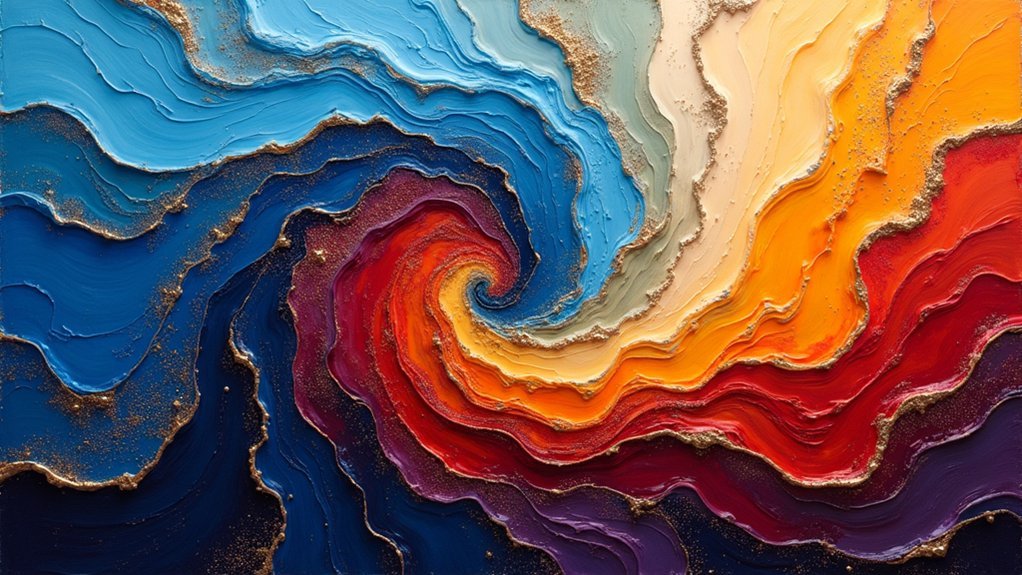
How can color theory transform your mixed media PMC creations from ordinary to extraordinary?
You’ll discover that understanding the color wheel becomes your secret weapon for creating striking contrasts using complementary colors. When you strategically place warm oranges against cool blues, you’ll draw viewers’ eyes exactly where you want them to focus.
You can harness color’s psychological power to evoke specific emotions in your Contemporary Art pieces. Warm reds convey passion, while cool greens suggest tranquility.
By layering colors through polymer clay or fabric integration, you’ll add remarkable depth and texture to your designs.
Layered color techniques create stunning visual depth that transforms flat PMC pieces into dynamic, multi-dimensional artworks with rich textural complexity.
Draw inspiration from nature’s palettes or cultural artifacts to create meaningful compositions that tell your unique story through intentional color choices.
Cultural Inspiration and Personal Narrative Integration
Beyond the strategic use of color, your cultural heritage and personal experiences offer an endless wellspring of inspiration that can elevate your PMC mixed media pieces into deeply meaningful works of art.
You’ll find that traditional motifs, patterns, and symbols from your heritage create powerful starting points for contemporary designs. When you integrate personal narratives into your creations, each piece becomes a storytelling vehicle that resonates with emotional depth.
Examine cultural artifacts around you—textiles, pottery, architectural elements—and translate these historical elements into your artist’s work.
Your unique experiences, whether tied to family traditions or personal milestones, can influence texture choices, form decisions, and symbolic elements. This approach transforms simple jewelry into wearable narratives that honor both your individual journey and cultural legacy.
Advanced Finishing Methods for Multi-Material Pieces
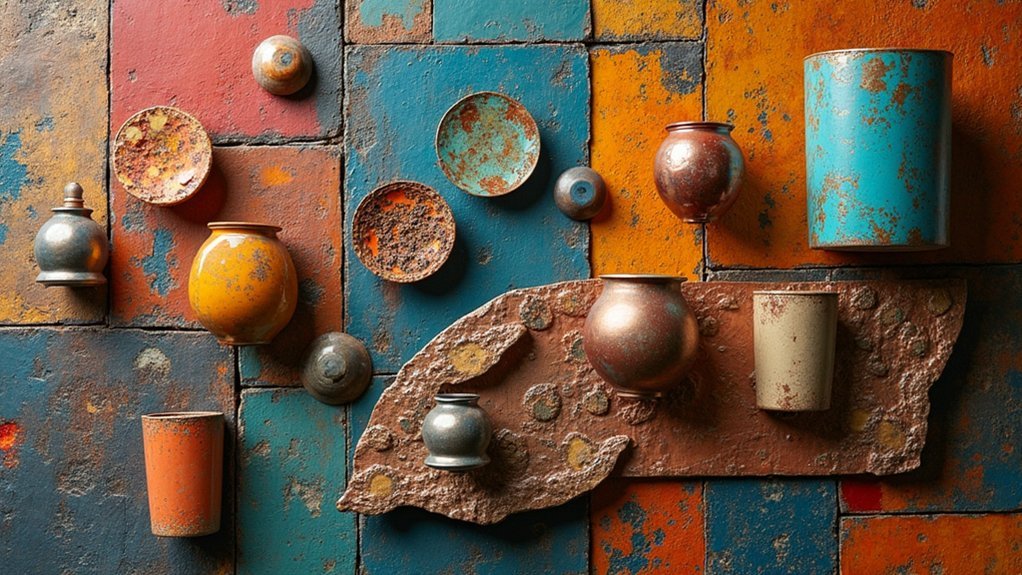
When you’ve successfully integrated cultural narratives into your PMC designs, the finishing stage becomes essential for achieving professional results that honor both your artistic vision and the diverse materials you’ve chosen to combine.
The finishing stage transforms your culturally-inspired PMC creations into professional artwork that honors both artistic vision and material diversity.
Advanced finishing methods transform your multi-material pieces into museum-quality artwork that rivals pieces found in galleries across the United States.
You’ll need to master surface polishing, patination, and protective coating applications to enhance both aesthetic appeal and durability. Rotary tools, files, and sanders enable precise detail work, while layering and texturing techniques create dimensional depth.
Careful attention to adhesion methods guarantees compatibility between PMC, polymer, ceramic, fabric, and glass components.
- Experiment with patination chemicals to create unique color variations and aged effects
- Layer transparent materials over textured PMC surfaces for enthralling visual depth
- Apply specialized adhesives designed for metal-to-non-metal bonding strength
- Use progressive sanding grits from coarse to fine for mirror-like surface finishes
- Combine matte and glossy protective coatings to create contrasting surface textures
Frequently Asked Questions
What Are the Six Types of Mixed Media Art?
You’ll find six types of mixed media art: collage, assemblage, installation, painting, drawing, and digital media. Each combines different materials and techniques, letting you explore creative expression through diverse artistic approaches and materials.
What Is the Best Paper for Mixed Media Art?
You’ll want heavyweight watercolor paper between 200-400 gsm for mixed media art. Cold-pressed watercolor paper offers excellent texture and durability, while Bristol board provides smooth surfaces perfect for combining inks, paints, and graphite effectively.
What Are the Rules for Mixed Media Art?
You don’t have strict rules in mixed media art, but you’ll want to follow design principles like balance and contrast. You’re encouraged to experiment freely while maintaining harmony to create cohesive, visually compelling pieces.
What Is a Mixed Media Design?
You’ll create mixed media design by combining multiple artistic materials like paint, fabric, paper, and found objects in one artwork. You’re blending different textures, colors, and techniques to achieve unique visual effects and expressive depth.
In Summary
You’ve discovered that PMC mixed media opens endless creative possibilities when you combine metals with polymers, ceramics, glass, and textiles. You’ll find that mastering color theory elevates your designs while drawing from cultural narratives adds personal depth. Don’t forget that advanced finishing techniques will transform your multi-material pieces into professional-quality art. Now you’re equipped to push boundaries and create stunning, innovative works that truly express your artistic vision.